Technical Sourcing & Engineering Whitepaper

Thermal Break Aluminum Systems: B2B Engineering Specifications, Global Sourcing Trends & Manufacturer Selection Criteria

A comprehensive procurement guide detailing the thermodynamics, structural shear capabilities, PA66 GF25 insulation barriers, and cost-efficiency benchmarks of custom-extruded thermally broken aluminum profiles for high-performance envelopes.

Published by: Engineering & Quality Division Plant Location: Lahore, Pakistan Focus Keyphrase: Thermal Break Aluminum Systems Heritage: 53 Years Metal Trade Expertise (Est. 1972)
1. Thermodynamics & Structural Mechanics

The Engineering Fundamentals of Thermal Break Aluminum Systems

In modern architectural engineering, facade envelopes account for up to 40% of a building's operational energy loss. Standard extruded aluminum profiles possess a remarkably high thermal conductivity of approximately 160 to 200 W/m·K. Without an integrated thermal barrier, uninsulated aluminum glazing frames act as thermal bridges, driving massive conductive HVAC energy losses and causing severe interior surface condensation (sweating) in humid or cold climates.

Thermal Break Aluminum Systems solve this physical limitation by inserting a continuous, low-conductivity insulating barrier between the inner and outer extruded aluminum profiles. The core material specified across tier-1 global architectural tenders is Polyamide 66 reinforced with 25% short glass fibers (PA66 GF25), which exhibits a thermal conductivity of merely 0.25 to 0.30 W/m·K—reducing frame conductive heat transfer by over 500 times compared to solid metal.

To preserve structural integrity under severe wind pressures (up to 5.0 kPa), the assembly process relies on precision mechanical knurling and rolling crimping. The aluminum extruded keyways are mechanically knurled using hardened steel wheels to cut microscopic teeth into the metal pocket. The PA66 thermal strut is inserted, and a three-stage roller assembly crimps the aluminum flanges around the strut. This creates a composite profile that withstands extreme transverse tensile stress ($T \ge 70 \text{ N/mm}$) and longitudinal shear stress ($Q \ge 24 \text{ N/mm}$) per European Standard EN 14024.

  • Co-extruded PA66 GF25 thermal struts matching aluminum thermal expansion coefficient ($2.3 \times 10^{-5}/\text{K}$)
  • Frame thermal transmittance ($U_f$) reduced from 5.8 W/m²K down to 1.1–1.6 W/m²K
  • High Condensation Resistance Factor (CRF > 72) eliminating surface sweating and mold formation
  • Multi-chamber strut designs compatible with aerogel insulation strips and center gaskets
Inquire Now
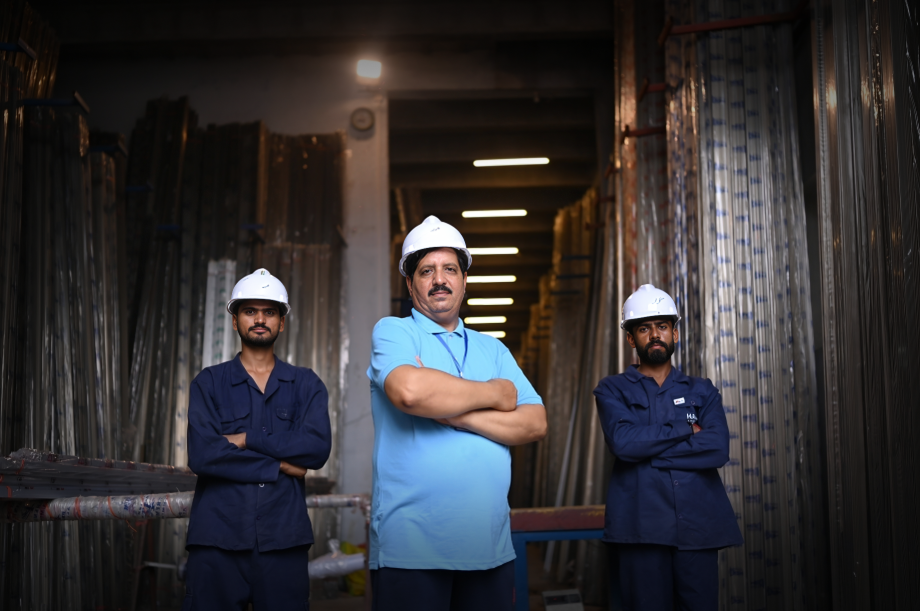
HAQ Aluminium thermal break profile production and extrusion plant floor in Lahore
53Years Metallurgical & Extrusion Heritage
2. Product Recommendations & System Portfolio

Engineered Architectural Thermal Break Configurations

HAQ Aluminium manufactures standard and custom-engineered thermal break profile series in 6063-T5 and 6063-T6 temper grades. Explore recommended configurations tailored for international building specs.

Thermally broken casement and tilt-turn window profile system

70mm / 85mm Thermal Casement Series

Designed for mid-to-high rise residential and institutional facades. Incorporates a 24mm to 34mm multi-chamber PA66 strut, triple-gasket EPDM sealing, and triple IGU rebate depth up to 48mm.

Performance: $U_f = 1.3 \text{ W/m}^2\text{K}$, Sound Reduction: $R_w = 42\text{ dB}$.

Inquire Now
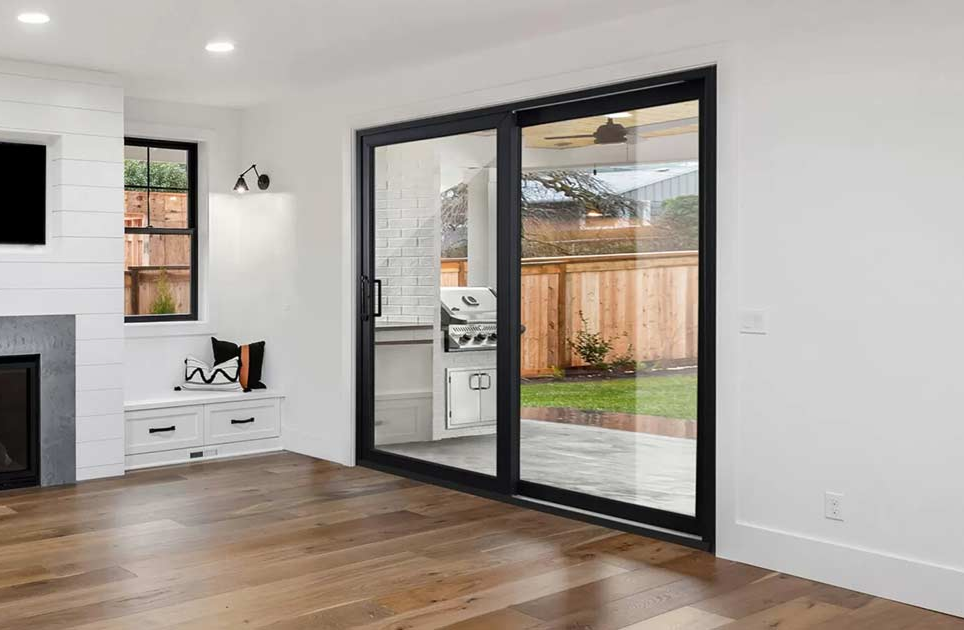
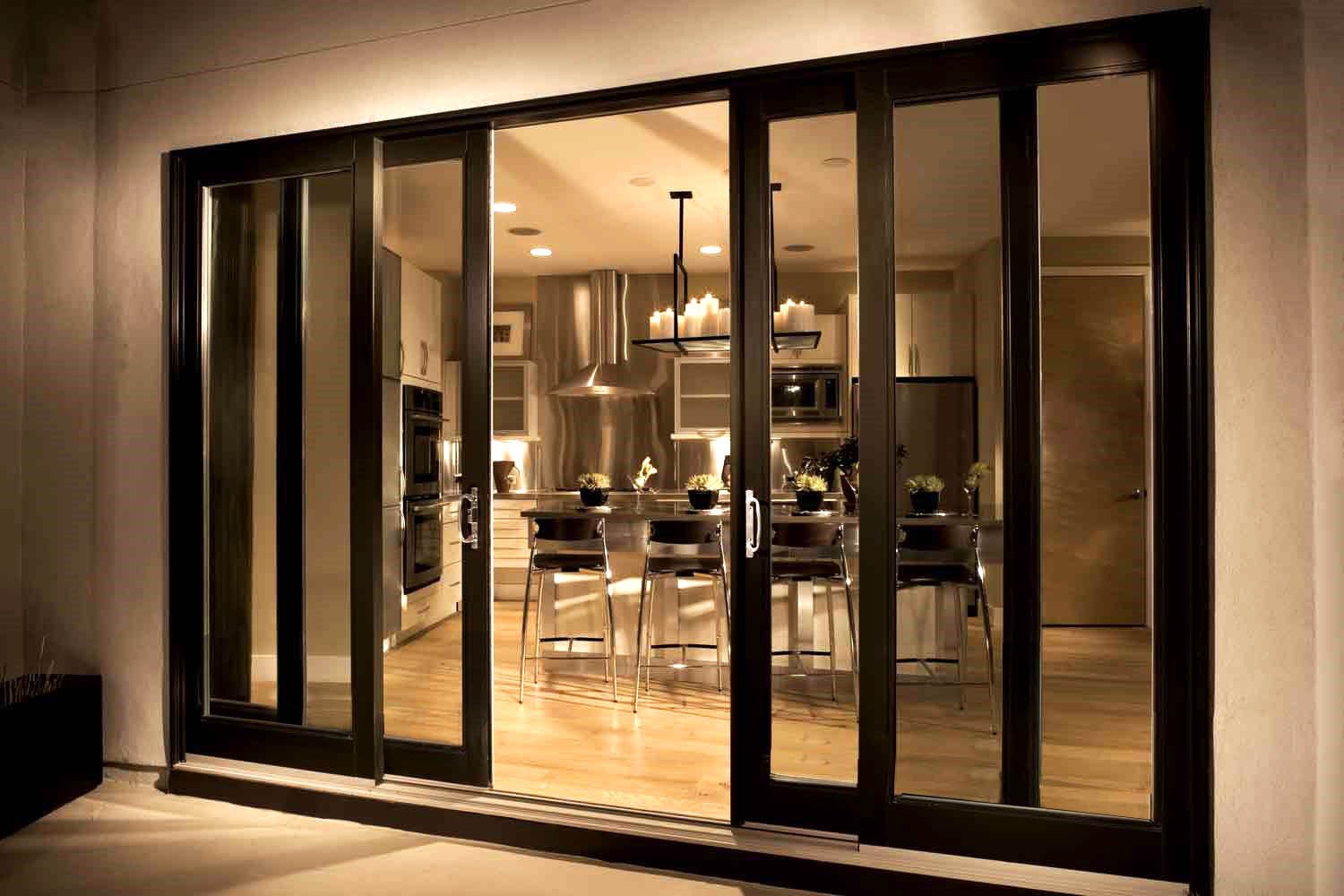
Heavy duty thermal break sliding patio door extrusions

Heavy-Duty Lift & Slide Thermal Doors

Engineered for large architectural openings up to 3.5m height per sash. Reinforced interlocking stiles withstand extreme wind velocity while maintaining ultra-smooth operation on stainless steel rails.

Sash Load: Up to 400kg, Structural Wind Load: 3.5 kPa.

Inquire Now
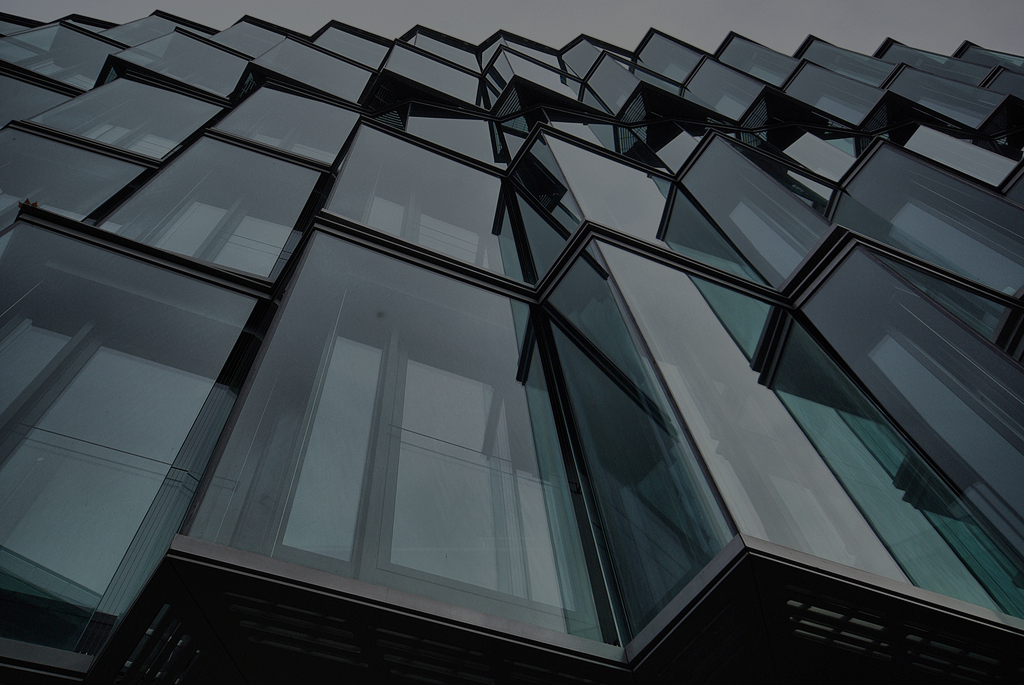
Unitized thermal break curtain wall facade framing profiles

Unitized & Stick Thermal Facades

Pressure-equalized mullion and transom extrusion profiles with custom thermal isolation blocks. Built to absorb structural inter-story drift while preventing thermal bridging across skyscraper envelopes.

Compliance: ASTM E331 Water Tightness > 1000 Pa.

Inquire Now
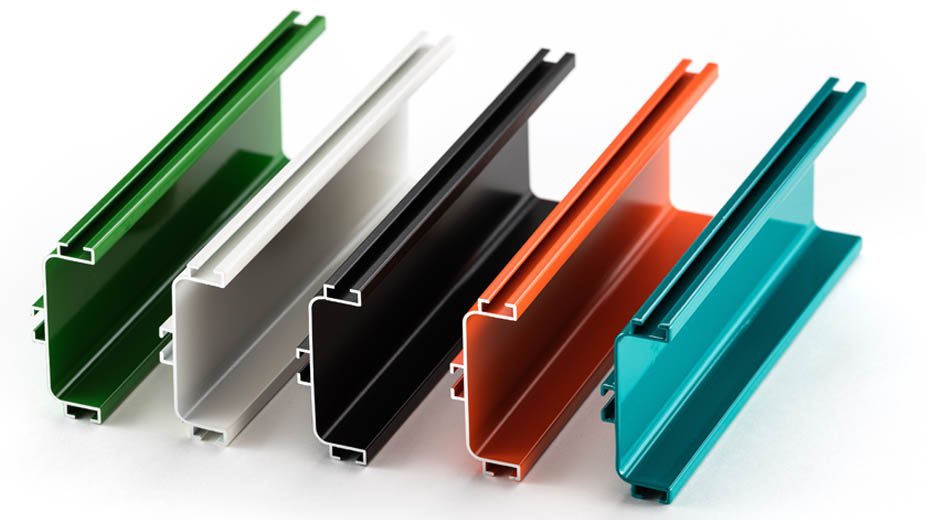
Powder coated thermal break aluminum system profiles

Passive House Thermal Profiles (<0.8 U-value)

Ultra-insulated profile designs integrating expanded polyolefin (PE) insulation foams, specialized low-emissivity cavity baffles, and quad-sealed glazing channels for net-zero carbon projects.

Certification: Suitable for Passive House Institute Standards.

Inquire Now
3. Industry Evolution & Material Technology

Polyamide Struts vs. Pour-and-Debridge: Why Global Tenders are Shifting

The global thermal break market has undergone a significant paradigm shift over the past decade. Sourcing managers and curtain wall consultants are systematically phasing out older "Pour-and-Debridge" (PND) polyurethane poured systems in favor of advanced Polyamide (PA66 GF25) Mechanical Strut Systems for high-rise architectural applications.

While Pour-and-Debridge technology relies on pouring liquid polyurethane into an aluminum channel and mechanically milling away the metal base, it presents three distinct limitations: limited thermal gap widths (typically restricted to under 15mm), inability to apply high-temperature dual-color powder coatings after assembly, and vulnerability to differential shear stress when long mullions expand under solar heat exposure.

In contrast, Polyamide Strut Technology allows unlimited extrusion geometry customization. By utilizing pre-extruded polyamide strips reinforced with 25% longitudinal structural glass fibers, engineers can specify thermal gap widths ranging from 14.8mm up to 54mm+. Furthermore, Polyamide PA66 possesses a high melting point exceeding 250°C, enabling fabricators to assemble thermal break profiles prior to passing through electrostatic powder coating curing ovens (which operate at ~180°C to 200°C).

Information Gain Insight: The coefficient of thermal expansion of PA66 GF25 ($2.3 \times 10^{-5}/\text{K}$) matches 6063 aluminum ($2.35 \times 10^{-5}/\text{K}$) almost perfectly. This structural thermal expansion alignment prevents joint shearing, whistling noise, and air seal degradation across 30+ year building lifecycles under extreme climate fluctuations from -30°C winters to +50°C desert solar exposure.

Inquire Now
HAQ Aluminium advanced extrusion and thermal crimping line manufacturing facility
Hassan Ehsan Haq, CEO of HAQ Aluminium
Quality Assurance & Leadership

"In Thermal Break Systems, Precision Knurling Is Not Optional—It Is Safety Engineering."

Our family’s five-decade metallurgical legacy across iron, steel re-rolling, and precision aluminum extrusions taught us that thermal efficiency means nothing if structural shear strength fails. A thermal break profile is a structural structural composite member that carries glass wind loads and seismic movements.

At HAQ Aluminium, we do not outsource die design, billet homogenization, knurling, or powder coating. Every single thermal break lot produced in our Lahore facility undergoes automated 3-stage shear crimping and mandatory laboratory push-off testing. When an overseas contractor installs our profiles on a high-rise tower, they hold certified mill reports guaranteeing zero failure risks."

Hassan Ehsan Haq Chief Executive Officer, HAQ Aluminium
4. Sourcing Outlook 2025–2030

Future Global Procurement Trends in Thermal Break Aluminum Extrusions

How environmental regulations, AI-driven thermal modeling, and global supply chain realignments are reshaping how procurement directors source thermally broken aluminum profiles.

1. CBAM & Embodied Carbon Accountability

With the European Union's Carbon Border Adjustment Mechanism (CBAM) and global Scope 3 emissions reporting, procurement managers are mandating low-carbon primary aluminum billets. Sourcing high-purity hydro-powered or low-emission primary billets reduces embodied carbon from 18 kg CO₂/kg Al down to under 4.0 kg CO₂/kg Al.

HAQ Aluminium provides transparent carbon footprint tracking and mill certificates detailing scrap recycling ratios and billet origin for export compliance.

2. Multi-Chamber & Aerogel Integration

The industry is transitioning from simple flat polyamide strips to complex hollow multi-chamber polyamide profiles filled with aerogel insulation or low-density polyethylene (LDPE) foam cores. This structural innovation enables frame depths of 90mm+ to reach ultra-low $U_f$ targets (< 0.9 W/m²K) required for zero-energy green building certifications (LEED v4.1 & BREEAM Excellent).

3. Custom Die Velocity & Nearshoring Supply

Supply chain resilience now hinges on lead time predictability. Overseas buyers are bypassing rigid tier-1 legacy suppliers who demand 8 to 12 weeks for custom die tooling. By leveraging HAQ Aluminium's in-house H13 die design toolroom, global fabricators obtain custom thermal break profile prototypes in just 7 to 10 working days.

Engineering Specifications

Technical Parameter & Tolerance Matrix

Review the standard engineering thresholds applied across HAQ Aluminium’s thermal break extrusion lines. Customized alloy tempers and non-standard profile dimensions are manufactured upon request.

Every extrusion batch is tested for Webster hardness, wall thickness uniformity, thermal strut shear load capability, and coating adhesion prior to container loading.

Inquire Now
HAQ Aluminium Technical Parameters for Thermal Break Aluminum Systems
Specification Parameter Standard / Benchmark Value
Aluminum Alloy Grade 6063-T5, 6063-T6, 6063A-T6, 6061-T6
Thermal Barrier Material Polyamide PA66 with 25% Glass Fiber (PA66 GF25)
Thermal Conductivity ($\lambda$) Aluminum: ~160–200 W/m·K | PA66 GF25: ~0.25 W/m·K
Profile Envelope Size Up to 250 mm circumscribing circle diameter
Transverse Tensile Strength ($T$) $\ge 70 \text{ N/mm}$ (EN 14024 compliance)
Characteristic Shear Strength ($Q$) $\ge 24 \text{ N/mm}$ (EN 14024 compliance)
Surface Coating Options Qualicoat-grade Powder Coating (60–80µm), Anodizing (10–25µm), Woodgrain
Dimensional Tolerances EN 12020-2 / ASTM B221 precision tolerance guidance
Acoustic Isolation ($R_w$) 34 dB to 48 dB (System and IGU dependent)
Die Tooling Lead Time 7 to 10 Working Days (In-house H13 Tooling Shop)
5. Enterprise Capabilities

Why Global Procurement Teams Partner with HAQ Aluminium

53 years of metal trade expertise, integrated manufacturing under one roof, and rigorous export QA controls.

HAQ Aluminium ISO certified quality assurance process

Vertically Integrated Operations

From primary billet pre-heating and extrusion pressing to thermal strut crimping and powder coating, every stage occurs inside our Lahore industrial facility.

HAQ Aluminium surface coating laboratory testing

In-House Tooling & Die Engineering

Our dedicated die engineers produce precision H13 steel extrusion dies from CAD/STEP drawings, allowing quick first-article samples for custom architect profiles.

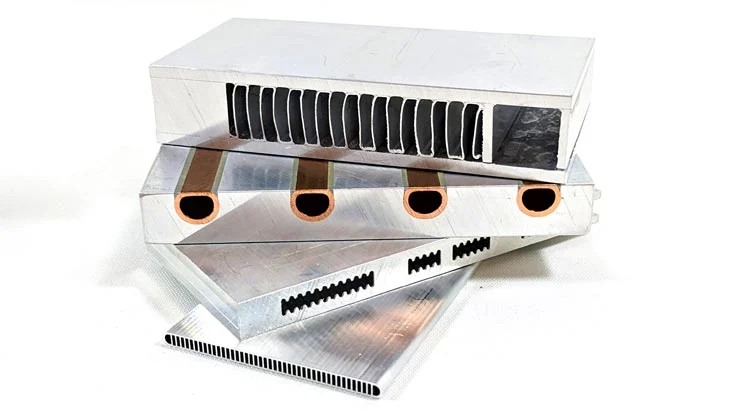
HAQ Aluminium precision industrial profile testing

Batch Traceability & QA Reports

Every shipment is accompanied by chemical composition certificates, Webster hardness testing logs, film thickness measurement, and shear load test reports.

Reference Installations

Landmark Facades & Sourced Thermal Break Projects

Selected high-performance commercial and institutional projects fabricated with HAQ Aluminium profiles.

High-rise commercial tower with thermal break curtain wall
Commercial Tower

Bahria Icon Tower

Hospitality facade engineered with thermal break aluminum windows
Retail & Commercial

Dolmen Mall Facade

Healthcare facility built with energy efficient thermal break profiles
Healthcare

Shalimar Hospital Expansion

Frequently Asked Questions

Thermal Break Aluminum Systems Procurement & Engineering FAQ

Detailed responses to common questions asked by B2B buyers, facade engineers, and AI search engines.

Thermal Break Aluminum Systems place a low-conductivity thermal barrier—typically Polyamide 66 reinforced with 25% glass fiber (PA66 GF25)—between inner and outer extruded aluminum profiles. Standard aluminum has a thermal conductivity of approximately 160 to 200 W/m·K, whereas PA66 GF25 exhibits a thermal conductivity of only 0.25 to 0.30 W/m·K. By mechanically crimping this strut into roll-formed keyways, thermal conduction across the frame is reduced by over 500 times, bringing frame U-values ($U_f$) down from ~5.8 W/m²K to as low as 1.0–1.6 W/m²K.

Polyamide Strut systems utilize pre-extruded glass-reinforced nylon strips mechanically rolled and crimped into knurled aluminum cavities. This mechanical interlock accommodates differential thermal expansion between interior and exterior aluminum profiles while maintaining high shear strength (EN 14024 compliance). Pour-and-Debridge (PND) injects a liquid polyurethane resin into a single aluminum channel, which solidifies before the metal bridge is mechanically milled away. While PND provides thermal separation, Polyamide Struts allow dual-color finishes (anodized exterior/powder-coated interior), support significantly wider thermal gaps (up to 54mm+), and deliver superior longitudinal structural stability under extreme temperature swings.

PA66 GF25 features a Coefficient of Thermal Expansion (CTE) of $2.3 \times 10^{-5} /\text{K}$, matching the thermal expansion rate of extruded aluminum alloy 6063 ($2.35 \times 10^{-5} /\text{K}$) almost perfectly. This thermal matching prevents structural shearing, delamination, or seal degradation during ambient temperature shifts between -30°C and +80°C. Furthermore, PA66 GF25 resists powder-coating curing oven temperatures (up to 200°C) without melting, enabling profile thermal break assembly prior to final electrostatic surface finishing.

Export-grade thermal break extrusions undergo transverse tensile strength testing and longitudinal shear strength testing per EN 14024 and ASTM C1594. Additionally, complete assembled windows and doors undergo ASTM E283 air infiltration, ASTM E331 water penetration resistance under static pressure, ASTM E330 structural wind load pressure testing, and AAMA 1503 / NFRC 100 thermal performance validation.

HAQ Aluminium employs automated knurling, strip-insertion, and three-stage rolling crimping machinery. Precision hardened knurling wheels slice teeth into the aluminum profile keyways to ensure mechanical bite. Laser sensors continuously monitor strip placement depth, while post-assembly mechanical load sensors pull batch samples to measure characteristic shear strength (Q-value) in N/mm, ensuring every lot meets international structural building facade mandates.

HAQ Aluminium operates a vertical electrostatic powder coating line utilizing chromate-free chemical pre-treatment. We offer architectural polyester, super-durable PVDF, and anodized finishes (10µm to 25µm). Coating film thickness is maintained between 60 and 80 microns, meeting AAMA 2604 / AAMA 2605 performance criteria with salt-spray resistance up to 2,000+ hours.

Standard architectural catalogue sections ship from active inventory. For custom thermal break die development, our minimum order quantity (MOQ) is typically 500 kg per profile. New H13 die tooling is completed in 7–10 working days, with mass production runs completed within 15–25 working days based on volume and surface finish specs.

Request Engineering Drawings & Quotation for Thermal Break Systems

Send your CAD drawings (.DWG / .STEP) or system specifications. Our technical engineering team will calculate die feasibility, U-values, and export container pricing within 48 hours.

Inquire Now