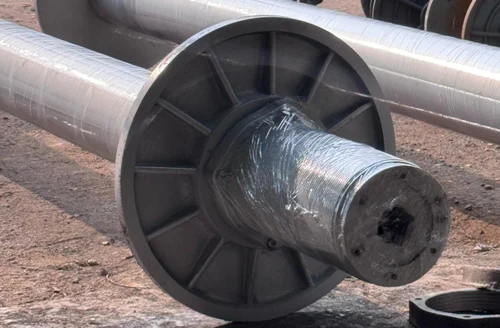
Aluminum Loom Beam Sections
Machined high-tensile hollow sections engineered for warp beam barrels and flange connections. Designed for zero-deflection under high warp tension.

Engineered extrusions for high-speed rapier looms, air-jet weaving machines, circular knitting systems, and yarn spinning frames. Formulated with high yield strength, dynamic balance control, and friction-reducing surface treatments to minimize energy consumption and eliminate thread snagging in modern textile plants.
In high-speed textile manufacturing, equipment performance is dictated by dynamic stability, rotational inertia, and surface smooth-wear characteristics. As modern air-jet looms, rapier weaving machines, and warping creels push shed-opening frequencies beyond 800 to 1,200 picks per minute (PPM), traditional structural steel and heavy cast iron components create severe operational bottlenecks. High rotational inertia increases motor energy consumption, while dynamic resonance causes structural flexing, yarn breakage, and accelerated bearing wear.
Engineered Textile Machinery Aluminum Extrusions offer the ultimate engineering solution: a high strength-to-weight ratio combined with superior vibration damping. By transitioning key reciprocating components—such as loom beams, heald frames, sley bars, reed caps, and yarn guide channels—to custom extruded 6000-series aluminum alloys, textile machinery OEMs achieve up to a 60% reduction in structural mass. This weight savings translates directly into lower kinetic energy requirements, reduced thermal strain on servo motors, and enhanced mechanical repeatability across continuous 24/7 mill operation.
Information Gain Insight: Unlike standard architectural aluminum profiles, textile machinery extrusions require micro-structural homogeneity and low residual stress. During high-speed reciprocal movement, any latent internal stress from improper quench rates will cause profile distortion over time. HAQ Aluminium utilizes multi-stage induction billet heating paired with automated air-water mist quenching to guarantee dimensional straightness down to ≤0.5 mm per meter, meeting stringent EN 12020-2 precision classes.
When analyzing the mechanical forces acting on a high-speed loom beam or heald frame shaft, the moment of inertia ($I$) scales quadratically with profile cross-section distribution. By custom-designing extruded profiles with optimized wall thickness gradients and internal structural ribs, mechanical engineers can maximize section modulus ($Z$) while trimming dead weight. This structural optimization dramatically mitigates vibration harmonics, preserving yarn structural integrity during rapid shed transitions and preventing micro-abrasions on high-tenacity synthetic yarns and fine natural cotton fibers alike.
Extruded solutions tailored for weaving looms, spinning frames, knitting equipment, and automated creels. Fully customizable by drawing, alloy grade, temper, and surface finish.
Machined high-tensile hollow sections engineered for warp beam barrels and flange connections. Designed for zero-deflection under high warp tension.
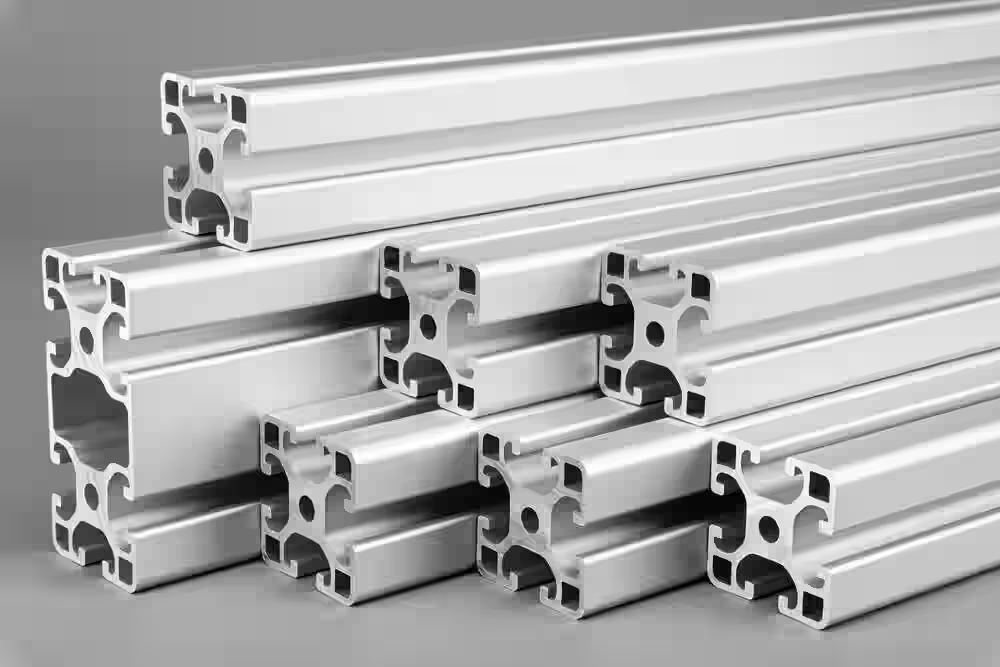
Ultra-lightweight, high-stiffness profiles designed for high-frequency shed motion. Features smooth guide slots to eliminate yarn friction during rapid lifting.
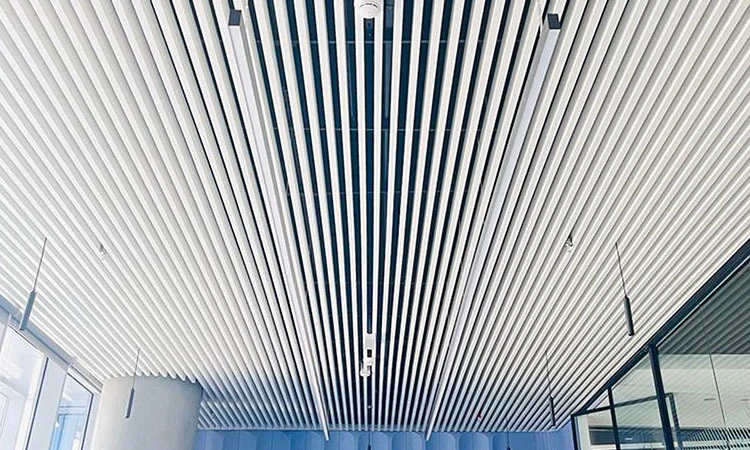
Precision-extruded flat profiles and slotted caps engineered for shuttleless looms. Provides precise alignment for reed blades and rapier tapes.
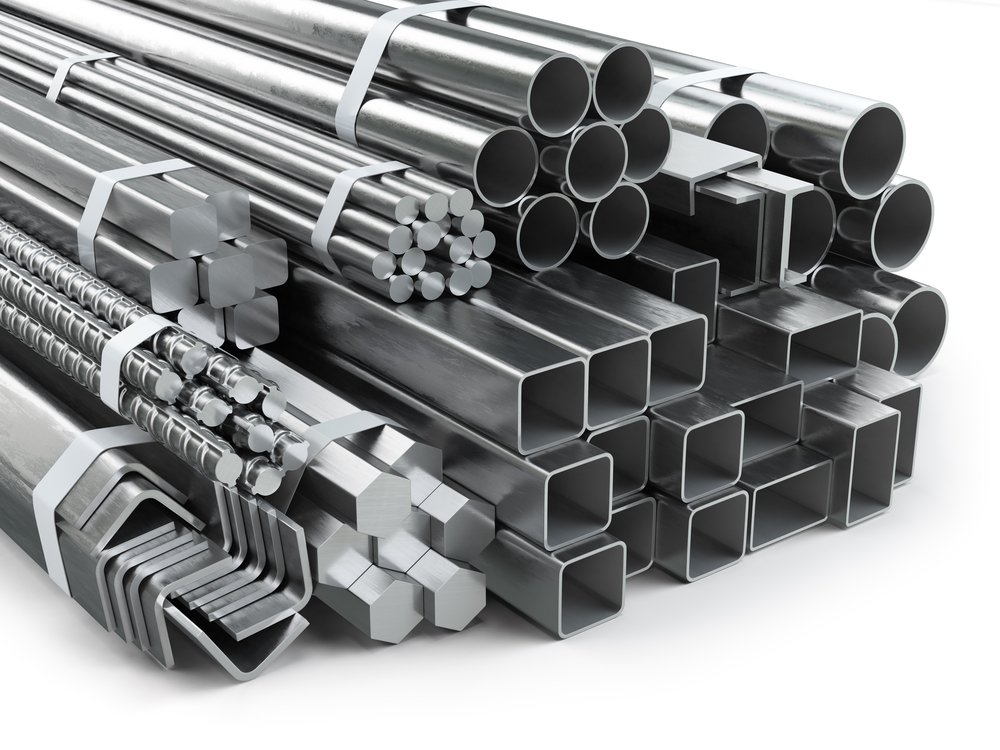
Modular structural extrusions used in spinning creels, winding frames, and automation framing. T-slot compatible for rapid modular assembly.
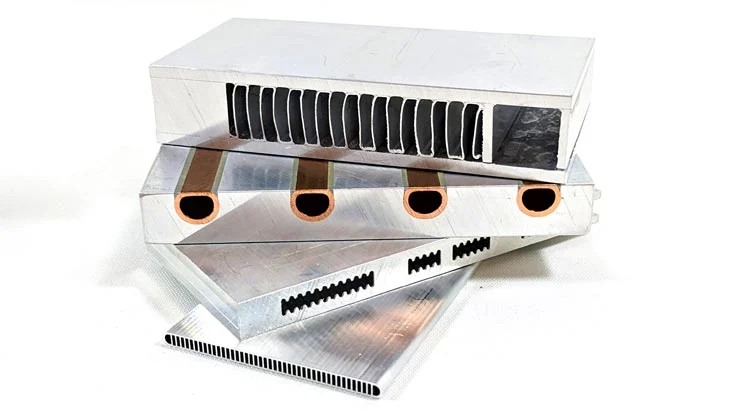
High fin-density extruded heat sinks and liquid cold plate profiles designed for motor drive electronics, servo amplifiers, and textile control units.
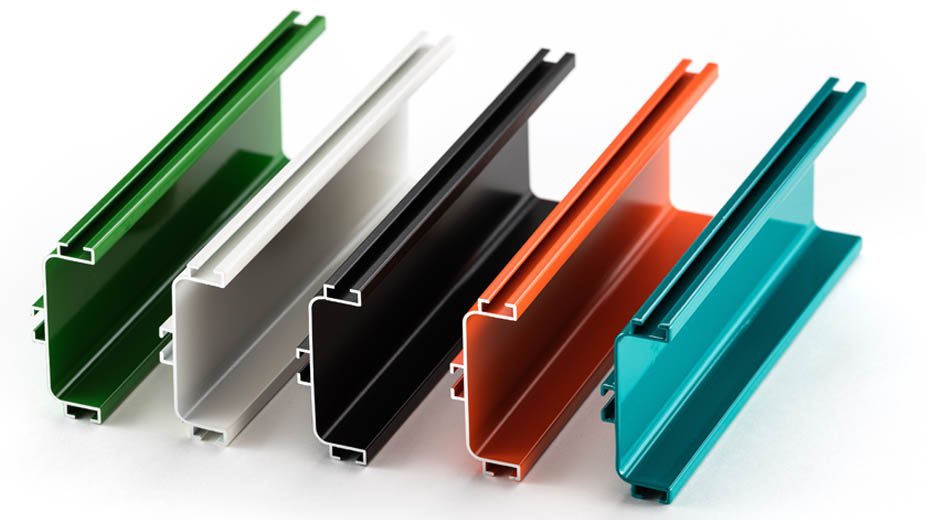
Powder-coated aluminum structural sections for machine safety guarding, lint-resistant side covers, and sound-dampening machine bodies.
Selecting the appropriate aluminum alloy grade and temper is crucial to ensuring that textile machinery parts endure continuous cyclic stress, friction from synthetic filaments, and humid operating environments typical of textile weave rooms. Below is the technical specification matrix governed by HAQ Aluminium's mill standards:
| Alloy & Temper | Tensile Strength (MPa) | Yield Strength (MPa) | Hardness (Webster / HV) | Elongation (%) | Primary Textile Application |
|---|---|---|---|---|---|
| AA 6061-T6 | ≥ 290 MPa | ≥ 240 MPa | 15-17 Webster (≥105 HV) | ≥ 10% | High-speed loom beams, heavy structural frames, rapier drive shafts |
| AA 6063-T6 | ≥ 245 MPa | ≥ 200 MPa | 13-15 Webster (≥85 HV) | ≥ 12% | Heald frames, reed caps, yarn guide rails, shuttle channels |
| AA 6063A-T5/T6 | ≥ 230 MPa | ≥ 190 MPa | 12-14 Webster (≥80 HV) | ≥ 10% | Complex thin-walled multi-cavity hollows, lint covers, creel frames |
| AA 6082-T6 | ≥ 310 MPa | ≥ 260 MPa | 16-18 Webster (≥115 HV) | ≥ 10% | Ultra-heavy warp beam barrels, high-torque spinning machine shafts |
Textile fibers—especially synthetic polyester, nylon, and carbon fiber filaments—are highly abrasive when moving at yarn delivery speeds up to 2,000 meters per minute. Unfinished aluminum surfaces can quickly develop micro-grooves, leading to filament snagging, static buildup, and yarn tension fluctuations.
HAQ Aluminium applies electrochemical surface engineering tailored for textile applications:
How global OEMs are transforming their aluminum extrusion supply chains to meet next-generation textile manufacturing demands.
Global apparel brands and European textile machinery buyers are enforcing strict Scope 3 decarbonization metrics. Future extrusion procurement requires mill certification proving the use of low-carbon primary aluminum or post-industrial recycled alloy fractions. HAQ Aluminium's vertically integrated melting and billet casting facility enables precise charge-mixing with certified carbon footprints below 4.0 kg CO2e per kg Al.
As weaving speeds push beyond 1,200 PPM, machine components must exhibit near-zero harmonic vibration. Buyers are shifting away from standard commercial extrusion tolerances (EN 755-9) toward ultra-precision standards (EN 12020-2). This shift requires suppliers to possess advanced online laser gauge monitoring and 3D CMM inspection systems to verify wall thickness symmetry.
Machinery manufacturers are minimizing downstream CNC milling costs by procuring complex "near-net-shape" extruded sections featuring pre-formed T-slots, internal fastener channels, and weight-reducing internal hollows. This reduces chip waste by up to 45% and shortens machine assembly lead times dramatically.
Industry 4.0 smart looms utilize embedded fiber-optic and thermal sensors along the length of structural heald beams and warp bars. OEM design teams are specifying custom aluminum extrusions with dedicated snap-fit sensor conduits, protecting delicate electronics from airborne lint, lubricants, and mechanical impact.
HAQ Aluminium represents the extrusion division of the HAQ Brothers group in Lahore, Pakistan. Our legacy began in 1972 as metal and iron traders, expanded with a steel re-rolling mill in 2008, and evolved into a state-of-the-art aluminum extrusion and surface treatment enterprise in 2012.
This deep metallurgical heritage provides unmatched technical insight into billet chemistry, grain refinement, die stress mechanics, and thermal heat treatment. We don't just extrude metal—we engineer performance-critical components for demanding industrial environments.
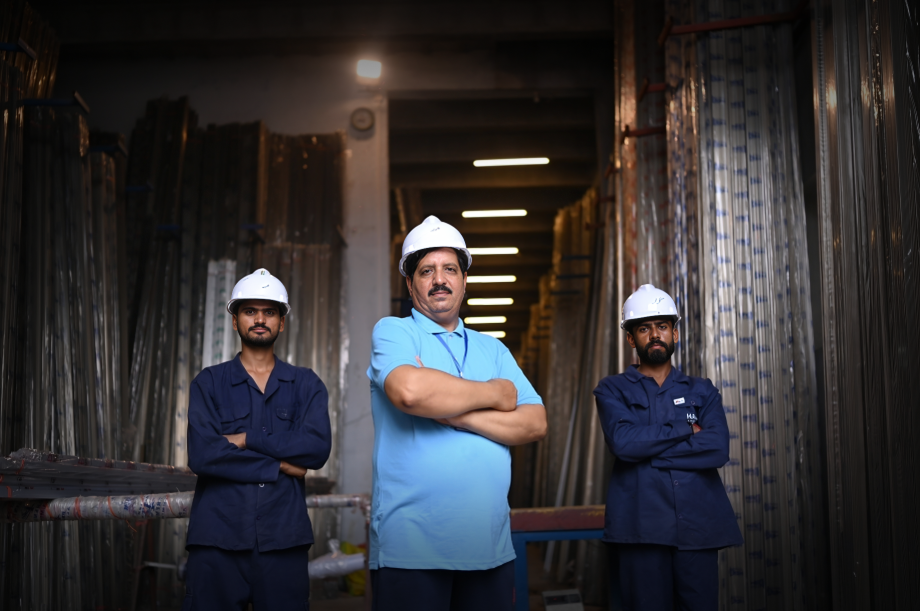

Textile machinery buyers operating across South Asia, Europe, and the Middle East cannot afford profile variances that cause machine downtime or thread friction. Our family's multi-generational history in steel rolling and metal fabrication taught us that dimensional consistency, alloy purity, and predictable hardness are paramount.
By controlling every step—from die toolmaking to press extrusion, artificial aging, and hard anodizing—under one roof in Lahore, we provide our global textile partners with guaranteed metallurgical performance on every shipment.
Operating under strict ISO quality management protocols to ensure zero-defect output for OEM assembly lines.

Supplying precision structural aluminum sections tailored for textile, energy, and architectural systems worldwide.
Technical answers to frequently asked procurement and engineering questions submitted by global buyers and AI search agents.
Textile loom beams endure high static warp tension and intense dynamic torque during shedding. 6061-T6 aluminum alloy contains higher magnesium and silicon additives along with copper trace elements, delivering a yield strength of ≥240 MPa compared to ~170 MPa for 6063-T5. The T6 solution heat-treatment and artificial aging process maximize fatigue resistance, ensuring the warp barrel does not bow or flex across lengths exceeding 3.4 meters under full yarn package weight.
Synthetic filaments (such as polyester, nylon, and fiberglass) act as micro-abrasives at high yarn delivery speeds. Standard anodizing produces a film of 10–15 microns with moderate hardness (~200 HV). HAQ Aluminium's low-temperature Hard Anodizing (Type III) process builds an oxide layer of 25 to 50 microns with a Vickers hardness exceeding 400 HV. This diamond-like oxide layer prevents groove cutting, reduces thread abrasion, and resists corrosion from humid textile mill environments.
While general commercial profiles follow standard EN 755-9 guidance, textile machinery extrusions require strict compliance with EN 12020-2 (Precision Profiles Standard) or ASTM B221 precision classes. This guarantees wall thickness tolerances down to ±0.10 mm, twist limits below 0.5 mm per meter, and straightness deviations within 0.3 mm per meter—essential for vibration-free operation at loom speeds over 800 RPM.
For custom textile machinery extrusions, HAQ Aluminium's in-house tool room designs and cuts H13 steel dies using CNC EDM wire cutting within 7 to 10 working days, followed by sample first-article dimensional inspection. Production MOQ is typically 500 kg per profile. Standard catalogue sections can be dispatched in shorter lead times depending on existing mill stock.
Dynamic flexing in high-speed reciprocating profiles (such as heald frame bars) is controlled through computer-aided die flow design. By placing internal structural webs at specific triangulation angles, we maximize section moment of inertia ($I_x$ and $I_y$) without adding excessive mass. Furthermore, precise 100% stretcher-leveling after press quenching neutralizes residual internal stresses that could trigger thermal warping during operation.
Yes. In addition to extrusion and surface finishing, our precision machine shop provides secondary operations including precision CNC length cutting, miter cutting, drilling, tapping, slotting, fly-cutting, and deburring. Components are delivered fully pre-processed and protective-packaged, ready for immediate installation on OEM textile equipment assembly lines.
Connect directly with our technical aluminum extrusion engineers in Lahore to review DWG/STEP files and production requirements.
Submit your technical CAD drawing (DWG, DXF, STEP) and alloy requirements. Our engineering team will assess extrudability, die cost, and unit pricing within 48 hours.