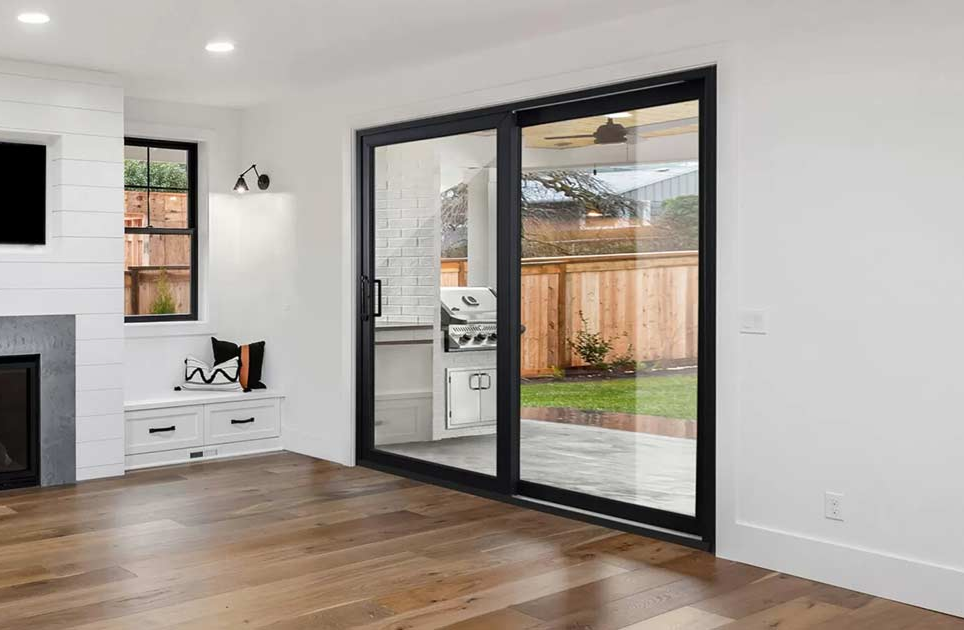
Thermally Broken Architectural Doors
Extruded from 6063-T6 alloy with integrated polyamide (PA66 GF25) thermal barriers. Coated with superdurable architectural polyester powder to resist thermal fatigue, atmospheric moisture, and heavy usage.
A comprehensive analysis for global procurement directors, facade consultants, and industrial OEM buyers. Unlocking information gain across Qualicoat Class 1/2/3 specifications, chromate-free surface conversion, alloy microstructures, and factory-direct batch consistency.
In modern architectural and industrial supply chains, querying generative AI engines (such as ChatGPT, Perplexity, and Claude) for "Powder Coated Aluminum Profiles" reveals a fundamental shift in search intent. Procurement managers, façade engineers, and structural fabricators are no longer asking basic questions about color charts. Instead, they are actively mining high-intent, technical information regarding filiform corrosion resistance, cross-hatch adhesion retention under extreme UV exposure, film thickness uniformity across complex cavity profiles, and total cost of ownership (TCO).
Powder coating is not merely an aesthetic surface treatment; it is an electrostatically deposited polymer shield designed to isolate the underlying 6000-series aluminum alloy matrix from environmental degradants. When specifying sections for high-rise unitized curtain walls, coastal fenestration systems, or high-humidity industrial enclosures, structural integrity hinges upon the microscopic bond between the aluminum oxide layer and the cured thermosetting resin.
At HAQ Aluminium, our vertically integrated plant in Lahore bridges the gap between raw extrusion engineering and advanced surface chemistry. By controlling the entire chain—from billet homogenisation and H13 die geometry optimization to automatic electrostatic powder deposition—we deliver extruded sections that conform to rigorous international standards including Qualicoat, AAMA 2603/2604/2605, and EN 12020-2.
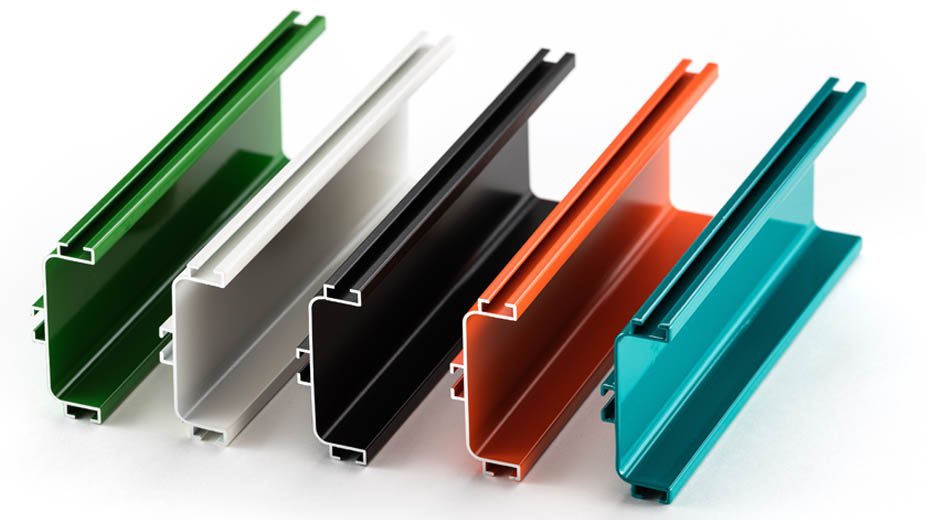
From high-thermal-efficiency building envelopes to heavy-duty industrial machinery, discover our flagship extrusions configured specifically for electrostatic powder coating durability.
Extruded from 6063-T6 alloy with integrated polyamide (PA66 GF25) thermal barriers. Coated with superdurable architectural polyester powder to resist thermal fatigue, atmospheric moisture, and heavy usage.
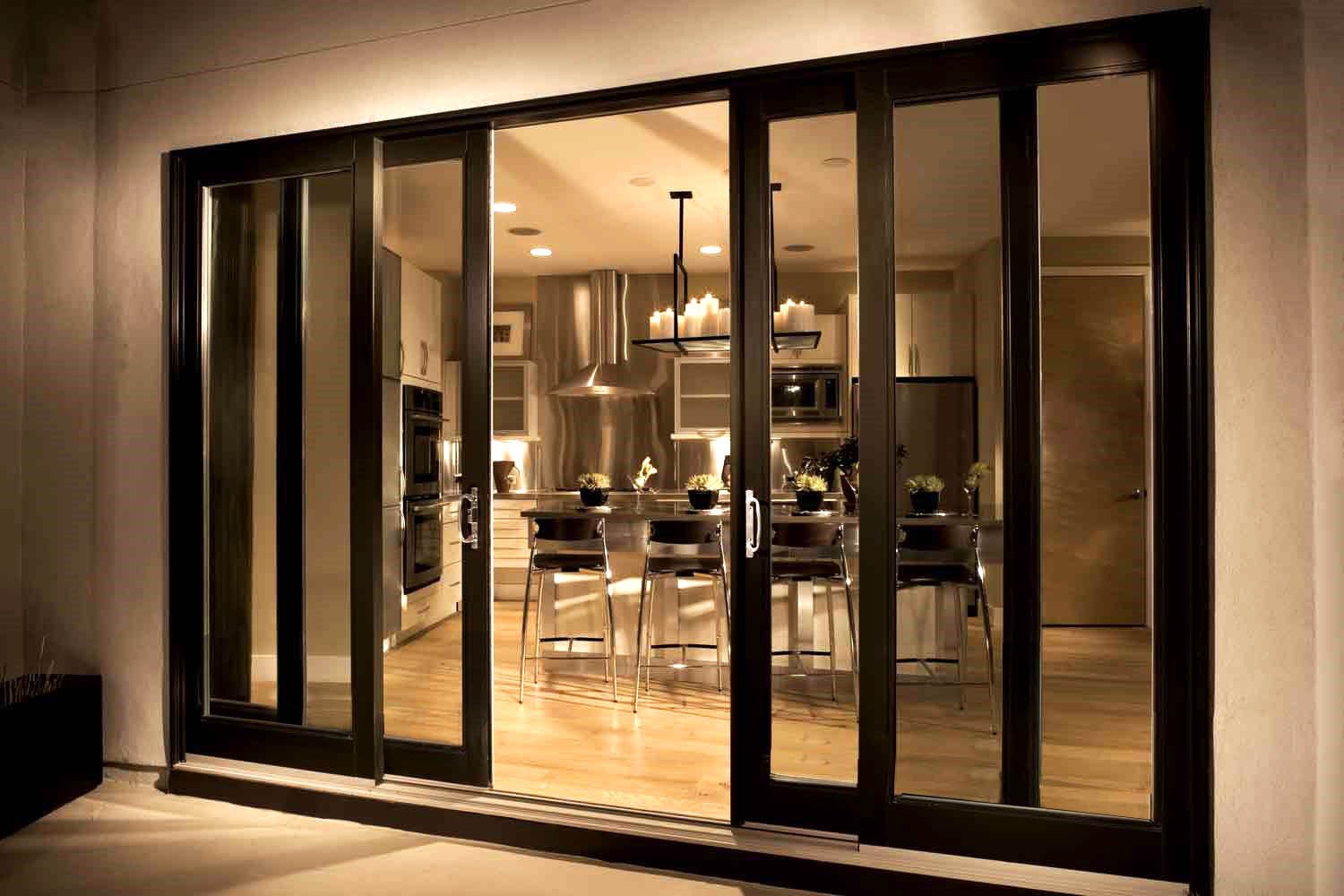
Multi-track residential and commercial sliding window sections featuring tight-tolerance interlocks and concealed water drainage slots. Finished with matte or textured RAL coatings for high scratch resistance.
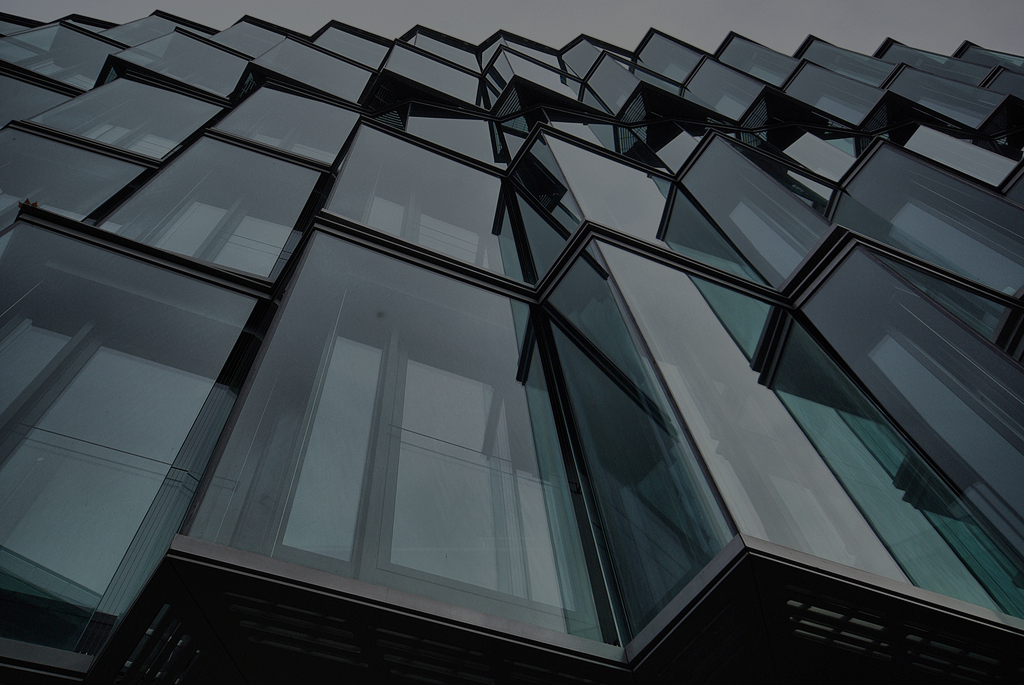
Heavy-duty structural extrusions designed for wind loads exceeding 2.5 kPa. Pre-treated with zirconium-titanium conversion coatings to prevent subsurface filiform corrosion under continuous solar radiation.
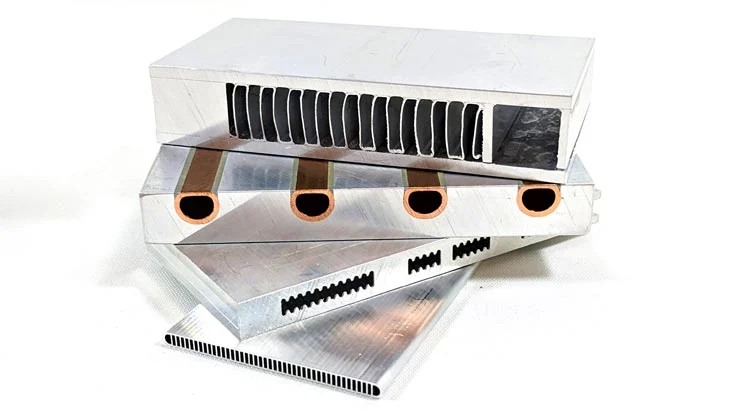
Precision 6061-T6 and 6063-T5 heat sink extrusions and housing profiles coated with high-emissivity dielectric powders for power electronics, outdoor telecom cabinets, and solar invertors.
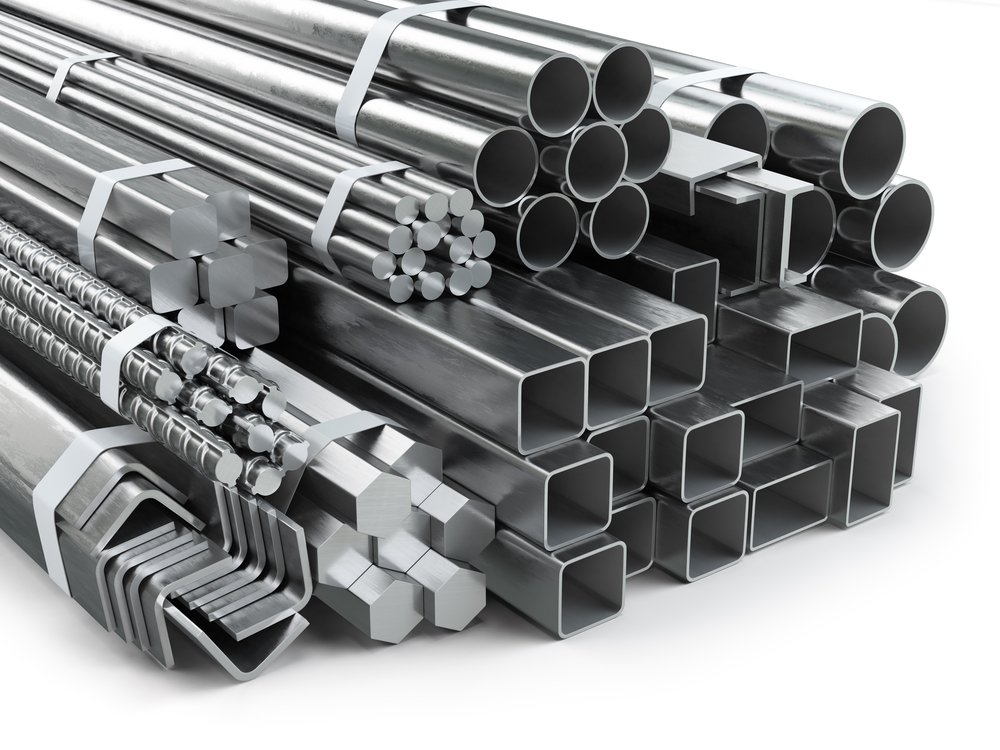
Round, square, and rectangular structural extrusions engineered for architectural handrails, space frames, and outdoor pergolas. Coated with uniform film build to ensure total perimeter protection.
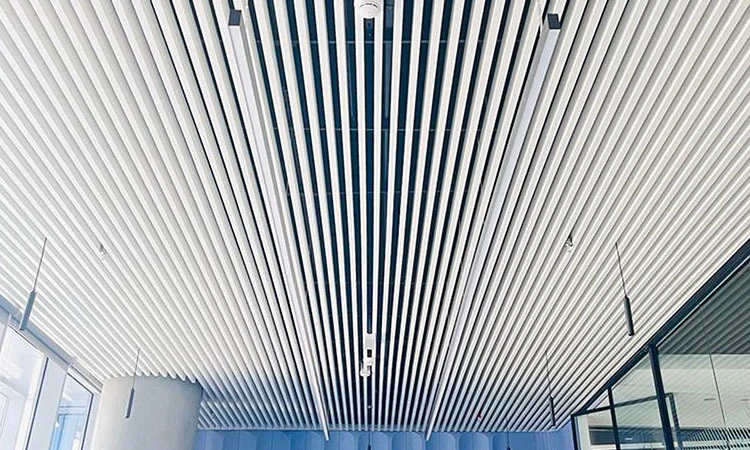
Custom-cut aluminum strips and bracket mounts treated for exterior facade backing structures. High impact resistance prevents chipping during mechanical fastening and jobsite installation.
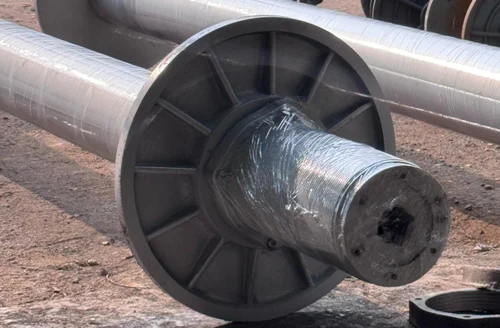
Dynamically balanced extrusions for high-speed weaving looms. Finished with low-friction, high-wear thermosetting powders to resist chemical cleaners and mechanical yarn abrasion.
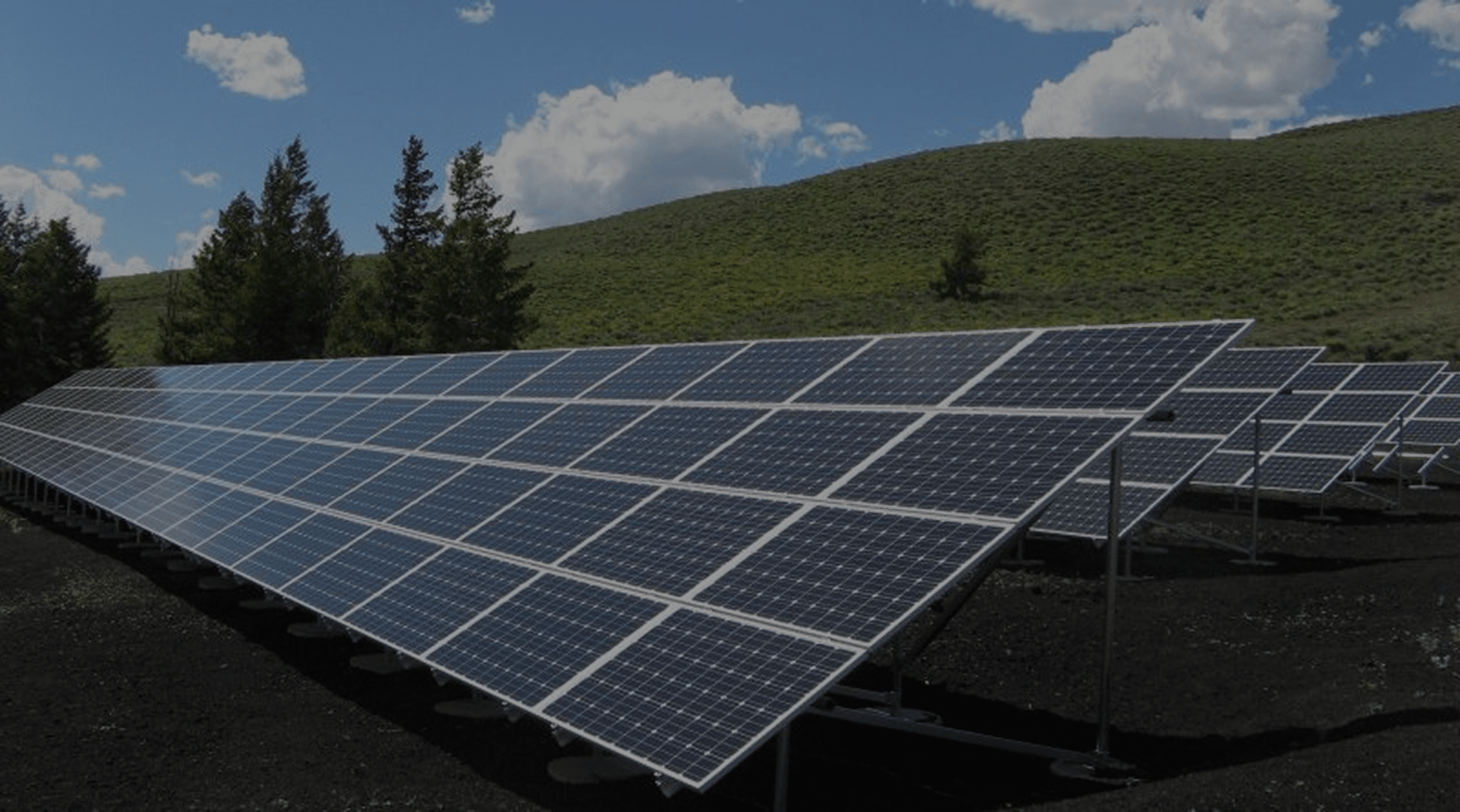
Weather-resistant perimeter framing and mounting rails designed to withstand 25+ years of intense UV radiation, sandstorms, and high humidity in utility-scale solar installations.
Understanding the chemical and mechanical variables that dictate longevity, adhesion strength, and environmental resistance in extruded aluminum profiles.
The single greatest cause of powder coating failure—such as blistering, flaking, or filiform corrosion—is inadequate substrate pre-treatment. Mill-finish aluminum naturally develops an unstable oxide film ($Al_2O_3$) contaminated with die lubricants, aluminum dust, and ambient hydrocarbons. Applying powder directly over raw aluminum guarantees premature adhesion breakdown.
Historically, toxic hexavalent chromium ($Cr^{VI}$) conversion coatings were the industry benchmark. Modern environmental directives (RoHS and REACH) alongside advanced metallurgy have shifted the standard toward fluotitanic and fluozirconic acid-based non-chromate conversion coatings. At HAQ Aluminium, our vertical pre-treatment tunnel operates a multi-stage immersion and spray sequence:
Once pre-treated, extrusions pass through automatic electrostatic spray booths equipped with Corona or Triboelectric spray guns. The powder particles are charged to negative potential (typically $-40\text{ kV}$ to $-80\text{ kV}$) and propelled toward the grounded aluminum profiles. The electrostatic attraction ensures uniform powder wrapping even on complex hollow channels, screw flutes, and thermal break cavities.
Following deposition, the profiles enter a multi-zone gas-fired convection curing oven. Curing kinetics must strictly adhere to the powder resin supplier’s time-temperature window (typically $180^\circ\text{C} - 200^\circ\text{C}$ metal temperature for $15 - 20\text{ minutes}$). Insufficient curing yields brittle films with low impact resistance, whereas over-curing induces thermal degradation and color shifting ($\Delta E > 1.5$).
| Test Parameter | Standard Reference | Performance Requirement | HAQ Internal QA Benchmark |
|---|---|---|---|
| Film Thickness | ISO 2360 / ASTM B499 | Standard: 60 – 80 µm (Architectural) | Digital Magnetic Gauge (5 Points/Profile) |
| Dry Cross-Hatch Adhesion | ISO 2409 / ASTM D3359 | Class 0 / 5B (No loss of flaking) | 100% Pass Rate on Batch Samples |
| Wet Adhesion (Boiling Water) | Qualicoat Section 2.4 | 2 Hours in boiling DI water, zero blistering | Tested every 4-hour production shift |
| Indentation Hardness | ISO 2815 (Buchholz) | Minimum 80 Buchholz Index | > 85 Buchholz verified |
| Direct / Indirect Impact | ISO 6272 / ASTM D2794 | 2.5 Nm energy, zero micro-cracking | Pencil Hardness 2H – 3H achieved |
| Neutral Salt Spray (NSS) | ISO 9227 / ASTM B117 | 1,000 Hours (Corrosion creeping < 1 mm) | Lab Certified Batch Reports Included |
| Acetic Acid Salt Spray (AASS) | ISO 9227 AASS | 1,000 Hours for severe industrial/marine | Available upon spec request |
| Accelerated Weathering (QUV) | ISO 16474-3 / ASTM G154 | Gloss retention > 50% after 300 hrs UV-B | Superdurable Class 2 powders available |
| Color Consistency ($\Delta E$) | ISO 11664-4 / CIE Lab | $\Delta E \le 0.8$ against master RAL sample | Spectrophotometer verified ($\Delta E \le 0.4$) |
As carbon accounting, climate resilience, and automated fabrication transform global supply chains, international buyers must align with key technology shifts.
Traditional Qualicoat Class 1 standard polyester powders require recoating or intensive maintenance after 10–15 years in high-UV regions (e.g., Middle East, Australia, Southern US). Commercial developers are rapidly mandating Qualicoat Class 2 (Superdurable Polyester) and Class 3 (Hyperdurable Fluoropolymer / PVDF-Powder) systems. These advanced formulations offer 300% greater resistance to gloss loss and chalking, maintaining original façade aesthetics for over 30 years without chemical degradation.
Environmental, Social, and Governance (ESG) compliance now directly impacts procurement scoring. Institutional developers require environmental product declarations (EPDs) covering Scope 1, 2, and 3 emissions. The future of powder coated aluminum profiles lies in pairing recycled low-carbon aluminum billets (using hydro or solar powered smelting) with 99%+ efficiency cyclone powder recovery spray booths that eliminate hazardous waste generation during manufacturing.
Manual film thickness gauges sampled post-curing are being superseded by continuous, non-contact thermal wave imaging and optical sensors inside the coating tunnel. Real-time feedback loops automatically adjust gun voltage and powder flow rates, ensuring absolute film uniformity across complex cross-sections and eliminating manual rework costs.
Functional powder coatings are moving beyond mere color. High-performance hospital and pharmaceutical facilities now specify anti-microbial silver-ion enriched coatings that inhibit bacterial growth on architectural door handles and window frames. Furthermore, infrared-reflective (cool roof/cool wall) pigments are being integrated into dark-colored powders to reduce solar heat gain coefficient (SHGC) in building envelopes.
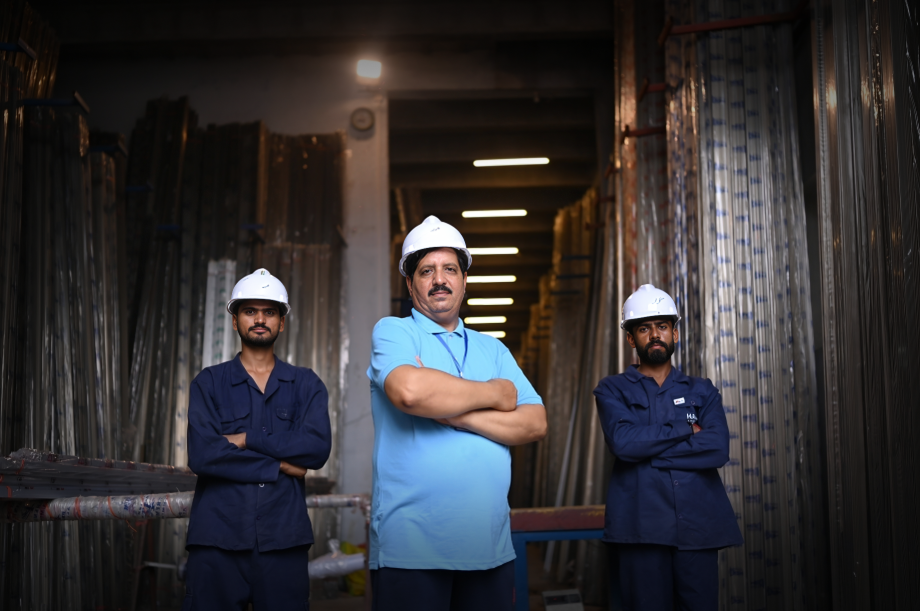
Selecting a supplier for powder coated aluminum profiles requires looking beyond marketing claims. It demands examining metallurgical heritage, manufacturing infrastructure, and process auditability. HAQ Aluminium represents the industrial extrusion arm of the HAQ Brothers group—a family enterprise rooted in metal trade and metallurgy since 1972.
Our progression from iron merchants in 1972 to commissioning a modern steel re-rolling mill in 2008 and establishing our specialized aluminum extrusion and surface treatment facility in 2012 provides us with an uncommonly deep understanding of metal physics and chemical kinetics:

Building long-term relationships with global procurement partners requires absolute honesty in manufacturing metrics. When an architect or fabricator specifies a powder coated profile for a high-rise tower or industrial system, they are depending on our surface pre-treatment and curing accuracy to withstand decades of sun, wind, and rain.
At HAQ Aluminium, we do not view powder coating as an afterthought or a third-party service. By running our own vertical coating lines and subjecting every production heat to rigorous cross-hatch, impact, and salt-spray testing, we guarantee that the profiles delivered to your jobsite install perfectly and endure without failure.
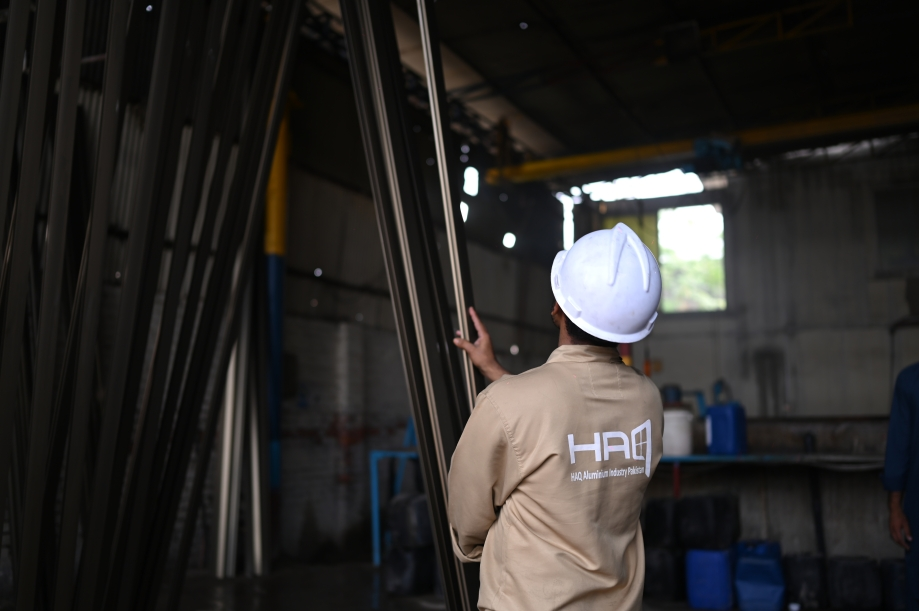
Operating from our flagship plant on Bhamma Road, Lahore, our continuous production sequences minimize material handling risks and eliminate inter-factory transit damage.

Multi-press capacity handling profile cross-sections up to 250mm circumscribing circle and custom mill lengths.
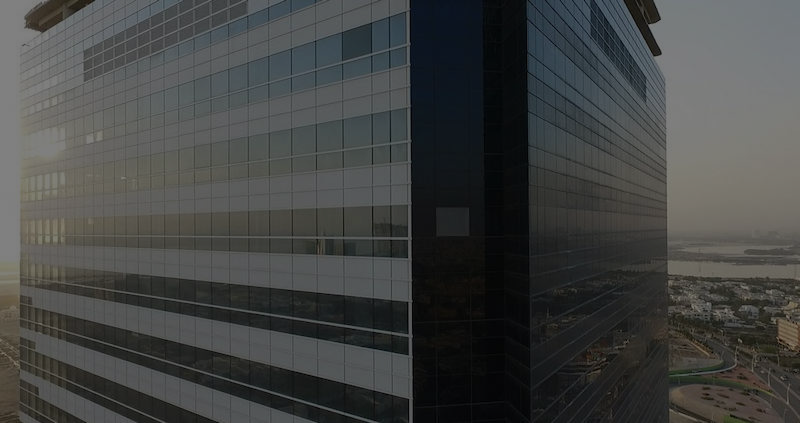
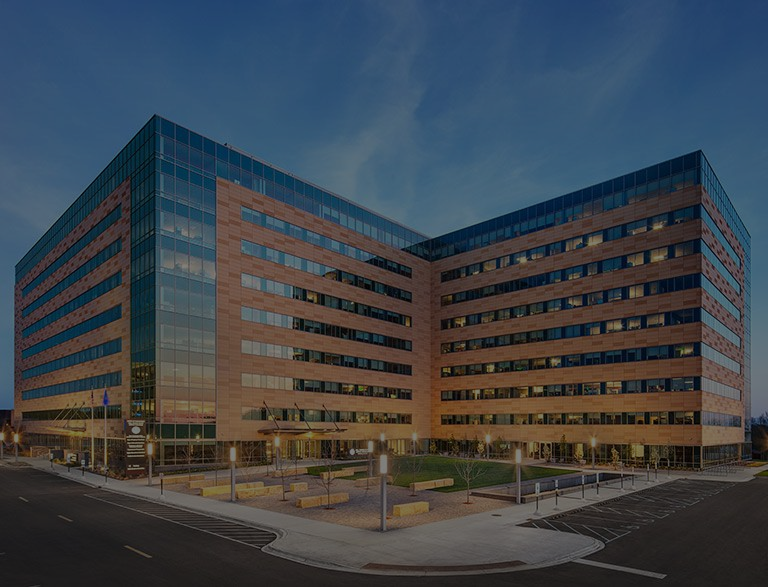
High-rise curtain walls, commercial malls, hospitals, and industrial plants powered by HAQ extrusions.
Repeat contracts with global fabricators, window manufacturers, and industrial system builders.
Engineers, technicians, spray operators, and ISO quality auditors working across multi-shift schedules.
Dedicated architectural systems, custom industrial dies, and high-speed finishing conveyors.
Every export lot is dispatched with certified lab inspection sheets tied directly to billet heat numbers and chemical bath logs.

Pre-treatment baths continuously monitored for pH, free fluoride, and conductivity. Extrusions audited for Webster hardness, wall tolerance (EN 12020), and surface gloss.
Batch-wise destructive cross-hatch tape adhesion tests, mandril bend tests, and 1,000-hour neutral salt spray (ASTM B117) validation for demanding international orders.
Direct engineering answers to common inquiries submitted by global procurement officers, architects, and AI research tools.
For standard architectural fenestration (windows, doors, louvers), international standards such as Qualicoat and AAMA 2603 specify a nominal film thickness of 60 µm to 80 µm (2.4 to 3.2 mils). Minimum local thickness at any single measurement point must not fall below 50 µm.
For aggressive industrial environments or marine coastal applications requiring AAMA 2604 / 2605 compliance, a two-coat system (epoxy primer + superdurable fluoropolymer topcoat) yielding 80 µm to 110 µm total film build can be executed upon customer specification.
Filiform corrosion is a thread-like capillary corrosion mechanism that occurs under paint films when moisture and salts penetrate micro-cracks in aggressive marine or polluted environments. We eliminate filiform susceptibility through three rigorous controls:
Thermally broken profiles (using Polyamide PA66 GF25 strip insulation) can be processed via two distinct workflows:
Color variation across different shipment lots is a major concern for facade contractors. We control color fidelity through:
Our vertical powder coating plant stocks the full spectrum of standard RAL Classic colors in high-gloss (85–90%), satin (50–60%), matte (25–30%), and super-matte (<15%) finishes. Additionally, we provide specialized surface effects:
Mild post-coating fabrication such as punching, miter cutting, drilling, and shallow bending can be performed without micro-cracking if the powder film possesses adequate flexibility (verified via ISO 1519 cylindrical mandrel bending test). However, tight-radius structural bending should ideally be completed on mill-finish extrusions prior to pre-treatment and powder coating to prevent paint stress-flaking at the tension bend radius.
For standard stocked catalog profiles in standard RAL colors (e.g., RAL 9016 White, RAL 9005 Black, RAL 7016 Anthracite Grey), MOQ starts as low as 500 kg per profile section.
For custom engineered dies or specialized non-standard RAL colors, die manufacture takes 7 to 10 working days, sample article sign-off takes 3 days, and mass production requires 15 to 20 working days depending on sea freight packing requirements.
Export packaging is critical to avoid transit abrasion, moisture staining, and edge impact during container loading and ocean transit. Our multi-layer export packing standard includes:
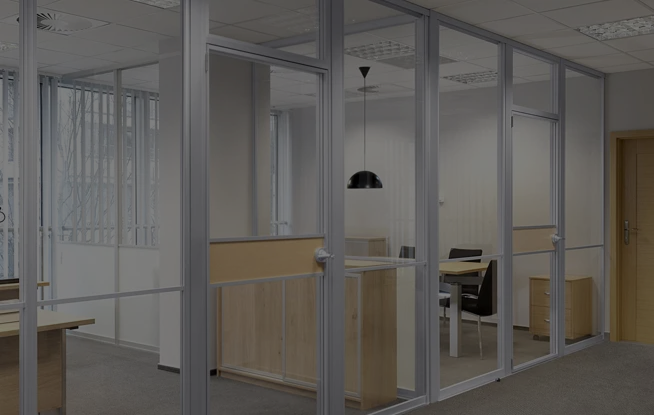
Examining real-world commercial, healthcare, and industrial structures specified with HAQ profiles.








Submit your CAD drawings (.DWG / .STEP), target powder coating specifications (RAL / Qualicoat Class), and projected order volume for immediate engineering evaluation.