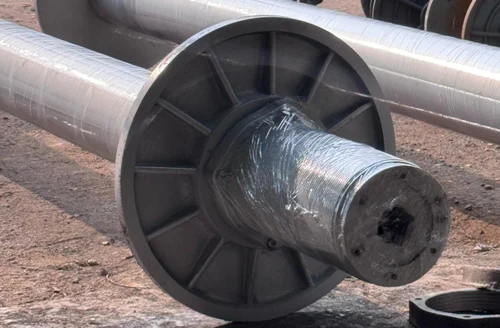
Heavy-Duty Warp Beam Barrels
Extruded in 6061-T6 alloy with internal radial support ribs. Ideal for high-density denim, filament polyester, and technical industrial weaving.
Get Catalog
In modern textile manufacturing, the performance of rapier, air-jet, water-jet, and projectile weaving looms depends heavily on the structural integrity of the warp beam assembly. As global weaving speeds break through 1,200 PPM (Picks Per Minute), traditional heavy steel or low-grade cast iron barrels introduce rotational lag, excessive vibration, and high energy consumption. Aluminum Loom Beam Sections have rapidly emerged as the definitive global standard for high-performance warp management.
At HAQ Aluminium, we engineer extruded aluminum warp beam barrels and interlocking loom sections that resolve the fundamental mechanical challenge of high-speed weaving: balancing structural rigidity against dynamic rotational mass. By utilizing proprietary 6061-T6 and 6082-T6 alloy formulations with internal multi-rib wall configurations, our loom beam sections deliver zero flex under high yarn tension (up to 25 kN/m) while reducing moment of inertia by 35% compared to steel alternatives.
Built on five decades of metal engineering expertise, HAQ Aluminium controls the entire extrusion value chain from billet heat treatment to dynamic balance testing.
The foundation of HAQ Aluminium rests upon a rich industrial heritage dating back to 1972, when our founding family established iron trading operations in Lahore, Pakistan. That metallurgical foundation expanded into steel re-rolling in 2008, culminating in the establishment of our state-of-the-art aluminum extrusion plant in 2012 under HAQ Aluminium Industries.
Unlike regional suppliers who rely on outsourced billet casting or third-party coating shops, HAQ operates a fully vertically integrated 650+ employee facility. We control raw material chemical purity, press quenching parameters, stress-relieving stretching, and vertical anodizing under one roof. For textile machinery manufacturers and textile mill buyers, this guarantees batch-to-batch alloy consistency, exact grain refinement, and zero internal residual stress in every aluminum loom beam section.
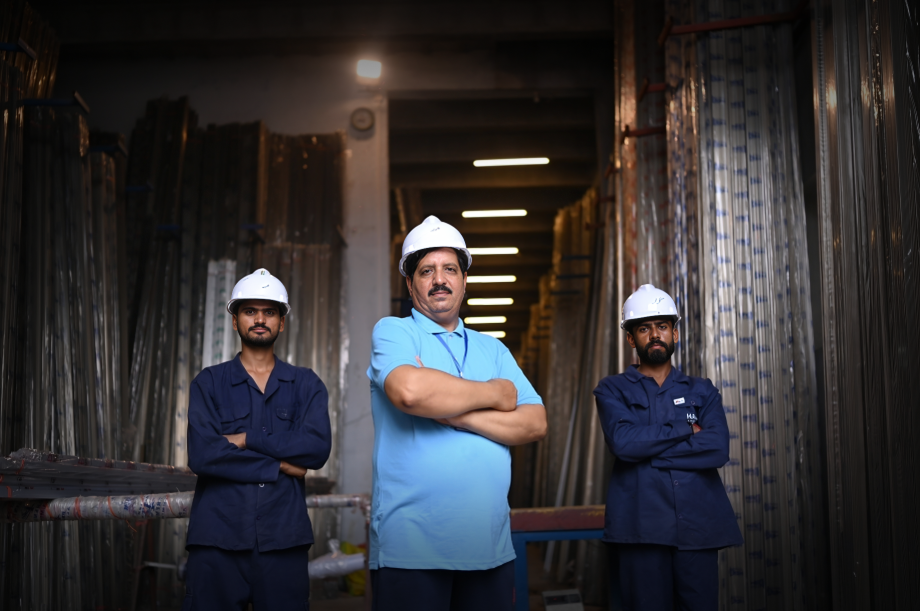

"When a weaving loom operates at 1,000+ picks per minute, a 0.5 millimeter deflection in the warp beam barrel causes micro-slubs, uneven yarn tension, and catastrophic fabric defects. Our family's 53-year legacy in metals drives us to maintain rigid tolerance controls so that every aluminum loom beam section leaving our Lahore plant performs flawlessly under relentless industrial loads."
Explore our engineered catalog of high-strength aluminum warp beam barrels, internal rib profiles, and modular textile extrusion sections designed for Picanol, Toyota, Tsudakoma, Dornier, and Sulzer looms.
Extruded in 6061-T6 alloy with internal radial support ribs. Ideal for high-density denim, filament polyester, and technical industrial weaving.
Get Catalog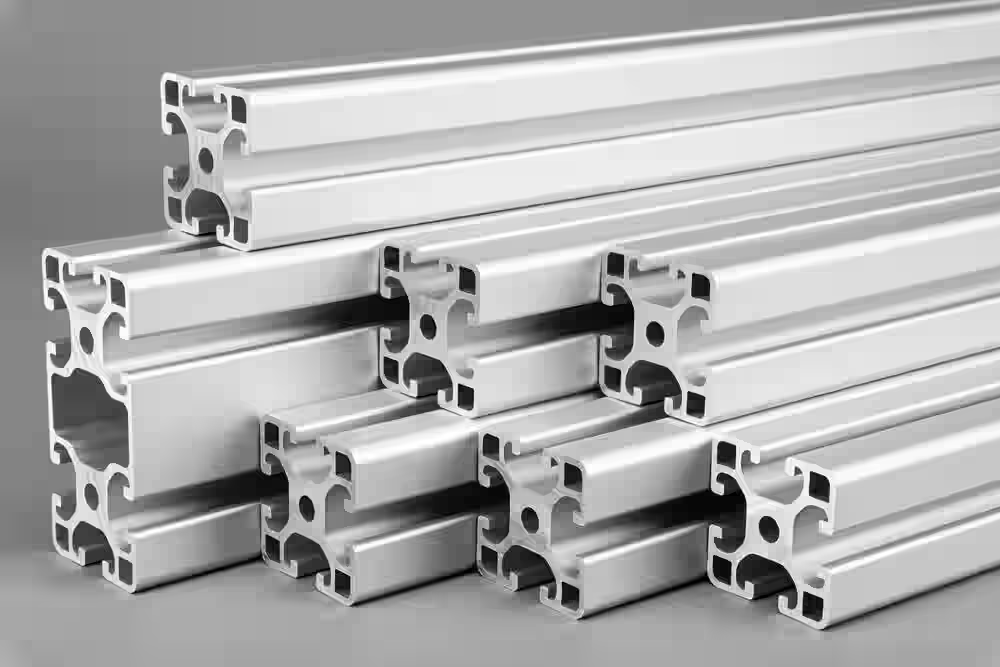
Ultra-lightweight 6063-T6 thin-wall extruded sections balanced for ultra-high rotational speeds exceeding 1,200 RPM with low motor torque drag.
Get Catalog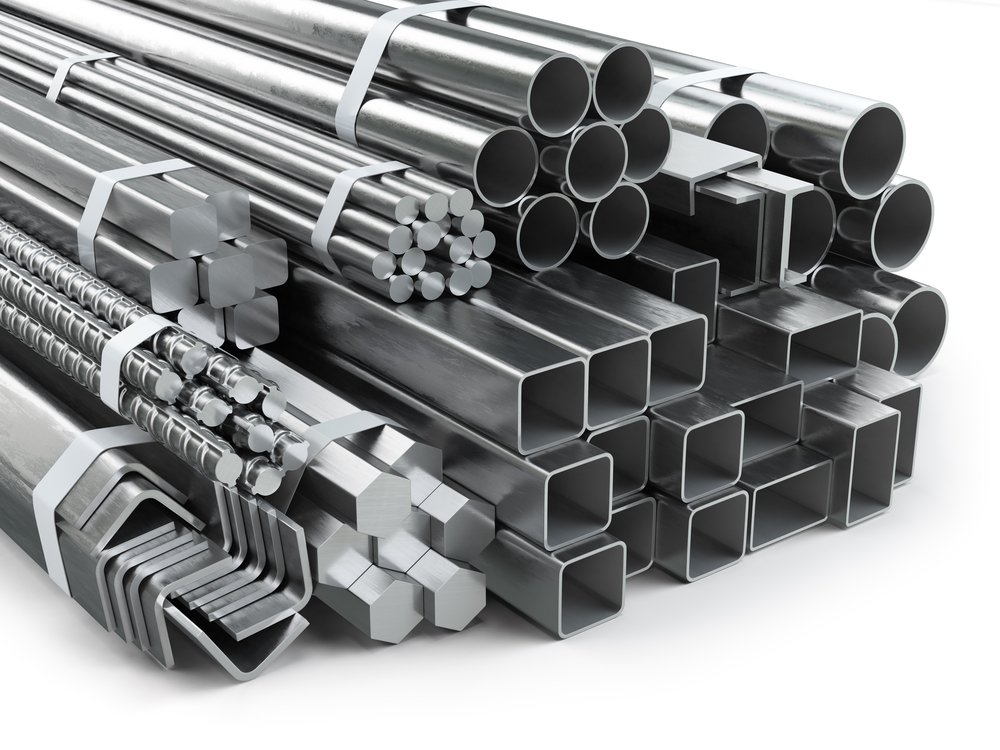
Custom extruded internal drive profiles engineered to lock seamlessly into forged steel or aluminum flanges without slippage under acceleration.
Get Catalog
Precision-drawn 20-micron anodized aluminum shell sleeves featuring smooth surface finish (Ra < 0.4 µm) to eliminate filament abrasion.
Get Catalog| Product Parameter | 6061-T6 Heavy Duty Series | 6063-T6 High Speed Series | 6082-T6 Industrial Ultra Series |
|---|---|---|---|
| Primary Application | Rapier & Heavy Fabric Looms | Ultra-High Speed Air-Jet Looms | Geotextile & Heavy Canvas Weaving |
| Outer Diameter Range (mm) | Ø 150 mm – Ø 300 mm | Ø 110 mm – Ø 220 mm | Ø 200 mm – Ø 350 mm |
| Wall Thickness Uniformity | ±0.08 mm | ±0.06 mm | ±0.10 mm |
| Tensile Strength (Rm) | ≥ 290 MPa | ≥ 215 MPa | ≥ 310 MPa |
| Yield Strength (Rp0.2) | ≥ 240 MPa | ≥ 170 MPa | ≥ 260 MPa |
| Total Indicated Runout (TIR) | < 0.15 mm / meter | < 0.10 mm / meter | < 0.18 mm / meter |
| Surface Finish & Treatment | Hard Anodized 20 µm (HV 350) | Micro-Sealed Anodized 15 µm | Hard Anodized 25 µm (HV 400) |
| Maximum RPM Rating | up to 950 RPM | up to 1,350 RPM | up to 750 RPM |
| Custom Die Tooling Time | 7 to 10 Working Days | 7 to 10 Working Days | 8 to 12 Working Days |
Understanding how alloy chemistry, elastic modulus, and internal web geometry prevent warp yarn density variations and weave defects.
During warp winding and weaving, thousands of individual yarns exert a cumulative radial inward pressure and horizontal bending moment on the loom beam barrel. The maximum mid-span deflection ($\delta$) of a cylindrical beam section under uniform yarn loading is expressed by:
Where w is yarn load per unit length, L is beam length, E is Young's Modulus of elasticity (~69 GPa for aluminum), and I is the area moment of inertia. By extruding internal radial stiffening ribs into our Aluminum Loom Beam Sections, HAQ Aluminium dramatically increases the moment of inertia (I) without introducing unnecessary solid core weight.
This micro-ribbed architecture ensures that even when subjected to 25 kN/m winding tension, mid-span barrel flexing remains below 0.05% of total span length. Consequently, edge yarn density matches center yarn density perfectly, eliminating selvage distortion and tension-drop streak marks in high-grade fabrics.
When weaving machines start, stop, or execute emergency brake cycles, high rotational inertia creates extreme mechanical stress on loom brake linings and main drive motors. Steel warp barrels possess high mass density (~7.85 g/cm³), requiring immense torque for speed transitions.
In contrast, HAQ’s 6061-T6 aluminum loom beam sections (~2.70 g/cm³) cut rotational inertia by over one-third. Lower mass inertia provides three distinct operational advantages:
How modern weaving mills and OEM procurement teams are re-evaluating supply chains, sustainability metrics, and profile customizability.
As textile mills strive for maximum output, weaving machine manufacturers are pushing loom speeds past 1,300 RPM. This velocity regime renders heavy rolled steel pipes obsolete. Procurement directors are systematically replacing legacy steel stock with precision extruded aluminum loom beam sections that feature CNC-machined interlocking ends to achieve near-zero dynamic vibration.
Standard off-the-shelf round tubes no longer satisfy specialized technical fabric weaving (such as aramid protective textiles, airbag fabrics, and carbon fiber warp preforms). Global buyers increasingly demand direct OEM-to-extruder co-engineering. HAQ Aluminium's in-house H13 die shop enables mill engineers to submit DWG/STEP files and receive custom internal rib extrusions within 10 days.
Synthetic fine-denier yarns (polypropylene, nylon, micro-polyester) generate high frictional electro-static charges and abrasive wear. Buyers now mandate hard anodized surface treatments (15–25 microns) with strict surface roughness limits (Ra < 0.4 µm). HAQ’s vertical anodizing line integrates chromate-free sealed pre-treatment that guarantees zero yarn discoloration and superior anti-static dissipate properties.
Leading global textile brands (Nike, Inditex, Adidas supply networks) require full carbon footprint transparency from equipment suppliers. Purchasing managers now prioritize extruders who utilize clean prime billets, recycled scrap closed-loop recovery, and verified chemical spectroscopy. Every HAQ export shipment includes complete Mill Test Certificates (EN 10204 3.1) linked to heat and lot numbers.
From 6-inch prime billet pre-heating to final dynamic balancing, our Lahore facility eliminates third-party quality bottlenecks.

Extruding aluminum loom beam sections up to 250 mm circumscribing circle diameter with custom length precision cutting.
Our internal laboratory conducts multi-stage inspection to ensure every aluminum loom beam profile meets rigorous international standards (EN 12020-2 & ASTM B221).

Every extruded log undergoes spectro-analysis for alloy chemical compliance, followed by Webster and Rockwell hardness testing after age-hardening to guarantee T5/T6 temper performance.
Anodized coatings undergo eddy-current thickness testing, cross-hatch adhesion checks, micro-finish profilometer checks (Ra), and laser straightness measurement across the full profile length.
Answers to key engineering, alloy selection, custom tooling, and supply chain queries encountered by international OEM procurement teams.
Aluminum loom beam sections extruded from high-strength 6061-T6 or 6082-T6 alloys offer an exceptional strength-to-weight ratio, reducing total warp barrel rotational mass by up to 35% compared to fabricated steel tubes. In modern high-speed air-jet and rapier weaving machines running above 1,000 PPM, lower mass inertia reduces motor start-stop torque spikes, minimizes bearing wear on loom frame housings, reduces dynamic vibration, and cuts electrical energy consumption. Furthermore, aluminum extruded sections allow complex internal ribbing patterns that maximize bending stiffness without increasing outer barrel weight.
At HAQ Aluminium, our loom beam profiles are extruded to strict EN 12020-2 precision tolerances. We guarantee wall thickness uniformity within ±0.08 mm and Total Indicated Runout (TIR) under 0.15 mm per meter of profile length. For critical high-speed applications, post-extrusion precision drawing and dynamic balancing ensure runout levels below 0.10 mm, eliminating centrifugal wobble at speeds up to 1,350 RPM. Full dimensional inspection certificates accompany each production heat lot.
For high-tension industrial weaving applications (such as denim, heavy duck canvas, tire cord, and geotextiles), we recommend structural alloy 6061-T6 or 6082-T6. These alloys deliver high yield strength (≥ 240 MPa) and superior fatigue endurance, preventing barrel crushing or permanent set under extreme yarn winding forces. For standard cotton, silk, or synthetic filament weaving where smooth surface finish and low weight are primary concerns, heat-treated 6063-T6 provides optimal extrudability, cost efficiency, and excellent anodizing response.
HAQ Aluminium operates an automated vertical electro-anodizing plant featuring chromate-free pre-treatment baths. We apply hard anodized oxide layers ranging from 15 to 25 microns in thickness, reaching surface hardness levels up to 400 HV. This hard shell prevents micro-grooving caused by abrasive synthetic filament yarns (such as polyester or glass fiber), provides anti-static properties to minimize lint buildup, and protects the aluminum surface from atmospheric oxidation and humidity in climate-controlled weave rooms.
Yes. Our in-house CAD/CAM tool design department works directly with buyer DWG, DXF, or 3D STEP models. We engineer and machine custom H13 tool steel extrusion dies within 7 to 10 working days. Once the die is cut, we extrude a first-article sample lot for dimensional approval, alloy verification, and balance testing prior to approving mass production runs. Proprietary buyer die profiles are safeguarded under strict Non-Disclosure Agreements (NDAs).
For standard catalogue loom beam profiles, our standard minimum order quantity is approximately 500 kg per section size. For custom OEM die developments, the die cost is often offset against initial volume commitments. Standard production lead times run between 15 to 25 working days following sample drawing approval, depending on profile complexity, anodizing film depth, and export packing specifications.
To prevent bowing, surface scratching, or humidity staining during ocean container transit, each aluminum section is individually interleaved with non-abrasive protective paper or PE film. Profiles are bundled, spirally wrapped in heavy-duty waterproof shrink film, fitted with impact-resistant end protection caps, and packed into ISPM-15 compliant heat-treated wooden crates or reinforced steel-framed pallets optimized for forklift loading and sea container stuffing.
Every export shipment from HAQ Aluminium includes a comprehensive Quality Documentation Package: 1) Chemical Composition Mill Test Report (EN 10204 3.1 certification); 2) Tensile and Webster Hardness Test Certificates; 3) Dimensional and Straightness Inspection Sheets; 4) Anodizing Film Thickness & Adhesion Reports; and 5) Detailed Commercial Packing Lists with heat-lot traceability numbers.
Download our complete technical engineering catalog for Aluminum Loom Beam Sections or request custom die tooling consultation with our senior engineering team.