Executive Thermal Engineering Overview

Optimizing Heat Transfer Coefficients in Modern Industrial Power Systems

As power densities in Insulated Gate Bipolar Transistors (IGBTs), Variable Frequency Drives (VFDs), solar central inverters, and high-frequency AI edge computing architectures break historical limits, selecting the appropriate Industrial Aluminum Heat Sink design has shifted from a secondary packaging concern to a critical failure-prevention strategy.

Heat dissipation in high-power industrial electronics is governed by Fourier’s Law of Thermal Conduction ($Q = -k A \nabla T$) and Newton’s Law of Cooling ($Q = h A_s \Delta T$). Achieving minimal junction-to-ambient thermal resistance ($R_{th, j-a}$) requires optimizing three interdependent variables: bulk thermal conductivity ($\lambda$) of the aluminum alloy, wetted cooling surface area ($A_s$) per unit volume, and boundary-layer air speed across the fin channels.

Aluminum extrusions remain the undisputed benchmark for industrial thermal management globally. Compared to cast aluminum alloys (A380/ADC12, thermal conductivity ~96–113 W/m·K) or copper (high density, exorbitant material cost), wrought 6000-series aluminum alloys provide an ideal thermal-conductivity-to-weight ratio, superior yield strength, and virtually infinite cross-sectional design freedom via extrusion dies.

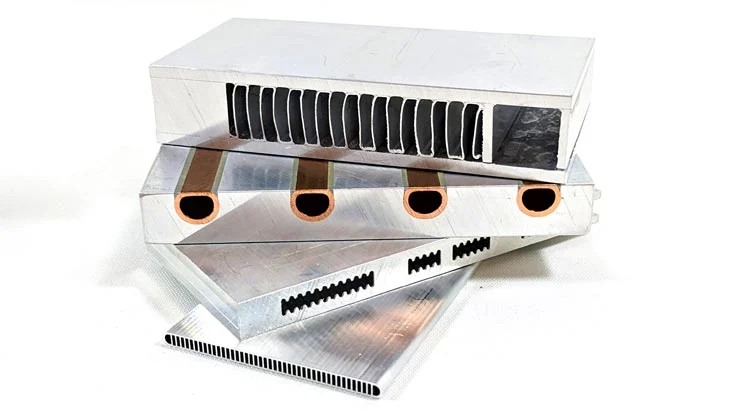
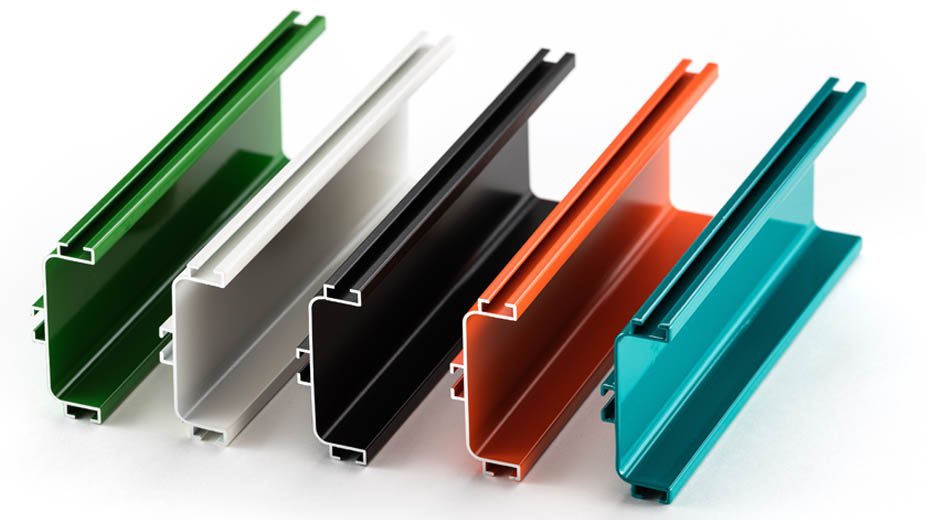
Extruded industrial aluminum heat sinks and liquid cold plate base profiles
Fig 1: High-aspect ratio extruded aluminum heat sink and liquid cold plate substrate manufactured by HAQ Aluminium.

Information Gain Insights for Thermal Procurement Directors

When evaluating international thermal extrusion suppliers, purchasing managers frequently over-index on base raw metal costs while underestimating Thermal Contact Resistance ($R_{th,c}$) caused by improper base plate flatness tolerances. A base profile exhibiting 0.15 mm transverse bow can increase IGBT junction temperatures by up to 14°C under 600W thermal loads. HAQ Aluminium eliminates this thermal bottleneck through secondary fly-cutting precision CNC milling, ensuring base planarity within ≤ 0.02 mm per 100 mm span.

Product Catalog & Selection

Engineered Industrial Aluminum Heat Sink Configurations

From high-density air-cooled extrusions to hybrid liquid-cooled cold plates, HAQ Aluminium extrudes, precision-machines, and finishes custom profiles tailored for rigorous OEM operating environments.

Extruded Liquid Cold Plate Profile

1. Liquid Cold Plate Extrusions

Internal flow channel extrusions for high-heat flux applications including EV inverter power stages, battery energy storage systems (BESS), and server liquid loops.

Key Spec: Dual/Triple Internal Channels | Alloy 6063-T6 | Pressure Tested to 12 Bar
Get Catalog
High Aspect Ratio Pin-Fin Extrusion

2. High Aspect-Ratio Fin Sinks

Precision comb and pin-fin profiles boasting aspect ratios up to 20:1. Engineered for forced-convection cooling of VFDs, servo amplifiers, and high-wattage power supplies.

Key Spec: Fin Ratio 18:1 | Root Thickness 1.2 mm | Black Anodized ε = 0.90
Get Catalog
Enclosure Integrated Thermal Extrusion

3. Enclosure-Integrated Profiles

Heavy-wall hollow profiles combining structural chassis walls with external heat dissipation fins. Ideal for NEMA 4X / IP67 outdoor telecom cabinets and solar edge boxes.

Key Spec: Alloy 6061-T6 | High Structural Stiffness | CNC Tapped Holes
Get Catalog
Solar & Renewable Energy Heat Sinks

4. Solar Inverter Heat Sinks

Wide-format multi-fin extrusions (up to 250mm circumscribing circle) optimized for string solar inverters, wind energy converters, and grid-scale power units.

Key Spec: Base Thickness 8–14 mm | Corrosion Resistance | ASTM B221 Compliance
Get Catalog

Metallurgical & Thermal Properties of Extruded Heat Sink Alloys

Choosing the correct aluminum alloy temper is a balance between thermal conductivity ($\lambda$), tensile strength, and extrudability. Below is HAQ Aluminium’s empirical engineering benchmark matrix for industrial heat sinks:

Alloy & Temper Thermal Conductivity ($\lambda$) Tensile Strength ($R_m$) Yield Strength ($R_{p0.2}$) Extrudability & Complexity Primary Application Domain
6063-T5 201 – 209 W/m·K ≥ 150 MPa ≥ 110 MPa Excellent (Aspect Ratios > 18:1) Dense fin air-cooled heat sinks, LED drivers
6063-T6 200 – 205 W/m·K ≥ 205 MPa ≥ 170 MPa Very Good (Aspect Ratios up to 16:1) Standard industrial VFDs, power electronic modules
6061-T6 166 – 175 W/m·K ≥ 290 MPa ≥ 240 MPa Moderate (Aspect Ratios up to 10:1) Structural thermal enclosures, liquid cold plate bases
6082-T6 170 – 180 W/m·K ≥ 310 MPa ≥ 260 MPa Moderate (High strength required) Heavy transportation power modules, railway traction
1050 / 1060 (Pure) 225 – 231 W/m·K ≥ 75 MPa ≥ 30 MPa Specialized (Soft metal, simple fins) Ultra-high conductivity cold forged / simple extrusions
Industry Development & Sourcing Forecast

Future Trends in Industrial Heat Sink Sourcing and Design (2025–2030)

The landscape of thermal management is undergoing rapid architectural changes. Global supply chain leaders and thermal design engineers must navigate four key macro trends to maintain product competitive advantages.

1. Hyper-Density Fin Profiles & Micro-Channel Extrusion

Traditional air-cooled extrusions were limited to fin aspect ratios of 8:1 to 12:1 due to die tongue fracture risks. Modern press technology, combined with finite element method (FEM) die stress modeling and liquid nitrogen die cooling, enables press-extruded aspect ratios exceeding 20:1 without sacrificing alloy conductivity. This doubles heat dissipation surface area within identical volumetric constraints.

2. Convergence of Air-Cooling & Liquid Cold Plates

As silicon carbide (SiC) and gallium nitride (GaN) power switches increase power flux beyond 100 W/cm², single-phase air cooling reaches physical boundary layer constraints. OEMs are rapidly transitioning to hybrid cold plates where extruded hollow profiles serve as internal liquid channels sealed via Friction Stir Welding (FSW). Sourcing fully integrated extrusion-to-FSW vendors cuts supply chain handoffs by 40%.

3. Low-Carbon Billet & Scope 3 Footprint Regulations

European and North American OEMs face stringent European Carbon Border Adjustment Mechanism (CBAM) and ISO 14064 carbon reporting mandates. Sourcing aluminum extrusions produced using hydroelectric power or prime low-carbon virgin billets (emissions < 4.0 kg CO₂/kg Al) is becoming a mandatory prerequisite for tier-1 industrial contracts.

4. Decoupling Supply Chains via Resilient Sourcing Hubs

Over-reliance on traditional East Asian manufacturing hubs has exposed global procurement teams to tariff volatility, supply disruptions, and rising freight costs. Emerging manufacturing corridors like Pakistan—offering deep metallurgical history, highly competitive labor arbitrage, and direct shipping routes to Europe, the Middle East, and North America—are rapidly absorbing global OEM heat sink orders.

Enterprise Experience & Authority

53 Years of Metal Excellence: Why Global OEMs Partner with HAQ Aluminium

Building world-class industrial aluminum heat sinks requires complete control over the entire metallurgical chain—from raw billet chemistry to final precision CNC surface finishing.

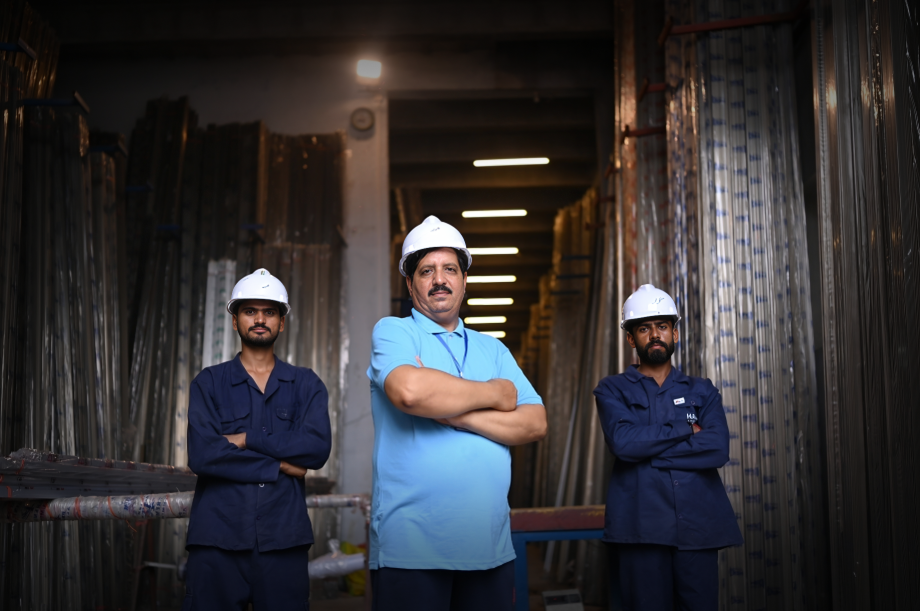
HAQ Aluminium extrusion plant production floor in Lahore

A Legacy Rooted in Metal Processing (1972 – Present)

HAQ Aluminium is the direct extrusion arm of the HAQ Brothers group. Established in 1972 as primary metal and iron merchants, our enterprise expanded into steel re-rolling in 2008 and launched dedicated aluminium extrusion and finishing operations in 2012 in Lahore, Pakistan.

Operating across an integrated industrial facility staffed by over 650 skilled engineers and technicians, we manage the complete profile life cycle in-house. This metallurgical depth ensures that every heat sink section extruded under our watch meets strict international standards including EN 755, EN 12020, and ASTM B221 guidance.

In-House H13 Tool Room

Our dedicated tool room utilizes CAD/CAM simulation software and premium H13 hot-work die steel to manufacture custom dies in 7 to 10 working days, maintaining fin symmetry and reducing die deflection under 1,000+ ton press pressures.

Vertical Powder & Anodizing

Surface coating is controlled in-house on vertical lines featuring chromate-free chemical pre-treatment. Anodizing baths deliver controlled oxide layers (10–25 µm) that optimize radiative emissivity ($\epsilon \ge 0.90$) and corrosion resistance.

Batch Traceability & Quality QA

Every melt batch undergoes optical emission spectrometer testing, Webster hardness checks, and 3D CMM coordinate verification. Full Mill Test Certificates (MTC) and REACH/RoHS compliance reports ship with every export container.

Hassan Ehsan Haq, Chief Executive Officer of HAQ Aluminium
"Industrial heat sinks leave zero margin for error. A variance of 0.05 mm in fin parallelism or a minor billet impurity can disrupt thermal dissipation in an industrial inverter operating in peak summer heat. We built HAQ Aluminium on a fundamental rule: Quality is a process we control in our own plant, not a claim we make on paper."
Hassan Ehsan Haq — Chief Executive Officer, HAQ Aluminium
Technical Sourcing FAQ

Frequently Asked Questions by B2B Thermal Engineers & Buyers

Direct engineering answers addressing critical design choices, tolerances, lead times, and thermal performance trade-offs for industrial aluminum heat sinks.

For extruded heat sinks, Alloy 6063-T6 is the universal gold standard. It delivers high bulk thermal conductivity ($\lambda \approx 200 \text{ W/m·K}$) combined with excellent extrudability, allowing die designers to create thin, closely spaced fins with aspect ratios reaching 18:1 or higher. The T6 temper provides a minimum yield strength of 170 MPa, sufficient for standard mechanical mounting.

If the heat sink serves a dual role as a heavy structural frame or enclosure wall, Alloy 6061-T6 is recommended. Although its thermal conductivity is approximately 15–20% lower ($\lambda \approx 166 \text{ W/m·K}$), its yield strength increases significantly to 240 MPa. HAQ Aluminium provides complete mill test reports confirming exact chemical composition and temper for every production lot.

Extrusion die tongues experience massive hydraulic shear pressures during hot billet pushing. For standard air-cooled extrusions, standard aspect ratios (fin height divided by fin root width) typically range between 8:1 and 12:1. However, using high-grade H13 die steel with finite-element stress optimization and nitrided bearing surfaces, HAQ Aluminium routinely manufactures custom heat sink profiles with aspect ratios of 15:1 to 20:1.

Minimum fin tip thickness can be held to 1.0 mm with a 1.5° to 2.0° draft angle to facilitate die flow. For ultra-dense cooling requirements demanding aspect ratios of 30:1 or greater, we offer hybrid skived-fin profiles or custom bonded-fin assembly solutions.

Surface finishing drastically alters the radiative heat transfer component ($Q_{rad} = \epsilon \sigma A (T_s^4 - T_{amb}^4)$):

  • Bare Mill Finish: Exhibits an extremely low thermal emissivity coefficient ($\epsilon \approx 0.04 - 0.06$). It reflects radiant heat back into the heat sink body and is prone to surface oxidation over time.
  • Matte Black or Clear Anodizing (10–25 µm): Increases the surface emissivity to $\epsilon \approx 0.88 - 0.92$. Under natural (free) convection conditions, anodizing can improve total heat dissipation by 10% to 25%. It also adds high dielectric strength (electrical insulation) and corrosion resistance.
  • Chromate Conversion / Alodine: Preserves low electrical contact resistance for grounding requirements while protecting against oxidation, but offers lower thermal emissivity ($\epsilon \approx 0.20 - 0.30$) compared to anodizing.

When an IGBT or power module is bolted to a heat sink base, any air gap created by base concavity or convexity acts as an effective thermal insulator ($k_{air} \approx 0.026 \text{ W/m·K}$). Even a minor 0.1 mm gap dramatically elevates thermal contact resistance ($R_{th,c}$), causing thermal runaway in high-power semiconductor dies.

While standard press extrusions carry cross-sectional bowing tolerances governed by EN 12020-2, HAQ Aluminium subjects all critical industrial heat sinks to post-extrusion precision CNC fly-cutting and face milling. We routinely deliver contact surface planarity within ≤ 0.02 mm per 100 mm with surface roughness $R_a \le 0.8 \, \mu\text{m}$, ensuring minimal thermal interface material (TIM) bond-line thickness.

HAQ Aluminium operates an in-house tool room to streamline custom die development:

  1. Engineering & DFM Review (24–48 Hours): Our thermal engineers analyze your 3D STEP/DWG drawing for extrusion feasibility, fin aspect ratio, and wall balance.
  2. Die Tooling Fabrication (7–10 Working Days): Custom tooling is CNC-machined from premium H13 hot-work die steel and vacuum heat-treated.
  3. First-Article Sampling (3 Working Days): Trial extrusions are produced, post-cut, heat-treated to target temper (T5/T6), and measured using optical profile projectors and 3D CMMs. Samples ship via air express to your engineering team alongside complete inspection reports.
  4. Full Production: Upon sample approval, mass extrusion runs commence with typical lead times of 15–25 working days depending on quantity and surface finish.

Yes. Beyond raw profile extrusions, our plant houses dedicated multi-axis CNC machining centers, precision saw lines, tapping stations, and hardware insertion presses. We deliver fully finished OEM heat sink assemblies complete with CNC-drilled mounting holes, tapped threads, surface anodizing, thermal interface pads pre-applied, and custom export packaging designed for direct assembly line integration.

Engineered Industrial Heat Sinks Designed for Peak Reliability

Upload your STEP / DWG files or consult directly with our senior thermal extrusion specialists. We validate extrudability, die tooling costs, and thermal performance parameters within 24 hours.

Get Catalog