Engineering & B2B Procurement Technical Guide

Architectural Aluminum Sliding Windows Technical Sourcing Guide & Custom Extrusion Engineering Performance Metrics, Thermal Break Innovations, and Global B2B Supply Chain Dynamics

An exhaustive analysis for architects, structural engineers, facade contractors, and international procurement managers. Discover alloy physics, U-value benchmarks, custom die lead times, salt spray finishing, and structural wind-load parameters engineered by HAQ Aluminium.

6063-T5 / T6 Architectural Alloy PA66 Thermal Break Systems ASTM B221 / EN 12020 Compliance 53 Years Industry Leadership
Contact Us
Search Intent & Engineering Scope

Navigating the Technical Mechanics of Commercial Aluminum Sliding Windows

In modern architectural engineering and high-rise commercial construction, Aluminum Sliding Windows represent far more than fenestration openings—they are critical structural envelopes responsible for thermal envelope control, acoustic attenuation, structural wind-load resistance, and water-tightness integrity. Global procurement managers, real estate developers, and facade consultants searching for reliable aluminum sliding window profile systems face complex technical decisions. Key considerations include selecting appropriate extrusion alloys (e.g., 6063-T5 vs. 6063A-T6), evaluating polyamide thermal break bar insulation depth, ensuring track deflection limits under high velocity wind loads, and securing certified surface treatments capable of resisting aggressive coastal atmospheres.

This technical guide provides verified manufacturing data, engineering formulas, and procurement benchmarks. Authored by the engineering team at HAQ Aluminium—a vertically integrated extrusion manufacturer established in Lahore, Pakistan, with roots dating back to 1972—this document offers direct insights into die design, metal tempering, structural glass channel alignment, and global shipping standards.

Global Market Dynamics

How decarbonization mandates, slimline architectural trends, and smart building integration are reshaping global window extrusion specifications through 2030.

Trend 01 · Thermal Performance

Decarbonization & Ultra-Low U-Value Mandates

With international energy codes (such as ASHRAE 90.1, EU EPBD, and UAE Green Building Codes) tightening insulation requirements, procurement shifts heavily toward Thermal Break Aluminum Sliding Windows. The integration of 24mm to 34mm PA66 GF25 (polyamide with 25% glass fiber) thermal strips allows frame U-values ($U_f$) to plunge below 1.6 W/m²K. Buyers are moving away from non-thermal profiles to prevent thermal bridging, lower HVAC operational costs, and achieve LEED Gold/Platinum certifications.

Trend 02 · Aesthetic Engineering

Ultra-Slim Interlocks & Panoramic Glazing

Architectural demand is rapidly favoring minimalist sliding window designs with sightlines under 20mm. Achieving ultra-slim vertical interlocks without compromising structural integrity requires high-tensile 6063-T6 or 6061-T6 alloy formulations with increased web wall thickness in unexposed structural fins. This trend demands die tolerances down to $\pm 0.15\text{ mm}$, preventing frame flex while supporting heavy double- and triple-glazed insulated glass units (IGUs) up to 300 kg per sash.

Trend 03 · Finishing Quality

High-Durability Coastal Coatings

As oceanfront real estate developments expand globally across the Middle East, Southeast Asia, and coastal Americas, standard powder coatings are no longer sufficient. Procurement protocols now specify Qualicoat Class 2 or Class 3 super-durable fluoropolymer (PVDF) and architectural polyester powder coatings with 60–80 micron film builds over chromate-free pre-treatments, engineered to withstand over 2,000 hours of continuous acetic acid salt spray (AASS) testing without filiform corrosion.

Product Catalog & Profile Series

Engineered Aluminum Sliding Window Profile Systems

HAQ Aluminium manufactures a versatile portfolio of window extrusions, available in standard stock sections or fully customized OEM die profiles engineered to exact project specifications.

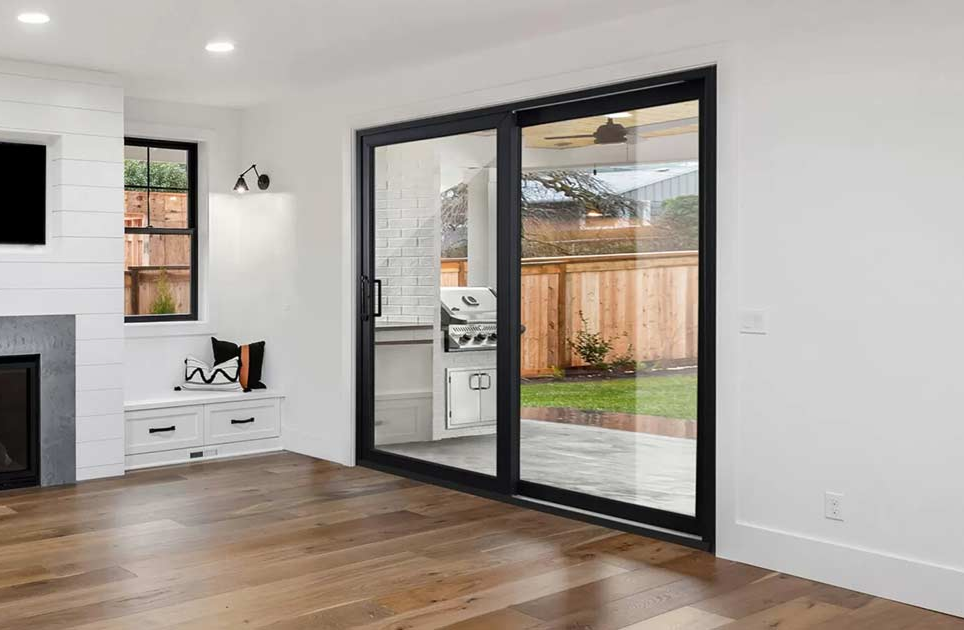
Slimline Thermal Break Aluminum Sliding Window Profile System
Series H-SW55

Slimline Thermal Break Aluminum Sliding Windows

Designed for premium residential towers and luxury villas. Features a 55mm frame depth, integrated PA66 thermal barrier, and a narrow 21mm central interlock. Accommodates 24mm double glazing, achieving sound attenuation up to 38 dB and thermal isolation for extreme climate zones.

  • Frame U-value: $U_f = 1.8\text{ W/m}^2\text{K}$
  • Euro-Groove Hardware Compatibility
Contact Us
Heavy-Duty Commercial Commercial Aluminum Sliding Window Extrusion
Series H-SW120

Heavy-Duty High-Rise Commercial Sliding Window Series

Engineered for high-rise commercial structures subject to high wind loads. Features a 120mm multi-track frame depth, reinforced wall sections up to 2.5mm, and double EPDM perimeter gaskets. Capable of withstanding extreme positive/negative wind pressures up to 3000 Pa (ASTM E330).

  • Water Tightness: Class 9A (EN 12208)
  • Max Sash Weight: 250 kg
Contact Us
Table 1.1: Comprehensive Engineering Performance Matrix for HAQ Aluminum Sliding Window Extrusions
Performance Parameter Standard Non-Thermal Sliding System High-Performance Thermal Break System Heavy-Duty High-Rise Commercial System
Primary Alloy & Temper 6063-T5 / 6063-T6 6063-T5 / 6063A-T6 6063-T6 / 6061-T6
Frame Depth Options 50mm – 80mm 65mm – 110mm 120mm – 150mm (2-Track / 3-Track)
Nominal Wall Thickness 1.2mm – 1.6mm 1.6mm – 2.0mm 2.0mm – 3.0mm
Thermal Insulation Strip N/A (Monolithic Profile) PA66 GF25 Polyamide (14.8mm – 24mm) PA66 GF25 Polyamide (24mm – 34mm)
Thermal Transmittance ($U_f$) $\approx 5.8\text{ W/m}^2\text{K}$ $1.6 - 2.2\text{ W/m}^2\text{K}$ $1.4 - 1.9\text{ W/m}^2\text{K}$
Acoustic Insulation Rating 24 dB – 30 dB (Single Glazed) 35 dB – 42 dB (Double/Triple IGU) 38 dB – 45 dB (Laminated Double IGU)
Air Infiltration (ASTM E283) Class A2 ($< 1.5\text{ m}^3/\text{m}\cdot\text{h}$) Class A4 ($< 0.5\text{ m}^3/\text{m}\cdot\text{h}$) Class A4 ($< 0.2\text{ m}^3/\text{m}\cdot\text{h}$)
Water Penetration (ASTM E331) 300 Pa 600 Pa 900 Pa – 1000 Pa
Structural Wind Load (ASTM E330) 1500 Pa 2400 Pa 3000 Pa – 4500 Pa
Surface Finish Standard AAMA 2603 / Qualicoat Class 1 AAMA 2604 / Qualicoat Class 2 AAMA 2605 / PVDF 3-Coat Fluoropolymer
Metallurgy & Manufacturing Engineering

The Precision Mechanics Behind HAQ Aluminum Extrusions

Why billet quality, press quench rates, and electrostatic film build dictate sliding window long-term durability.

1. Billet Metallurgy & Chemical Composition Control

The structural longevity of an Aluminum Sliding Window frame begins at the chemical level. At HAQ Aluminium, we strictly process 100% primary aluminium billets (AA6063 / AA6061). Magnesium ($0.45 - 0.9\%$) and Silicon ($0.20 - 0.6\%$) ratios are calibrated to form Mg₂Si (Magnesium Silicide) precipitates during heat treatment.

This microstructural phase ensures that upon artificial ageing in our temperature-controlled ovens, profiles achieve a uniform Webster Hardness of $\ge 12\text{ HW}$ (T5 temper) or $\ge 15\text{ HW}$ (T6 temper). Precise alloy control eliminates micro-porosity, ensuring smooth extrusion surfaces and high resistance to stress corrosion cracking under cyclical sliding movements.

HAQ Aluminium Extrusion Press Plant Production Floor

2. Die Design Engineering & Track Geometry Tolerances

Sliding window performance relies on low rolling friction and tight air-sealing tolerances. Our in-house tool room utilizes H13 hot-work die steel to manufacture custom extrusion dies using high-precision CNC spark erosion (EDM).

We solve the common buyer pain point of "frame sagging and track binding" by engineering reinforced hollow chambers into the bottom frame sill and utilizing balanced flow channels during extrusion. This ensures wall thickness uniformity across complex multi-track geometries, complying with EN 12020-2 tightness standards. Linear straightness is controlled within 1.0 mm per meter along full 6.0-meter stock lengths.

HAQ Extrusion Tool Room and Powder Coating Line Overview

3. Vertical Electrostatic Powder Coating & Surface Pre-Treatment

To prevent paint peeling, blistering, and chalking in severe climates, HAQ Aluminium operates an advanced vertical powder coating production line. The process incorporates a multi-stage chromate-free chemical conversion bath that cleans, etches, and applies a zirconium/titanium oxide passivation layer onto the aluminium profile.

Electrostatic guns apply thermosetting polyester or PVDF powder coatings, maintaining a uniform film thickness of 60 to 80 microns. The coated profiles undergo thermal curing at 200°C. Every production lot undergoes rigorous quality testing, including cross-hatch adhesion testing (ISO 2409 Class 0), Buchholz indentation resistance, and salt spray exposure testing (ASTM B117).

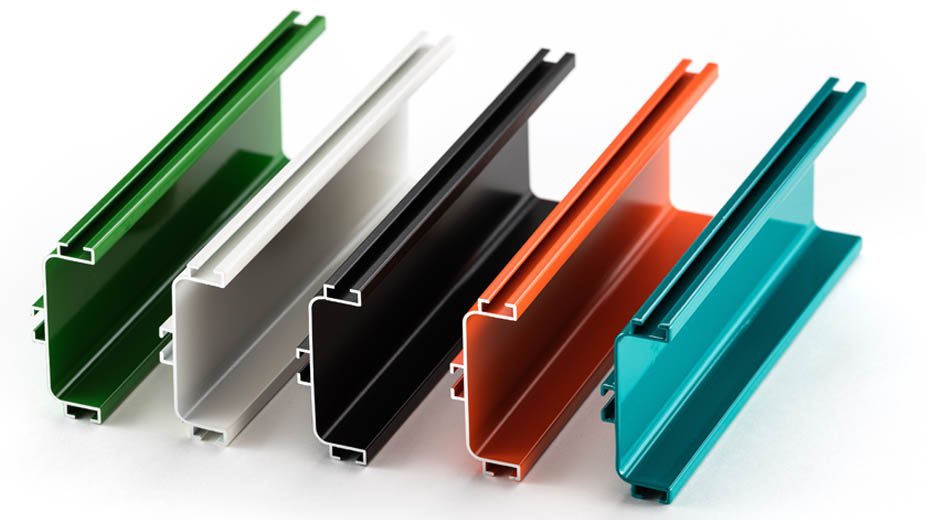
Powder Coated Aluminum Profiles Finishes in Multiple RAL Shades
Proven Experience & Manufacturing Reliability

53 Years of Metal Excellence: Why Global Buyers Partner with HAQ Aluminium

Trust in international B2B procurement is built on manufacturing heritage, verifiable quality controls, and financial stability. HAQ Aluminium is the extrusion division of the HAQ Brothers industrial group in Lahore, Pakistan. Our roots began in 1972 as iron and metal merchants. In 2008, we expanded into steel manufacturing with HAQ Steel, followed by the establishment of our state-of-the-art aluminium extrusion plant in 2012.

Spanning decades of metallurgical expertise, our integrated manufacturing plant operates under a unified quality management framework. Overseen by over 650 skilled engineers, press operators, die makers, and QC specialists, we ensure that every batch of aluminum sliding window profiles meets strict mechanical and dimensional tolerances before export.

  • 1972 — Group established in scrap and metal trading, accumulating foundational metallurgical experience.
  • 2008 — Steel re-rolling mill commissioned, specializing in structural steel reinforcing bars.
  • 2012 — HAQ Aluminium plant launched with automated extrusion presses, anodizing, and powder coating lines.
  • Present — Exporting architectural sliding windows, thermal break systems, heat sinks, and solar framing worldwide.
Contact Us
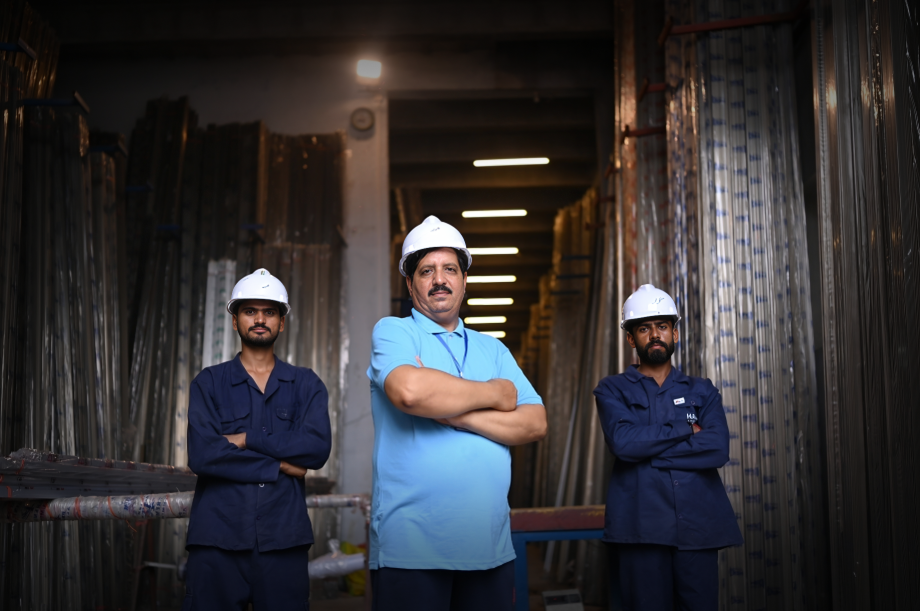
Hassan Ehsan Haq, CEO of HAQ Aluminium
53+Years Industry Experience
HAQ Aluminium Production Facility Floor
Corporate Quality Assurance

"Consistency in wall thickness and coating adhesion defines operational reliability."

"Global procurement managers cannot afford site delays caused by ill-fitting profile channels, poor powder coat adhesion, or out-of-tolerance window sash dimensions. Our multi-generational heritage in steel and aluminium manufacturing has taught us that long-term business relationships are earned through uncompromised precision."

"By maintaining complete control over our H13 die design, billet quenching, vertical powder coating, and batch-level spectrographic analysis, HAQ Aluminium delivers window systems that install right the first time."

Hassan Ehsan Haq Chief Executive Officer, HAQ Aluminium
Quality Control & Traceability

Certified Quality Control Protocols for International Shipping

Every export shipment of aluminum sliding window profiles is accompanied by Mill Test Reports (MTR), dimensional check sheets, and coating test logs.

HAQ Aluminium Quality Testing Certificate Mark

Batch Alloy Chemical & Hardness Verification

Every cast heat of aluminium billet is analyzed via optical emission spectroscopy for alloy compliance (AA6063/AA6061). Post-ageing Webster and Barcol hardness testing ensures optimal tensile and yield strength before profile release.

HAQ Aluminium Surface Finishing Certificate

Coating Adhesion & Environmental Endurance Testing

Coated window profiles undergo cross-hatch adhesion testing (ISO 2409), MEK solvent rub testing, impact resistance tests, and salt spray chamber validation (ASTM B117) to guarantee long-term exterior durability.

Reference Installations

Commercial Projects Glazed with HAQ Architectural Profiles

From high-rise mixed-use towers to industrial plants, our extrusions are trusted by major developers and facade contractors.

Dolmen Mall High-Rise Commercial Glazing Project
Retail & Commercial

Dolmen Mall Development

Shalimar Hospital Architectural Window Installation
Healthcare Facility

Shalimar Hospital Project

Pepsi Bottling Facility Industrial Glazing
Industrial Complex

Pepsi Industrial Complex

B2B Sourcing FAQ

Frequently Asked Sourcing Questions on Aluminum Sliding Windows

Technical answers to key questions asked by architects, engineers, and international buyers searching for reliable extrusion suppliers.

For standard architectural aluminum sliding windows, 6063-T5 is the industry standard due to its excellent surface finish, crisp extrusion detail, and high corrosion resistance. Where superior structural performance and wind-load resistance are required—such as in high-rise coastal developments—we recommend 6063-T6 or 6063A-T6 temper, which provides a higher yield strength ($\ge 170\text{ MPa}$) while maintaining dimensional stability under ASTM B221 and EN 12020-2 guidance.

Thermal break aluminum sliding windows isolate the outer and inner aluminium extrusions using a low-conductivity polyamide insulating strip (such as PA66 GF25 with 25% glass fiber reinforcement). This structural barrier breaks the continuous heat flow path through the aluminum frame. When combined with low-emissivity double or triple insulated glass units (IGUs), frame U-values ($U_f$) drop from around $5.8\text{ W/m}^2\text{K}$ (monolithic) down to $1.4 - 2.1\text{ W/m}^2\text{K}$, preventing condensation and reducing HVAC power consumption.

For coastal and harsh industrial environments, we apply electrostatic architectural powder coating compliant with Qualicoat Class 2 or AAMA 2604 standards. The process includes a chromate-free chemical conversion layer followed by a 60–80 micron polyester or PVDF film build. This system withstands over 1,000 to 2,000 hours of continuous neutral salt spray exposure (ASTM B117) without blistering, chalking, or paint film delamination.

Our in-house CAD/CAM tooling department manufactures custom H13 steel extrusion dies within 7 to 10 working days upon approval of 2D DWG/DXF or 3D STEP drawings. First-article sample prototypes are extruded and measured before full production. The minimum order quantity (MOQ) for custom profile sections is approximately 500 kg per profile per finish, while standard catalog sliding window profiles can ship in smaller, mixed-container quantities.

Track straightness is controlled during extrusion pulling and post-quench hydraulic stretching, enforcing bow tolerances within 1.0 mm per meter per EN 12020-2 guidelines. Bottom track profiles feature reinforced structural channels or stainless steel cap rails, preventing roller indentation under heavy glass loads up to 300 kg per sash.

All finished profiles are interleaved with protective non-abrasive paper or PE protective film to prevent surface scuffing. Profiles are then wrapped in plastic shrink film, bundled, and packed into custom wooden crates or steel-banded pallets designed for safe container loading and unloading.

Request Technical Specifications & Project Quotation

Planning an architectural facade or commercial aluminum sliding window supply contract? Partner directly with our engineering team for CAD drawing reviews, alloy selection, die tooling schedules, and competitive factory-direct pricing.

Contact Us