EN Contact Us
Custom-engineered window frame extrusions, high-strength alloy plates, and surface-finished architectural solutions supplied directly to Japanese construction & OEM procurement partners.
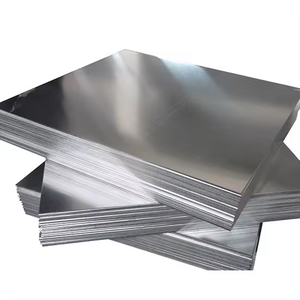
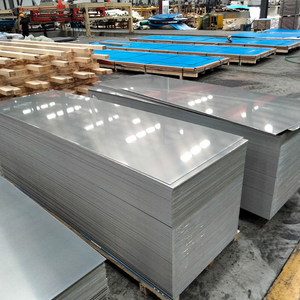
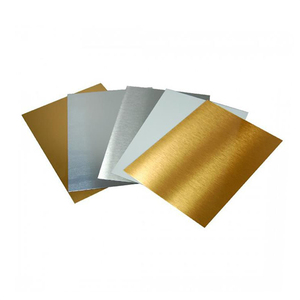
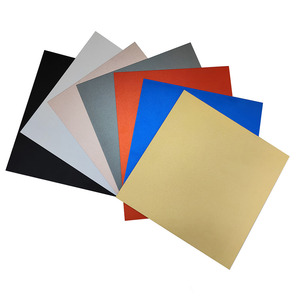
The Japanese building and construction market represents one of the world's most rigorous environments for architectural fenestration, window framing, and curtain wall engineering. Driven by strict regional mandates including JIS A 4702 (Sashes for Buildings) and JIS A 4706 (Windows), window frame manufacturers exporting to Tokyo, Osaka, Nagoya, and Fukuoka must adhere to stringent physical performance benchmarks that far exceed standard international baseline specifications.
Japanese architectural designs demand a delicate synthesis of structural slimness, extreme weather durability, high thermal insulation, and exceptional seismic tolerance. As an established global manufacturer with over five decades of metallurgical and extrusion expertise, our engineering teams design and manufacture aluminum window frames and profiles specifically aligned with these localized challenges.
Japan’s severe seismic vulnerability requires structural fenestration framing capable of undergoing significant inter-story displacement without catastrophic glazing failure, frame buckling, or loss of air/water tightness. Window frame extrusions engineered for high-rise commercial structures and residential housing must accommodate Relative Story Drift Angles ($\gamma$) up to 1/150 and 1/100 during major seismic events (Tokai/Nankai earthquake simulation standards).
Our custom extruded 6063-T6 and 6061-T6 structural sub-frames incorporate engineered floating mullion joints, high-elasticity EPDM perimeter gaskets, and reinforced corner key block receivers CNC-machined under AS9100 quality guidelines. This allows flexible shear movement and rapid energy dissipation while maintaining structural integrity.
Typhoon seasonality across the Japanese archipelago subjects coastal and urban facades to extreme wind loads and wind-driven rain. Window profiles are engineered and tested to meet JIS Wind Pressure Resistance Ratings from S-5 (2400 Pa) up to S-7 (3600 Pa) and Water Tightness Ratings up to W-5 (500 Pa pressure differential).
By employing complex multi-chambered internal profile geometries, integrated pressure-equalized drainage cavities, and continuous thermal-break barriers, our aluminum window frame assemblies prevent water ingress under combined heavy precipitation and cyclonic wind velocity.
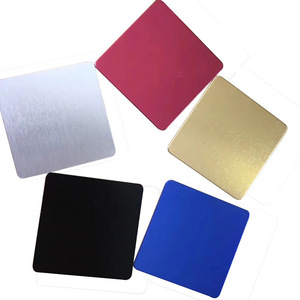
Unlike Western markets that primarily utilize standard powder coating, Japanese architectural specifications (JIS H 8602) overwhelmingly mandate Anodized Composite Coatings (AAC) with Cationic Electrodeposition (ED) Topcoats. This dual-layer surface protection provides an ultra-smooth, uniform clear or matte resin film over the anodized aluminum surface, delivering unmatched resistance to coastal salt-spray erosion, alkaline mortar splashing, and intense UV degradation.
A comparative engineering evaluation of extruded aluminum alloys commonly specified in Japanese residential, commercial, and industrial fenestration systems.
| Alloy & Temper | Tensile Strength (MPa) | Yield Strength (MPa) | Corrosion Resistance | Primary Application in Japanese Fenestration |
|---|---|---|---|---|
| 6063-T5 / T6 | 200 - 245 | 165 - 210 | Excellent | Main window sashes, residential sliding frames, thermal-break profile extrusions. |
| 6061-T6 | 290 - 310 | 240 - 275 | High | Heavy structural mullions, curtain wall transoms, seismic anchor connectors. |
| 6082-T6 | 310 - 340 | 260 - 290 | High | High-load commercial facades, high-rise tower window sub-assemblies. |
| 5052-H32 / A5052 | 210 - 260 | 160 - 200 | Superior (Marine) | Architectural window trim, spandrel panels, flashing sheets, coastal louvers. |
| 5083-H116 | 305 - 380 | 215 - 280 | Extreme (Saltwater) | Extreme coastal installation window frames, port authority architectural glazing. |
With Japan's aggressive national carbon-neutrality targets and updated Building Energy Efficiency Act regulations, building envelope thermal insulation standards have tightened significantly. The push towards ZEH (Zero Energy House) and ZEB (Zero Energy Building) benchmarks mandates exceptionally low overall Window Heat Transmittance Values ($U_w$).
Traditional solid aluminum frames exhibit high thermal conductivity ($k \approx 200 \text{ W/m}\cdot\text{K}$), which leads to severe condensation in cold climates like Hokkaido and Tohoku, while increasing summer cooling loads in southern regions. To overcome this, our technical team exports advanced Polyamide Thermal Break Window Frame Systems engineered specifically for Japanese insulation zones 1 through 8.
Our thermal-break profiles utilize precision-crimped 24mm to 34mm multi-cavity Polyamide 66 reinforced with 25% short glass fibers (PA66-GF25). This composite material matches the linear thermal expansion coefficient of aluminum ($\alpha \approx 2.3 \times 10^{-5}/\text{K}$), preventing delamination under extreme thermal cycling between Japanese winter frosts and summer heat waves.
Combined with low-emissivity double or triple insulated glass units (IGUs) filled with Argon gas, our thermally broken window frame assemblies achieve frame thermal transmittance ($U_f$) values as low as 1.3 to 1.7 W/m²K, comfortably meeting Japanese Energy Efficiency Grade 4 and Passive House standards.
Tailored window frame extrusions engineered for specific regional building codes and environmental exposure profiles throughout Japan.
Unitized window framing and stick curtain wall extrusions produced in alloy 6061-T6 and 6082-T6. Designed for rapid crane-lift installation, high inter-story seismic movement absorption, and integrated dynamic shade louver anchors.
Ultra-insulated thermal-break sliding sashes and casement window profiles featuring PA66-GF25 thermal insulation strips, internal foam-filled air chambers, and dual-layer ED matte black/bronze surface finishes.
Heavy-duty marine-grade 5083/5754 alloy window framing and spandrel trims featuring fluorocarbon PVDF coating (min. 40 micron film thickness) to withstand continuous salt air spray, high humidity, and direct tropical solar exposure.
The Japanese architectural window market is experiencing a profound structural transformation driven by three core economic and demographic factors:
Japan’s acute domestic labor constraints in the skilled construction sector have accelerated the transition away from traditional on-site sash assembly toward fully pre-fabricated, unitized window modules. General contractors (Zenecon firms such as Kajima, Obayashi, Takenaka, and Shimizu) increasingly demand window suppliers capable of exporting ready-to-install framing units featuring pre-punched mounting slots, precision CNC-milled hardware cutouts, and pre-fitted EPDM gaskets.
Corporate ESG mandates across Japan require verified carbon-footprint reduction throughout the supply chain. Leading real estate developers prioritize window frame manufacturers that utilize Low-Carbon Primary Aluminum Billets (smelted using hydroelectric energy with emissions < 4.0 kg CO2/kg Al) alongside closed-loop scrap recycling processes. Our manufacturing facility maintains strict raw material batch traceability and supplies full Environmental Product Declarations (EPDs) for green building certifications (CASBEE compliance).
In mid-rise timber buildings and modern residential developments, high-performance window designs increasingly feature hybrid composite framing—combining an exterior weather-resistant, ED-coated aluminum sash with an interior natural wood interior trim. Our custom extrusion tooling services allow overseas buyers to design complex snap-lock exterior aluminum profiles specifically shaped to receive interior timber components seamlessly.
Combining 50+ years of industrial metal manufacturing heritage with state-of-the-art billet extrusion, precision CNC machining, and automated surface treatment lines.
Equipped with CAD/CAM software and wire-EDM die cutting technology, our tooling shop manufactures complex multi-cavity window frame dies from high-grade H13 tool steel in 10 to 15 working days. First-article samples are fully verified via CMM optical projection before bulk extrusion approval.
Every production lot undergoes comprehensive metallurgical testing: optical emission spectrometry for alloy composition, Websters/Vickers hardness testing post-artificial ageing, cross-hatch adhesion testing (JIS K 5600), and salt spray corrosion chamber testing (JIS Z 2371).
Window profiles are interleaved with non-scratch protective polyethylene film, wrapped in heavy-duty waterproof kraft paper, and packed into steel-strapped timber crates designed for direct container discharge at Yokohama, Tokyo, Kobe, Osaka, and Nagoya ports.
Technical, logistical, and commercial answers for window fabricators, trading companies (Sogo Shosha), and architectural specifiers.
For standard residential sashes and sliding window frames, alloy 6063-T5 or 6063-T6 is the industry standard due to its excellent surface finish extrudability, sharp profile detail, and ideal response to anodizing and ED coating. For heavy structural mullions or high-rise commercial window walls subject to severe wind loads, 6061-T6 or 6082-T6 is recommended due to its substantially higher tensile and yield strength.
Yes. Our in-house surface treatment lines include automated clear and matte anodizing tanks alongside a state-of-the-art Cationic Electrodeposition (ED) coating plant. We produce finishes complying with JIS H 8602 class specifications, ensuring film thickness control (anodized film ≥ 10 microns, ED resin topcoat ≥ 7 microns) with zero orange-peel defect, excellent alkali resistance, and superior UV weatherability.
For custom OEM window frame profiles, our typical MOQ is 500 kg to 1,000 kg per profile cross-section depending on alloy and die circumscribing circle size. New extrusion die sinking and sample preparation require 10 to 15 working days. Following sample sign-off by your engineering team, full containerized bulk production is completed within 20 to 25 days.
Dimensional verification is performed using high-precision optical profile projectors and CMM equipment to inspect critical wall thicknesses, screw-port inner diameters, gasket retention channels, and polyamide crimping notch tolerances against agreed DXF/STEP CAD drawings. Inspection certificates (Mill Test Reports per EN 10204 3.1 / JIS standards) are generated for every export batch.
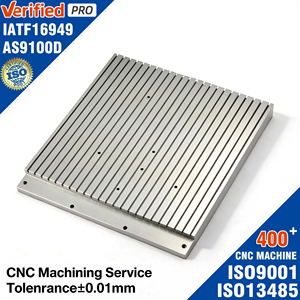
Yes. We offer complete fabrication-ready supply services. Our CNC machining department handles precision length cutting (+/- 0.5mm tolerance), 45-degree miter sawing for frame corners, weep-hole slot punching, hinge placement routing, and corner key slot milling, allowing Japanese fabricators to receive components directly ready for assembly lines.
Whether you require custom extrusion die development for thermal-break sashes, JIS-compliant ED-coated profiles, or high-volume aluminum window component supply, our engineering sales team provides full technical assistance within 24 hours.