
EN Contact Us
Engineered for extreme environmental resilience across Mexico’s diverse climate zones—from high-humidity coastal ports like Veracruz and Manzanillo to northern industrial centers in Monterrey and Tijuana.
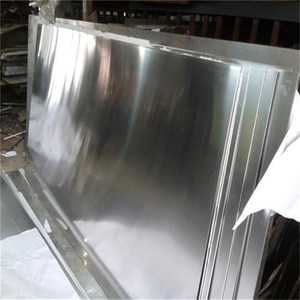
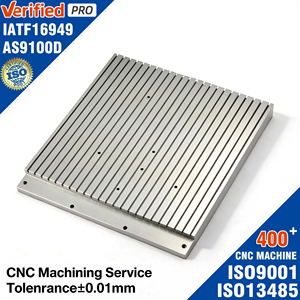
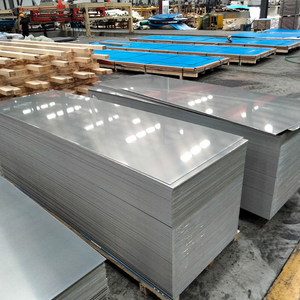
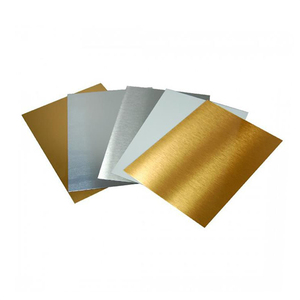
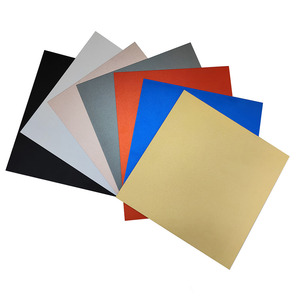
Mexico's transformation into a powerhouse of global manufacturing—fueled by the rapid growth of nearshoring hubs in Nuevo León, Coahuila, Chihuahua, and Baja California—has fundamentally altered the specifications required for structural hardware. As tier-1 suppliers and original equipment manufacturers (OEMs) relocate production closer to the North American market, demand for certified high-grade aluminum hinges and hardware components has escalated dramatically. Chinese exporters must provide not merely generic commodities, but highly engineered, alloy-specific hardware tailored to regional Mexican industrial environments.
In the heavy automotive and passenger transit assembly corridors of Saltillo and Monterrey, aluminum hinges are replacing traditional steel components to achieve vehicle lightweighting targets. Extruded 6061-T6 and 6082-T6 alloy hinges are widely specified for luggage compartment doors, passenger side-access hatches, and battery compartment covers on commercial electric buses. The high yield strength-to-weight ratio ensures resistance against dynamic road vibration along Mexican federal highways (Carreteras Federales) without causing structural fatigue or sagging over hundreds of thousands of duty cycles.
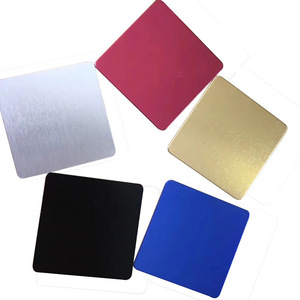
Mexico City's seismic zone construction standards and Riviera Maya's hurricane-prone coastal resorts require architectural door and curtain wall hinges that satisfy stringent wind-load and atmospheric exposure criteria. Our 6063-T5 color-anodized hinges undergo 25-micron Qualanod-certified anodic film treatment, making them impervious to salt-laden marine air in coastal areas like Cancún, Veracruz, and Los Cabos. Designed with self-lubricating bronze or PTFE bushings, these hinges eliminate galvanic corrosion when paired with stainless steel fasteners in heavy glass storefronts.
Precision electronics assembly plants and medical device manufacturers operating under the IMMEX program in Tijuana, Mexicali, and Ciudad Juárez require dust-tight, EMI-shielded electrical control cabinets. Our continuous aluminum piano hinges (0.1mm to 3.0mm thickness) provide unbroken axial alignment across tall enclosure doors. Machined with precision countersunk mounting holes, these hinges allow flush mounting on NEMA 4X / IP66 enclosures, ensuring smooth door articulation and tight gasket compression in cleanroom and factory-floor environments.
Commercial fishing fleets, naval vessels, and offshore oil platforms operating out of the Ports of Manzanillo, Lázaro Cárdenas, and Tampico demand structural alloys that actively resist pitting and intergranular stress corrosion cracking. By extruding 5083-H116 and 5086-H321 marine-grade alloys, our heavy-duty marine hinges maintain mechanical integrity even when fully submerged in sea water or exposed to tropical UV radiation. Integrated 316 stainless steel hinge pins prevent seizing under extreme salt-spray conditions.
Procurement directors and supply chain managers overseeing operations in Mexico face an increasingly complex trade landscape. Balancing lower landed costs with regulatory compliance under USMCA (T-MEC) rules of origin, Mexican NOM technical standards, and SAT customs controls requires partnering with a sophisticated Chinese exporter capable of complete material documentation.
The influx of foreign direct investment (FDI) into Mexico’s Bajío and Northern industrial regions has triggered unprecedented demand for standardized, stockable industrial hardware. Importers are moving away from fragmented local machine shops toward scaled Chinese manufacturers capable of supplying container-load quantities of uniform-quality aluminum hinges with guaranteed metallurgical properties.
Due to intense solar irradiance in northern and central Mexico, wet-painted aluminum hardware experiences rapid chalking and color fading. The market is overwhelmingly shifting toward hard-coat anodizing and architectural powder coating certified under AAMA 2604/2605 standards, guaranteeing 15+ years of color retention and corrosion protection in tropical conditions.
To comply with green building codes (LEED Mexico) and modern transportation emission targets, engineers are replacing cast iron and zinc alloy hinges with high-tensile 6000 and 7000 series aluminum extrusions, reducing total hardware weight by over 50% while preserving load-bearing limits.
Selecting the correct aluminum alloy temper and hinge configuration is critical to preventing mechanical failure on industrial door assemblies and architectural facades. Below is our comprehensive metallurgical comparison table for industrial decision-makers:
| Alloy Grade & Temper | Tensile Strength (MPa) | Yield Strength (MPa) | Corrosion Resistance | Machinability & Anodizing | Recommended Mexican Application |
|---|---|---|---|---|---|
| 6063-T5 / T6 | 200 - 240 | 165 - 210 | Excellent (Atmospheric) | Superior Anodizing Surface Finish | Architectural Windows, Storefront Doors, Louvers |
| 6061-T6 | 310 | 276 | Very Good | Excellent CNC Machining / Weldable | Heavy Industrial Gates, Commercial Bus Doors |
| 5083-H116 | 305 | 215 | Exceptional (Marine / Salt) | Moderate Machining / Excellent Weldability | Coastal Infrastructure, Shipbuilding, Chemical Plants |
| 7075-T6 | 570 | 505 | Fair | Superior Structural Precision | Aerospace Machined Components, High-Stress Hinges |
| 5052-H32 | 230 | 195 | Excellent in Marine Air | High Formability / Cold Working | Continuous Piano Hinges, Truck Side Panels |
With a metallurgical heritage spanning back to 1972, our enterprise operates as an integrated mill-to-market aluminum manufacturer. By uniting billet casting, custom die extrusion, precision CNC machining, and automated anodizing under a single quality control regime in our 650+ employee facility, we eliminate third-party markup and guarantee strict dimensional tolerances across every batch.
Our dedicated tooling department converts DXF, STEP, or physical sample drawings into production-ready extrusion dies in just 10 to 15 working days. First-article inspection reports (FAIR) with full CMM dimensional checks are submitted prior to mass extrusion.
Every production lot undergoes spectator spectral analysis for alloy chemical composition, Webster/Barcol hardness verification, cross-hatch adhesion testing for powder coatings, and continuous ASTM B117 salt spray chamber audits.
Addressing common technical, legal, and shipping inquiries from purchasing managers, customs brokers (Agentes Aduanales), and plant engineers in Mexico:
Aluminum hinges are typically imported into Mexico under HS Code 8302.10.02 (Bisagras de aluminio) or 8302.10.99 (Los demás montajes, herrajes y artículos similares). Importers operating under the IMMEX program or PROSEC (Programa de Fomento Sectorial) can enjoy preferential import duty rates (often 0% to 5%) when components are integrated into goods exported to North America. Our shipping team supplies fully compliant commercial invoices, packing lists with net/gross weights, and Certificate of Origin documents to simplify clearance by your Mexican customs broker.
Direct ocean freight vessels route regularly from major Chinese ports (Ningbo, Shanghai, Shenzhen) to Mexico's principal Pacific ports: Puerto de Manzanillo (Colima) and Puerto de Lázaro Cárdenas (Michoacán). Average sea transit time is between 18 to 25 days. For factories located in northern Mexico (e.g., Monterrey, Saltillo, Reynosa), goods cleared at Manzanillo are moved via direct rail or bonded truck freight (Autotransporte de Carga) in 3 to 5 additional inland days. Total door-to-door lead time from order deposit to factory arrival typically ranges between 35 and 45 days.
Yes. While architectural hardware items fall under specific building safety codes, our production processes adhere to international standards (ASTM B221, EN 755, ISO 9001) that fulfill or exceed technical guidelines mandated by Mexican authorities (such as NOM-014-SCT2 for transport containers or NOM-001 equivalents for electrical cabinet hardware). We provide complete third-party lab test reports for tensile strength, mechanical cycle durability, and salt-spray resistance required during NOM verification procedures at Mexican customs.
For standard catalog profiles and stock aluminum hinges, our MOQ starts at 500 kg per section. For fully custom extrusion dies, MOQ is typically 1,000 kg per order. Because ocean shipments encounter high humidity, export packaging is paramount: hinges are individual poly-bagged, interleaved with anti-corrosion protective film or VCI paper, boxed in heavy-duty 5-ply corrugated master cartons, and strapped onto fumigated ISPM-15 wooden pallets optimized for 20ft or 40ft container loading.
We offer flexible commercial payment terms including T/T (Telegraphic Transfer) with a 30% advance deposit and 70% balance payable against Bill of Lading (B/L) copy, as well as Irrevocable Irrevocable Letters of Credit at Sight (L/C at sight) issued by major Mexican financial institutions (e.g., BBVA México, Banorte, Santander, HSBC México). Pricing can be quoted on FOB Chinese Port, CIF Manzanillo/Lázaro Cárdenas, or DDP (Delivered Duty Paid) basis depending on your logistics preference.
Partner directly with China's premier manufacturer of high-precision aluminum hinges and structural profiles. Send us your CAD drawings, STEP files, or sample specifications for an instant engineering review and competitive CIF/DDP quote.