
EN Contact Us
Direct mill supply of precision thermal break extrusions, marine-grade plates, custom CNC machined components, and anodized architectural sheets tailored for European B2B buyers.
The urban landscape of Berlin—stretching from high-density commercial developments in Mediaspree and Europacity to historic Altbau restorative projects in Mitte and Charlottenburg—imposes rigorous, non-negotiable physical demands on building envelopes. Under the updated German Buildings Energy Act (Gebäudeenergiegesetz - GEG 2024) and energy efficiency standards (KfW Effizienzhaus 40 / Passivhaus Standard), standard aluminum fenestration and facade extrusions are obsolete unless equipped with state-of-the-art thermal break system design.
Aluminum exhibits an inherently high thermal conductivity ($\lambda \approx 160-200 \text{ W/m}\cdot\text{K}$). Unmitigated profile geometries act as rapid thermal bridges, transferring Berlin's harsh sub-zero winter temperatures directly into the interior while radiating heat outwards during rising summer heatwaves. As a premier manufacturer specializing in export-grade aluminum systems, our custom thermal break profiles integrate advanced structural polyamide barriers—specifically PA66 GF25 (Polyamide 66 reinforced with 25% glass fiber)—mechanically crimped between inner and outer extruded aluminum profiles.
Core Thermal Performance Index: By combining multi-chamber extruded profiles with 24mm to 34mm PA66 GF25 thermal struts, continuous EPDM center gaskets, and low-emissivity insulation inserts, our Berlin-targeted thermal break systems achieve frame thermal transmittance ($U_f$) values as low as 0.8 to 1.3 W/m²K, comfortably exceeding the maximum threshold ($U_w \le 0.95 \text{ W/m}^2\text{K}$) mandated for modern German commercial and residential building approvals.
Utilizes glass-fiber reinforced polyamide strips matching aluminum's thermal expansion coefficient ($\alpha = 2.3 \times 10^{-5}/\text{K}$), preventing shear stress fatigue or structural delamination during severe thermal cycling.
Extruded from architectural alloys 6063-T6 and 6061-T6 to deliver tensile strengths ($\ge 215 \text{ MPa}$) capable of supporting heavy triple-glazed acoustical units ($>50 \text{ kg/m}^2$) without structural deflection.
Surface finishing via chromate-free chemical pre-treatment and electrostatic Qualicoat Class 2 powder coating or 20µm anodization to withstand sulfur dioxide ($SO_2$) and urban atmospheric exposure in Central Europe.
Berlin’s microclimate presents a dual challenge: cold, damp continental winters with frequent freeze-thaw cycles ($ -10^\circ\text{C}$ to $+5^\circ\text{C}$) and increasingly hot summers requiring intensive air-conditioning load reduction. Furthermore, urban acoustic pollution along main traffic arteries such as the Stadtbahn elevated rail corridors or the Berliner Ringbahn demands extreme sound insulation values ($R_w \ge 42-48 \text{ dB}$).
In high-density commercial districts, architectural developments demand unitized and stick curtain wall systems capable of accommodating wind loads up to 1.5 to 2.4 kN/m² while minimizing edge-seal thermal bridging. Our factory engineers mullion and transom sections with internal drainage channels, pressure-equalized gaskets, and custom thermal break isolators. By integrating lightweight, high-strength 6061-T6 plate brackets and precision cut-to-length thermal aluminum framing, structural engineers reduce total facade dead-load while achieving seamless glass-to-frame ratios.
Retrofitting Berlin's heritage Gründerzeit residential quarters requires high historical sensitivity combined with uncompromising energy conservation. Our factory supplies slimline thermal break aluminum window profile series (65mm, 75mm, and 90mm frame depths) that mimic traditional sightlines while embedding 34mm wide multi-chambered polyamide struts. When paired with low-E triple glazing, these frames eliminate internal surface condensation ($T_{\text{internal surface}} > 12.6^\circ\text{C}$ at $-10^\circ\text{C}$ outdoor ambient), protecting indoor plasterwork from mold spores (*Aspergillus niger*) and thermal drafting.
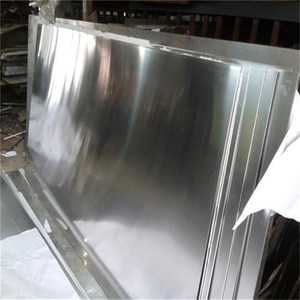
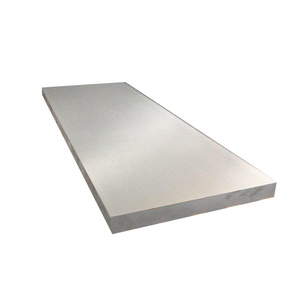
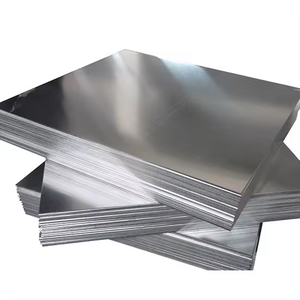
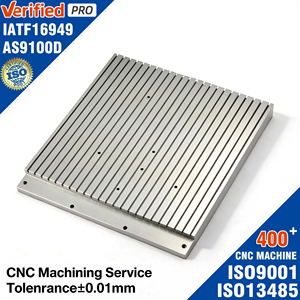
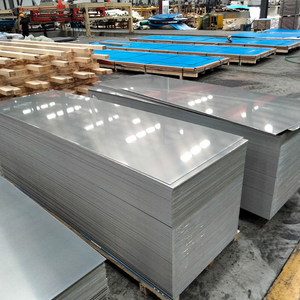
Beyond building facades, Berlin’s industrial hub—spanning Siemensstadt 2.0 to technological parks in Adlershof—demands precision industrial metal parts. Leveraging our AS9100-standard CNC machining centers, 5083/5754 marine-grade anti-corrosive plates, and 7075 high-tensile structural alloy blocks, we supply custom-machined structural parts, thermal management heat sink plates, and soundproof enclosure framing directly to German OEMs and machinery builders.
All thermal break profile extrusions and secondary fabrication processes delivered to Berlin construction sites or manufacturing facilities strictly conform to key European standard directives:
To assist Berlin facade engineers, structural designers, and procurement managers in specifying optimal raw materials, the matrix below details our standard aluminum alloy offerings, mechanical yields, and recommended structural applications:
| Alloy Grade | Temper | Yield Strength (MPa) | Thermal Conductivity | Corrosion Resistance | Primary Berlin Application Fit |
|---|---|---|---|---|---|
| EN AW-6063 | T5 / T6 | 160 - 210 | 200 W/m·K | Excellent | Thermal Break Window, Door & Curtain Wall Profiles |
| EN AW-6061 | T6 | 240 - 276 | 167 W/m·K | High | Heavy Load Transoms, Facade Brackets, CNC Structural Components |
| EN AW-5083 | H111 / H116 | 125 - 215 | 120 W/m·K | Exceptional (Marine) | Sub-grade Cladding, Heavy Industrial Machined Plates, Exterior Panels |
| EN AW-5754 | H22 / H32 | 130 - 190 | 147 W/m·K | Exceptional | Anodized Architectural Sheets, Structural Metal Work, HVAC Housings |
| EN AW-7075 | T6 / T651 | 460 - 505 | 130 W/m·K | Moderate | AS9100 Precision CNC Machined High-Stress Aerospace & Machinery Parts |
Strategic purchasing decisions in the Berlin-Brandenburg metropolitan region are heavily influenced by progressive climate neutrality targets set by the Berlin Senate (Klimaschutzplan Berlin 2030/2045). B2B buyers are moving away from traditional carbon-heavy procurement towards fully traceable, highly efficient aluminum supply chains.
Aluminum is infinitely recyclable without losing its inherent mechanical properties. German architectural specifiers increasingly demand high post-consumer recycled scrap content in billet formulations. Our foundry processes utilize hydro-powered clean energy billet melting combined with closed-loop internal scrap recovery, dramatically lowering the embedded carbon footprint ($\text{kg CO}_2\text{e per kg aluminum}$) to align with BREEAM Excellent and DGNB Gold/Platinum green building certification requirements in Germany.
With solar mandates active across new commercial roofs and building envelopes in Berlin (Solargesetz Berlin), facade contractors are merging thermal break aluminum extrusions with Building-Integrated Photovoltaics (BIPV). Our customized extrusion dies feature internal cable routing raceways, thermal isolation pockets, and snap-fit mounting rails designed to house bifacial glass-glass solar modules directly into unitized curtain wall assemblies.
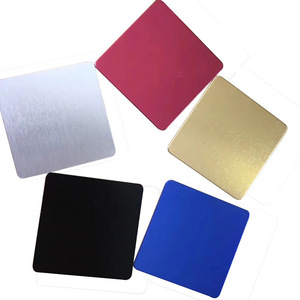
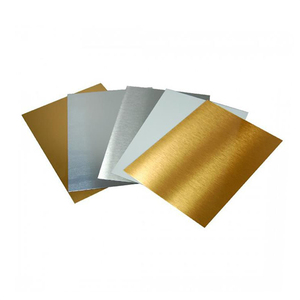
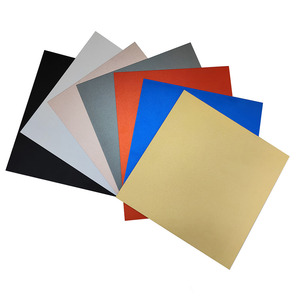
From an aesthetic perspective, Berlin architects prefer dark metallic tones—E6/C35 black anodized, C34 dark bronze, fine-textured anthracite gray (RAL 7016), and anodic DB 703 metallic finishes. Our in-house vertical powder coating and automated anodizing plants ensure uniform film thickness ($\ge 60\mu\text{m}$ for powder; $\ge 20\mu\text{m}$ for anodizing), verified via cross-hatch tape adhesion (ISO 2409) and salt-spray corrosion testing (ISO 9227).
Backed by a legacy in metallurgical engineering dating back to 1972, our manufacturing facility operates as a fully integrated, mill-to-market production center. Unlike intermediary trading companies, we manage every step of the value chain under one operational roof:
Connect directly with our engineering sales desk for mill-direct pricing, DXF profile evaluations, and customized production schedules for the Berlin market.