
EN Contact Us
Direct Factory Supply for Indonesian Contractors, Facade Fabricators, and High-Rise Developers in Jakarta
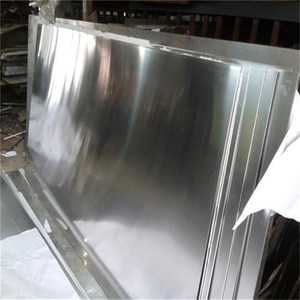
High-corrosion-resistant aluminum alloy plate designed for Jakarta coastal structural facade anchors, curtain wall brackets, and tropical marine applications.
Send an Inquiry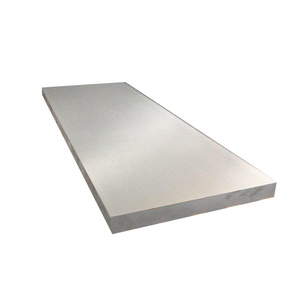
Thickness from 0.1mm to 300mm. High yield strength structural alloy ideal for architectural sub-frames, thermal barrier connectors, and industrial machinery.
Send an Inquiry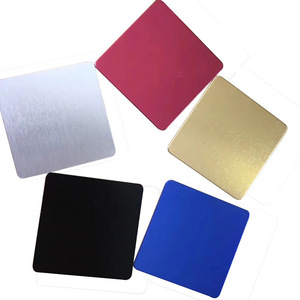
Available in Gold, Pink, Black, Blue, and Silver. Premium anodized surface treatment providing superior weatherability under Jakarta UV conditions.
Send an Inquiry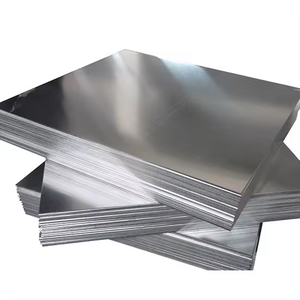
Engineered for extreme structural loads and moisture barrier performance in commercial high-rises across Jabodetabek.
Send an Inquiry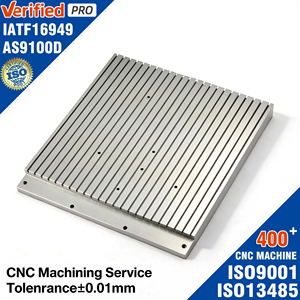
Custom precision CNC turning, milling, and slotting for high-performance thermal break corner keys, structural joinery, and facade hardware.
Send an Inquiry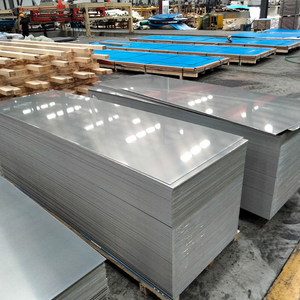
5052 H36 / 5083 A5052 alloy plates precision-cut for heavy industrial louver frames, curtain wall mullion stiffeners, and structural reinforcing.
Send an Inquiry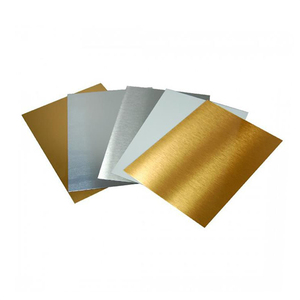
Custom finish choices including matte black, deep bronze, champagne gold, and traffic white, certified under Qualicoat architectural standards.
Send an Inquiry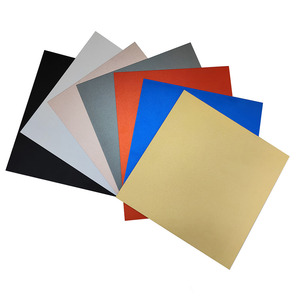
Ultra-thin precision aluminum foil and strip engineered for thermal barrier sealing, spandrel insulation backing, and architectural flashing.
Send an InquiryThe Special Capital Region of Jakarta (DKI Jakarta) and its surrounding industrial metropolitan arc—encompassing Bogor, Depok, Tangerang, and Bekasi (Jabodetabek)—presents one of the most punishing atmospheric environments in Southeast Asia for modern curtain wall and window envelope engineering. Operating under an equatorial tropical monsoon climate (Köppen Am), Jakarta experiences persistent year-round dry-bulb temperatures ranging from 28°C to 38°C, paired with ambient relative humidity levels fluctuating between 75% and 92%.
When high-rise commercial structures in major central business districts such as Sudirman Central Business District (SCBD), Mega Kuningan, and Jalan M.H. Thamrin run intensive internal air-conditioning systems (maintaining indoor temperatures around 20°C–22°C), an extreme thermal gradient ($\Delta T$) is continuously asserted across the exterior facade envelope. In standard uninsulated aluminum profiles, high thermal conductivity ($k \approx 200 \text{ W/m}\cdot\text{K}$) results in rapid heat transfer from the exterior to the interior, creating severe cooling energy loss and causing internal frame surfaces to drop below the ambient indoor dew-point temperature.
Technical Insight (Information Gain): Standard uninsulated aluminum windows installed in Jakarta high-rises record an overall Thermal Transmittance ($U_{\text{frame}}$) value of roughly 5.8 W/m²K to 6.2 W/m²K. By integrating custom-engineered PA66 GF25 (25% Glass Fiber Reinforced Polyamide 66) thermal barrier strips, $U_{\text{frame}}$ is drastically reduced to 1.6 – 2.2 W/m²K, cutting solar heat gain coefficient (SHGC) conductive loads by up to 64%.
By breaking the continuous thermal pathway through the aluminum extrusion wall, thermal break systems raise the interior surface temperature of the interior frame above Jakarta's average dew-point temperature (24.5°C at 80% RH). This completely prevents surface sweating, mold growth, drywall deterioration, and internal gasket breakdown in luxury residences and commercial offices.
Our thermal break profile assemblies utilize mechanically knurled, high-tensile PA66 GF25 polyamide locking strips inserted under high mechanical pressure. This creates a composite profile structural shear strength capable of withstanding extreme monsoon wind loads (up to 2.5 kPa) experienced by coastal high-rises in Pantai Indah Kapuk (PIK) and North Jakarta.
| Profile Architecture Type | Alloy & Temper | Thermal Transmittance ($U_{\text{f}}$) | Acoustic Insulation (STC) | Target Application in Jakarta |
|---|---|---|---|---|
| Non-Thermal Break Standard | 6063-T5 / T6 | 5.8 - 6.2 W/m²K | 26 - 28 dB | Low-rise interior partitioning, commercial store fronts |
| Standard Thermal Break (14.8mm PA66) | 6063-T6 Architectural | 2.6 - 3.1 W/m²K | 34 - 36 dB | Residential towers, mid-rise office developments |
| High-Spec Thermal Break (24mm–34mm PA66) | 6063-T6 / 6061-T6 High Yield | 1.6 - 2.1 W/m²K | 40 - 44 dB | SCBD Landmark Towers, PIK Coastal Villas, Green Building Projects |
| Heavy Marine Thermal Cladding | 5083-H116 / 5052-H32 | 1.8 - 2.3 W/m²K | 38 - 42 dB | Port infrastructure, Tanjung Priok maritime facilities, island resorts |
Procurement needs for thermal break aluminum profiles vary dramatically across Jakarta's distinct urban micro-environments. As an experienced direct-factory manufacturer and international exporter, our profile design, alloy selection, and surface treatment regimes are tailored directly to regional architectural demands:
For super-tall commercial towers and financial headquarters, our unitized curtain wall thermal break profiles utilize high-yield 6063-T6 alloy. The thermal barrier reduces HVAC chill loads by hundreds of kilowatts daily, aligning with national decarbonization mandates while ensuring frame structural integrity against seismic micro-deflections.
Developments in Pantai Indah Kapuk (PIK 1 & PIK 2) and Ancol face extreme airborne sea-salt concentration. We supply thermal break sliding doors and casement windows treated with Qualicoat Seaside-class chromate-free PVDF coating or heavy anodic oxide films (>25 microns), resisting chloride pitting and atmospheric corrosion.
The vast industrial estates in East Jakarta (MM2100, Jababeka, Delta Silicon) require high-span thermal break skylight framing, industrial louver systems, and heavy-duty 5083/6061 CNC machined aluminum connector plates that withstand aggressive chemical fumes and high mechanical fatigue.
The regulatory ecosystem surrounding commercial real estate in Jakarta has undergone a massive transition toward mandatory sustainability. Under Governor Regulation DKI Jakarta No. 38/2012 on Green Buildings, new commercial structures, hotels, and healthcare institutions exceeding strict square-footage thresholds are legally required to limit their Overall Thermal Transfer Value (OTTV).
The Green Building Council Indonesia (GBCI) through its GREENSHIP Certification Standard awards significant credit points for building envelope thermal efficiency. Standard uninsulated aluminum frames often fail to meet the maximum OTTV allowance of 35 W/m². Incorporating our precision-extruded thermal break systems guarantees compliance with national standard SNI 03-6389 (Energy Conservation of Building Envelope).
Thermal break aluminum windows directly decrease the thermal transmittance of transparent and vision areas ($U_{\text{w}}$), empowering facade engineers to maximize glass transparency while strictly maintaining the overall OTTV well below the mandatory 35 W/m² ceiling.
Our extrusions utilize responsibly sourced primary aluminum billets alongside 100% in-house recycled scrap re-melting processes. Combined with a 30+ year service life in humid tropical environments, our profiles minimize lifecycle embodied carbon.
Rooted in a multi-generational metallurgical family business established in 1972, our manufacturing plant combines decades of foundry experience with advanced aluminum extrusion, precision machining, and surface finishing facilities. We provide Indonesian B2B buyers with direct-from-factory transparency, removing middleman markups and guaranteeing strict mechanical tolerances.
Send DXF, DWG, or STEP drawings to our engineering team. We review circumscribing circle diameter, extrudability, and wall thickness uniformity, producing custom extrusion dies within 10 to 15 working days.
Our vertical and horizontal powder coating lines utilize eco-friendly chromate-free pre-treatment, ensuring outstanding film adhesion (Cross-Hatch Class 0), zero flaking, and superior salt-spray corrosion resistance.
Profiles are protected with interleaved protective film or kraft paper wrapping, bundled securely with steel strapping on custom wooden skids designed for 20ft/40ft HQ container loading at Tanjung Priok Port.
Yes. As a registered international manufacturer, we provide complete Certificate of Origin (Form E under the ASEAN-China Free Trade Area or applicable regional trade frameworks). This documentation allows Indonesian importers and contractors clearing goods through Tanjung Priok Port (Jakarta) to claim zero or substantially reduced import duty tariffs on qualified aluminum extrusions.
Our thermal break profiles incorporate premium-grade 25% glass fiber-reinforced Polyamide 66 (PA66 GF25). This composite material exhibits identical thermal expansion coefficients ($\alpha \approx 2.3 \times 10^{-5}/\text{K}$) to the surrounding aluminum, preventing shear debonding under intense solar heating up to 80°C frame surface temperatures. Additionally, UV stabilizers in the polyamide matrix prevent embrittlement from intense tropical sunlight.
For coastal and high-salinity marine locations within 5 km of Jakarta Bay, we strongly recommend either Fluorocarbon PVDF coating (minimum 2-coat or 3-coat system, total film thickness $\ge 35 \, \mu\text{m}$) or heavy anodic oxide finishing (Anodized Class 25, thickness $\ge 25 \, \mu\text{m}$). Both finishes meet Qualicoat Seaside standards and guarantee long-term protection against salt spray pitting.
For standard profile dies in existing inventory, production time is typically 14 to 20 calendar days. Direct ocean freight transit from our regional shipping hub to Tanjung Priok Port (Jakarta) takes approximately 10 to 14 days. For custom dies, add 10 to 15 days for die sinking and first-article sample sign-off prior to bulk production.
Our standard Minimum Order Quantity (MOQ) is 500 kg per individual extrusion profile for standard mill finishes, and 1,000 kg per profile for custom powder-coated or anodized colors. For complete project-based curtain wall contracts across Jabodetabek, we accommodate multi-profile mixed container shipments.
Every melt batch undergoes optical emission spectrometry analysis prior to casting into billets. Following extrusion and age-hardening (T5 or T6 temper ovens), profiles are audited using Webster hardness testers and tensile testing equipment. A certified Mill Test Report (MTR) detailing chemical analysis (Si, Fe, Cu, Mn, Mg, Cr, Zn, Ti) and mechanical properties (yield strength, ultimate tensile strength, elongation) accompanies every shipment container.
Need custom thermal barrier extrusions, architectural window profile systems, or marine-grade structural plates for your upcoming high-rise project in Jabodetabek? Talk directly with our senior metallurgical engineering team today.
Send an Inquiry