EN Contact Us
Directly extruded, precision-machined, and hard-anodized for Tier-1 solar EPC contractors, commercial panel assemblers, and mega ground-mount developers across Bangladesh.
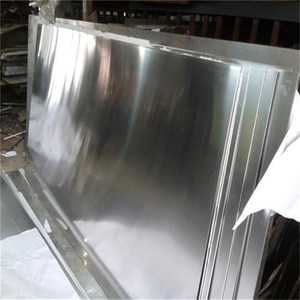
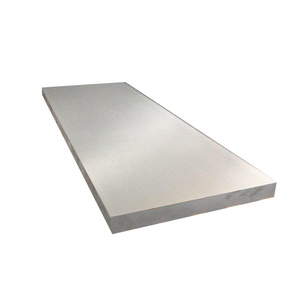
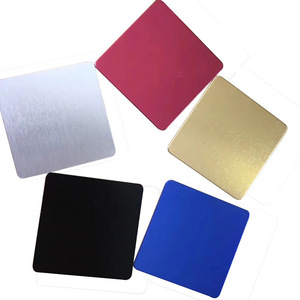
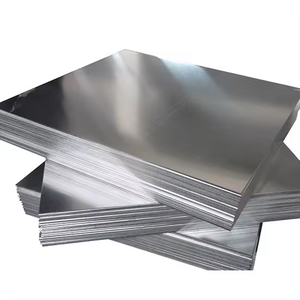
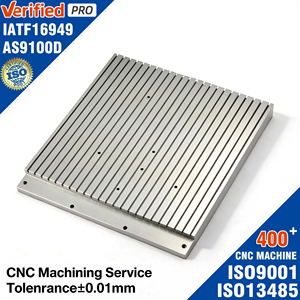
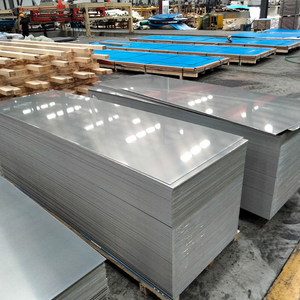
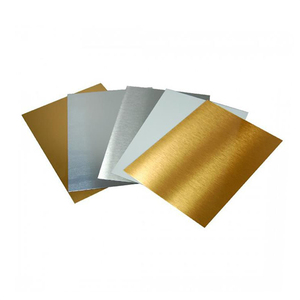
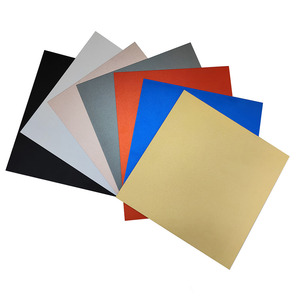
Bangladesh presents a demanding operational environment for solar photovoltaic (PV) hardware. Operating between tropical monsoon conditions, extreme humidity, high ambient heat, coastal salt aerosol exposure in the Chittagong and Cox’s Bazar belts, and destructive tropical cyclones originating in the Bay of Bengal, solar structural components demand rigorous metallurgical engineering. For solar panel manufacturers, EPC contractors, and project developers importing solar aluminum profiles into Bangladesh, selecting the correct aluminum alloy, mechanical temper, and surface passivation profile determines whether a PV infrastructure achieves its 25-to-30-year operational lifecycle.
Standard commercial aluminum profiles imported without localized metallurgical adjustments suffer from accelerated atmospheric corrosion, intergranular stress corrosion cracking, and structural deflection under cyclonic wind forces. As a primary exporter and supplier of engineered solar panel frames, mounting rails, and structural extrusions, our manufacturing processes integrate direct empirical research tailored to Bangladesh's climate specifications.
The structural skeleton of a PV panel frame and its underlying racking system relies on heat-treatable 6000-series silicon-magnesium aluminum alloys. Selecting the correct alloy selection dictates tensile strength, extrudability, and flexural rigidity:
| Mechanical / Chemical Parameter | Alloy 6063-T5 / T6 | Alloy 6005A-T6 | Alloy 6061-T6 |
|---|---|---|---|
| Primary Mechanical Application | Standard PV Module Outer Frames & Edge Profiles | Heavy-Duty Rooftop & Ground Rails | High-Stress Structural Connectors & Clamps |
| Tensile Strength (Rm min) | 205 MPa (T6) / 175 MPa (T5) | 270 MPa | 290 MPa |
| Yield Strength (Rp0.2 min) | 170 MPa (T6) / 130 MPa (T5) | 225 MPa | 240 MPa |
| Elongation at Break (A50mm) | 8% - 10% | 8% | 10% |
| Corrosion Resistance (Marine/Humid) | Excellent (Low Copper Content) | Very Good | Good (Requires ≥ 15µm Anodizing) |
| Extrudability & Surface Smoothness | Superior (Ideal for Aesthetic Anodizing) | Moderate (High Mechanical Strength) | Moderate |
For standard module manufacturing supplying Bangladesh's C&I rooftop solar sector, Alloy 6063-T6 offers the ideal combination of thin-wall extrudability, corner-key locking tension, and superior anodizing responsiveness. For utility-scale ground-mounted solar power plants in high-wind regions like Feni or Sirajganj, structural mounting rails engineered from Alloy 6005A-T6 provide a 30% increase in yield strength over conventional 6063-T5, eliminating structural sagging over wide span purlins.
Atmospheric humidity across Dhaka, Gazipur, and Narayanganj averages over 80% during the four-month monsoon season, while coastal zones in the Chittagong Division experience continuous airborne salt aerosol concentrations (NaCl). Unprotected or poorly anodized aluminum undergoes galvanic corrosion when in contact with stainless steel fasteners or structural steel purlins.
Our solar frame extrusions exported to Bangladesh utilize a zero-chromate, acid-etching pre-treatment followed by continuous sulfuric acid anodizing to produce a high-density aluminum oxide layer (Al₂O₃). We control anodizing thickness according to strict international environmental classifications:
Suitable for inland residential solar deployments across inland districts (e.g., Bogra, Rajshahi) with mild environmental exposure and low industrial sulfur dioxide pollution.
The baseline specification recommended for Bangladesh Commercial & Industrial (C&I) textile rooftops in Gazipur & Narayanganj. Resists acidic chemical exhaust and high relative humidity.
Mandatory for coastal solar plants, floating PV (FPV) on coastal ponds, and offshore island microgrids (e.g., Maheshkhali, Sandwip). Tested to > 1,000 hours neutral salt spray (ISO 9227) without pitting.
High-end architectural solar framing designed for Building-Integrated Photovoltaics (BIPV) in urban Dhaka commercial towers. Offers 20-year color retention against intense tropical UV radiation.
As Bangladesh transitions toward its SREDA (Sustainable and Renewable Energy Development Authority) renewable energy target of generating 10% of total electricity from clean energy sources, solar infrastructure deployments have diversified into four primary localized engineering scenarios. Each scenario requires specialized aluminum profile geometry and structural framing considerations:
Locations: Gazipur, Savar, Narayanganj, EPZ Zones in Chattogram.
Bangladesh's Ready-Made Garment (RMG) sector is converting expansive corrugated tin and concrete factory roofs into MW-scale solar installations under Net-Metering guidelines. Our ultra-lightweight aluminum mounting rails (Alloy 6005A-T6) reduce static roof dead load while providing universal clamp attachment to Kliplok, standing seam, and trapezoidal sheet roofs.
Locations: Teesta 200MW, Feni 100MW, Mymensingh, Sirajganj.
Utility-scale ground solar in river basin terrains faces severe seasonal flooding, mud erosion, and violent wind gusts. Our heavy-duty aluminum mounting purlins and reinforced 35mm / 40mm anodized module frames integrate dual-wall corner key reinforcements, capable of withstanding structural shear stress without frame bowing or micro-cracking of glass.
Locations: Kaptai Lake, Sunamganj Haors, Agricultural Ponds.
Given land scarcity in Bangladesh, floating PV installations on water bodies represent a rapidly expanding sector. Water surface humidity reaches 100%, causing continuous condensate build-up inside profile cavities. Our custom extrusions feature precision CNC-milled drainage slots and 22µm hard anodization to prevent internal cavity oxidation.
Locations: Northern Bangladesh (Rangpur, Dinajpur, Rajshahi).
Under the Rural Electrification Board (REB) and IDCOL initiatives, thousands of diesel irrigation pumps are being converted to solar power. Our modular, easy-to-assemble aluminum racking profiles allow local installation teams to deploy ground mounts rapidly in rural field settings without heavy cranes or specialized welding equipment.
The renewable energy sector in Bangladesh has experienced structural shifts driven by grid stability demands, net-metering incentives, and international green supply chain compliance mandates (such as RE100 for garment exporters). Understanding these market dynamics is vital for B2B procurement managers ordering solar hardware:
The Power Division of Bangladesh updated the Net-Metering Guidelines, permitting industrial electricity consumers to build solar capacities up to 10 MW or 70% of their sanctioned load. This policy has created a surge in procurement for high-rigidity aluminum racking systems designed for industrial rooftops. Factory owners prioritize long-lifecycle anodized frames that match the 25-year warranty of top-tier solar panels, avoiding costly roof tear-downs.
Large-scale solar parks across Bangladesh are adopting bifacial solar modules to harness albedo light reflected from sandy or water-rich ground surfaces. Bifacial modules generate up to 15-20% additional power from the rear side but are substantially heavier than traditional mono-facial panels. Consequently, EPC contractors require wider, reinforced aluminum frames (35mm x 30mm / 40mm x 35mm) with enhanced torque strength to support double-glass module loads during cyclonic storms.
Most high-precision, structural solar aluminum profiles are imported via Chittagong Port (Chattogram Port) or ICD Kamalapur, Dhaka. Local Bangladeshi module manufacturers and racking fabricators seek reliable overseas extrusion partners offering flexible LC (Letter of Credit) payment terms, pre-shipment structural testing, and protective container packaging that prevents surface friction scratches during sea transit.
Combining over five decades of metallurgical manufacturing experience with dedicated solar profile extrusion capacity, we deliver certified aluminum hardware tailored to exact project specifications.
Deep foundational expertise in billet chemistry, homogenizing heat treatment, press extrusion dynamics, and mechanical tempering control.
Fully controlled chromate-free pre-treatment and acid anodizing tanks handling profiles up to 6.5 meters with consistent micron film thickness.
Fast turnaround DXF/STEP drawing review and die sinking. Custom structural profile samples produced in 10-15 working days.
Integrated multi-axis CNC drilling, slot punching, corner mitering, and deburring for zero-defect field installation assembly.
Every batch undergoes cross-hatch adhesion testing, Webster hardness checks, tensile testing, and anodizing thickness gauge verification.
Interleaved protective PE film between profiles, heavy-duty waterproof VCI wrapping, strapped export-bound timber pallets for ocean freight.
Direct technical and commercial answers for procurement directors, structural engineers, and solar import managers in Bangladesh:
Partner with an experienced solar aluminum frame exporter. Send us your CAD profile specifications, required alloy temper, anodizing micron class, and target quantity for an instant engineering assessment and CIF Chittagong cost estimate.
Send an Inquiry