
EN Contact Us
Engineered to withstand Victoria's extreme microclimates—from Port Phillip Bay's marine atmospheric corrosion to the harsh wind shear loads of the Mallee region.
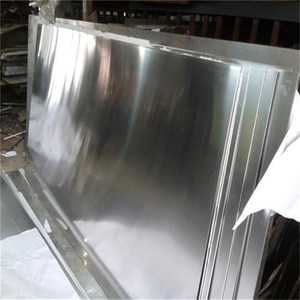
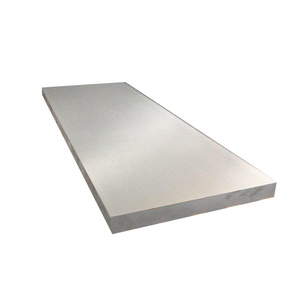
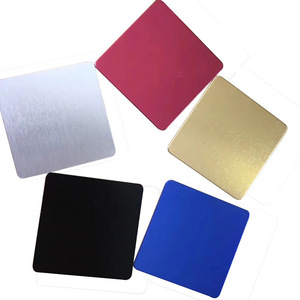
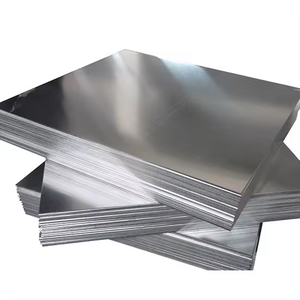
As Victoria accelerates toward its ambitious Victorian Renewable Energy Targets (VRET 2030), commercial EPC contractors, solar panel manufacturers, and mounting system integrators face escalating mechanical and environmental stresses. Supplying solar panel aluminum framing to Greater Melbourne requires rigorous metallurgical selection, precise heat treatment, and specialized surface passivation capable of surviving C4 and C5 atmospheric corrosive classifications.
China direct wholesale manufacturing provides Melbourne distributors and project developers with a massive cost efficiency advantage—provided the extrusions meet or exceed Australian Standards, specifically AS/NZS 1170.2 (Structural Design Actions - Wind Actions) and AS/NZS 1664 (Aluminum Structures).
The structural framework of a photovoltaic module must sustain cyclic thermal expansion, dynamic gust loadings exceeding 45 m/s in regional Victoria, and galvanic reaction when paired with stainless steel fasteners. Below is an engineering comparison of primary aluminum alloys utilized in our manufacturing facilities:
| Alloy & Temper | Tensile Strength (MPa) | Yield Strength (MPa) | Corrosion Resistance | Primary Application in Melbourne Market |
|---|---|---|---|---|
| 6063-T5 / T6 | 215 – 245 | 170 – 210 | High (Excellent Finish) | Standard residential PV module frames, sleek BIPV edging, architectural skylights. |
| 6005A-T6 | 270 – 290 | 225 – 240 | Very High | Long-span commercial solar rails, bifacial module perimeter support, roof racking. |
| 6061-T6 | 310 – 330 | 276 – 290 | Superior Structural | Utility-scale ground trackers, heavy-duty load-bearing structural connectors, seismic brackets. |
| 5052-H32 / 5083 | 230 – 340 | 190 – 280 | Extreme Marine (C5 Rating) | Port Phillip Bay coastal installations, floating solar platforms, inverter enclosures. |
Melbourne’s unique geography creates variable atmospheric microclimates. Sites within 5 km of Port Phillip Bay or Western Port Bay experience continuous sodium chloride deposition. To combat pitting and intergranular corrosion, our manufacturing facility applies two certified protective regimes:
How specialized aluminum profile designs address the exact site conditions encountered by Victorian solar installers and civil contractors.
Industrial logistics hubs across Dandenong South, Truganina, and Campbellfield feature expansive sheet-metal roofs. Our lightweight 6005A-T6 extrusions reduce dead load on corrugated roofs while offering high moment of inertia to resist uplift during violent spring storms.
Solar projects deployed near St Kilda, Brighton, or Geelong face aggressive salt damp. Utilizing 5083/5754 marine-grade aluminum frame backing with 25-micron clear anodizing prevents pitting corrosion and maintains mechanical integrity over a 25-year service life.
Large-scale solar generation in Shepparton, Mildura, and Kerang requires 6061-T6 high-wall torque tubes and mounting rails. These sections handle severe thermal cycling (45°C summers down to 0°C winter frost) without micro-cracking or bolt-hole elongation.
The Victorian solar market is undergoing rapid evolution driven by changing standards, high-density residential updates, and commercial decarbonization mandates:
Recent revisions to AS/NZS 5033 require mounting systems and module frames to prove documented shear and clamp load capacity. Chinese manufacturers with direct AS/NZS certified test reports (MTCs) and batch-traceable billet quality are replacing non-compliant grey-market importers.
Architects working on high-end residential developments in Toorak, Brighton, and South Yarra increasingly demand sleek, uniform all-black PV panels. Our automated black anodizing and deep matte powder-coating deliver 100% color-matched framing and mid/end-clamp assemblies.
Ground-mounted commercial projects in regional Victoria are rapidly transitioning to bifacial modules. Conventional frame geometry casts shadows on the rear glass, dropping yield by up to 8%. Our custom extrusions utilize an ultra-narrow bottom flange profile that minimizes rear shading while retaining 1.8kN/m² load ratings.
Tier-1 Australian EPCs now evaluate the supply chain carbon footprint. By sourcing primary aluminum from low-carbon hydro-powered smelters and recycling 100% of in-house extrusion butt-ends, our wholesale framing helps developers satisfy local Victorian green building procurement criteria.
Direct technical clarity on alloy certifications, shipping to Port of Melbourne, and custom tooling die processes.
Combining 50+ years of heavy metal engineering heritage with state-of-the-art aluminum extrusion technologies.
Originating from a multi-generational metals industrial group operating since 1972 (covering steel rolling, precision forging, and aluminum extrusion). We bring deep metallurgical knowledge to alloy billet composition, homogenization, and artificial ageing.
Quality control is performed under one roof. Every batch undergoes chemical composition spectroscopy, Webstler hardness testing, tensile pull tests, coating thickness measurement, and cross-hatch adhesion audits before export bundling.
Aluminum extrusions are prone to transit scratch damage if packed improperly. Our export packaging uses non-abrasive protective interleave film, PE shrink wrapping, heavy-duty corner cardboard protectors, and steel-strapped timber pallets constructed for side-forklift unloading.
Connect with our technical engineering desk today. Request custom profile CAD reviews, alloy sample kits, or factory-direct wholesale quote sheets for your next commercial tender.