EN Contact Us
High-precision extruded aluminium channels, custom plates, and structural profiles engineered to meet strict DIN EN specifications, delivered with complete material traceability.
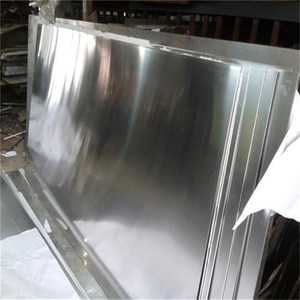
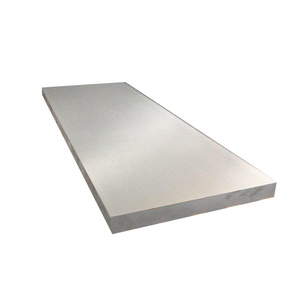
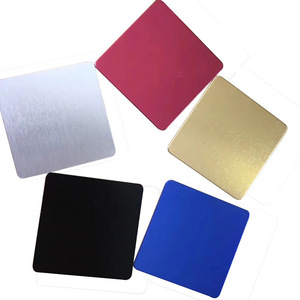
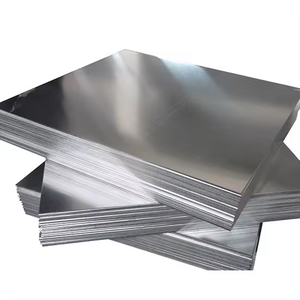
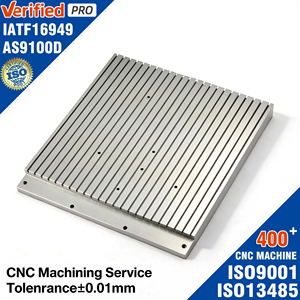
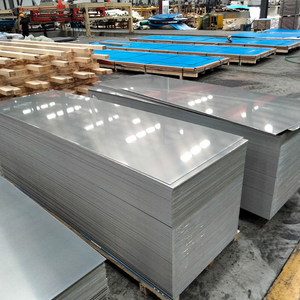
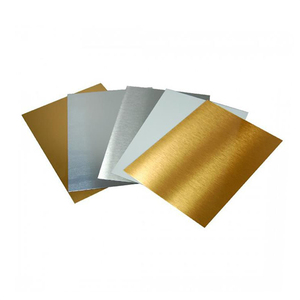
The Federal Republic of Germany represents Europe’s largest industrial ecosystem for semi-finished aluminium products, consuming millions of metric tons annually across high-precision mechanical engineering (Maschinenbau), automotive manufacturing, renewable energy systems, and architectural curtain walls. As German industrial procurement teams evaluate global supply chains, Chinese aluminium channel manufacturers have transitioned from low-cost alternative suppliers to primary strategic technology partners capable of fulfilling sub-millimeter tolerances, stringent alloy purities, and green-energy compliance directives.
This technical whitepaper provides a comprehensive evaluation framework for German B2B procurement heads, structural engineers, and supply chain directors seeking to import high-specification aluminium channel extrusions (U-channels, C-channels, H-channels, and custom extruded profiles) directly from premier Chinese extrusion mills and fabricators. By addressing localized compliance standards such as DIN EN 755-9, DIN EN 12020-2, the European Union's Carbon Border Adjustment Mechanism (CBAM), and specialized anodizing standards (Qualanod / Qualicoat Class 2), this document provides actionable insights to mitigate supply chain risks while securing a substantial total cost of ownership (TCO) advantage.
German engineering applications demand precise alloy chemistry and mechanical temper selection. Below is the authoritative reference breakdown for Chinese extruded aluminium channel alloys engineered for specific German market sectors.
| Alloy Designation (EN AW) | Chinese Standard (GB/T) | Temper Options | Tensile Strength (Rm MPa) | Primary German Market Applications |
|---|---|---|---|---|
| EN AW-6060 (AlMgSi0.5) | LD30 / 6060 | T4, T5, T6 | 160 - 220 | Architectural facades, window framing, interior mounting rails, solar framing. |
| EN AW-6063 (AlMg0.7Si) | 6063 | T5, T6 | 215 - 245 | Precision anodized architectural channels, structural louvers, electrical enclosures. |
| EN AW-6082 (AlSi1MgMn) | 6082 | T6, T651 | 295 - 340 | Heavy mechanical engineering (Maschinenbau), load-bearing structural channels, crane booms. |
| EN AW-5083 (AlMg4.5Mn0.7) | LF4 / 5083 | H111, H116, H321 | 275 - 350 | Marine shipbuilding in Bremen/Hamburg, chemical plant containers, cryogenic vessels. |
| EN AW-5754 (AlMg3) | 5754 | H111, H22, H32 | 190 - 240 | Bavarian automotive chassis components, welded structural frames, road transport bodies. |
| EN AW-7075 (AlZn5.5MgCu) | 7075 | T6, T651 | 540 - 580 | Aerospace components (AS9100 certified), high-stress robotics in Baden-Württemberg. |
Aluminium channel profiles sourced from top-tier Chinese manufacturers are deeply embedded in Germany’s major industrial clusters. Understanding these localized engineering contexts ensures precise die design and tolerance specification.
Germany’s machinery core relies heavily on EN AW-6082 T6 structural channels for modular machine frames, automated conveyor tracks, and robotic linear guide beds. These extrusions demand strict adherence to DIN EN 12020-2, limiting angular deviation and bow to ensure seamless integration with precision ball screws and pneumatic actuators without secondary milling.
Supply chain partners feeding OEM assembly hubs in Munich, Stuttgart, and Wolfsburg require specialized structural channels extruded from crash-resistant alloys like EN AW-5754 and 6063-T6. Applications include EV battery enclosure trays, crash-box channels, and lightweight subframes requiring strict grain-size control to pass critical 180° bending and crush testing protocols.
Architectural curtain wall systems in Germany’s commercial towers demand premium surface aesthetics paired with thermal efficiency. Extruded EN AW-6060 / 6063 U-channels integrated with polyamide thermal break strips undergo in-house Qualanod E6/EV1 clear anodizing (15-25µm film thickness) or Qualicoat Class 2 powder coating to withstand harsh Northern European freeze-thaw cycles and acid rain exposure.
With Germany accelerating its Energiewende targets, utility-scale solar farms across Brandenburg and rooftop installations across Saxony require millions of linear meters of high-volume extruded mounting channels. Standardized 41x41mm and 41x21mm mounting channels in anodized 6005A-T6 alloy offer optimal strength-to-weight ratios, ensuring rapid site installation and 25-year structural resistance against heavy snow loads (DIN 1055).
The German procurement landscape is undergoing a structural transition driven by the European Union’s environmental policies and domestic sustainability legislation (Lieferkettensorgfaltspflichtengesetz - LkSG). Importers sourcing aluminium channels from China must align with these emerging requirements:
Under the EU Carbon Border Adjustment Mechanism (CBAM), German buyers are required to declare embedded direct and indirect greenhouse gas emissions for imported aluminium products. Top Chinese exporters now provide audited Scope 1, 2, and 3 carbon footprint declarations per metric ton of extruded channels, utilizing hydro-powered and solar-powered primary smelter billets to drastically minimize carbon tariffs at German customs points.
German industrial clients increasingly mandate a minimum percentage of Post-Consumer Recycled (PCR) content in aluminium extrusions. Advanced Chinese mills utilize closed-loop recycling loops to produce EN AW-6060 and 6082 extrusions with up to 75% recycled content without sacrificing mechanical tensile yield or chemical purity limits defined by DIN EN 573-3.
German enterprise buyers must guarantee ethical sourcing and environmental compliance across all tier-1 and tier-2 international suppliers. Established Chinese manufacturing hubs offer full digital supply chain traceability, from bauxite/billet origin certificates through automated ultrasonic testing and EN 10204 3.1 chemical analysis documentation.
With over five decades of deep-rooted metallurgical manufacturing heritage, our extrusion plant combines raw material independence, state-of-the-art European extrusion technology, and precision post-extrusion fabrication under one unified Quality Management System certified to ISO 9001:2015, ISO 14001:2015, and AS9100D.
Operating a fleet of 12 fully automated hydraulic extrusion presses ranging from 600 to 5,500 metric tons, we extrude complex solid, semi-hollow, and hollow channel profiles with circumscribing circle diameters up to 450mm. Integrated infrared die temperature sensors and automated nitrogen quench systems ensure uniform metallurgical grain structure across the entire profile length.
To deliver ready-to-assemble structural channel components directly to German production lines, our dedicated CNC machining facility features multi-axis vertical machining centers, precision miter saws, automated punching equipment, and deburring lines. Operations include high-speed milling, tapping, counter-sinking, and precision end-notching to drawing tolerances of ±0.02mm.
To initiate a technical RFQ and receive a comprehensive commercial quotation within 24 hours, German sourcing teams are encouraged to prepare the following project specifications:
Provide 2D DXF/PDF or 3D STEP files highlighting critical fit-form-function dimensions, wall thickness tolerances, and mating profile interfaces.
Specify the required EN AW alloy designation (e.g., 6082 vs 6063) and mechanical temper (T5 vs T6) based on structural yield requirements.
Define surface finish standards (Mill finish, Anodized E6/EV1, Powder Coat RAL), target batch quantities, and preferred Incoterm (FOB/CIF/DDP).
Connect directly with our senior metallurgical engineering team and European procurement specialists to review custom profile drawings, request sample boxes, or obtain instant project quotations.
Get Catalog