
EN Contact Us
Engineered with high-tensile 5000 and 6000-series structural aluminum alloys, offering superior wind-load resistance, acoustic isolation, and long-term durability against Tokyo Bay's coastal salinity.
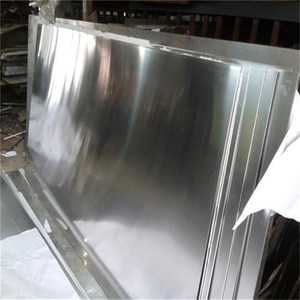
Architectural developments in Tokyo represent one of the most technically demanding engineering landscapes in global construction. Entrance door systems in Greater Tokyo must simultaneously address extreme seismic displacement hazards, severe typhoon-driven wind loads (exceeding 3,600 Pa), rigorous thermal insulation mandates enforced by Japan's Building Energy Efficiency Act (Zero Energy Building / ZEB initiatives), and aggressive salt-spray oxidation in coastal areas such as Odaiba and Toyosu.
As an established global extrusion manufacturer and direct OEM/ODM exporter with over five decades of metal processing experience, our facility produces CE-certified architectural aluminum entrance door systems engineered to bridge European structural standards (EN 14351-1) with Japanese Industrial Standards (JIS A 4702 / JIS A 1513). By maintaining total vertically integrated control—from primary billet casting and matrix die-sinking to multi-chamber thermal break assembly and automated electrostatic powder coating—we deliver high-information-gain solutions tailored precisely for Japanese general contractors, architectural fabricators, and commercial developers.
Every district in Tokyo exhibits distinct architectural requirements, urban density challenges, and environmental exposures. Our custom aluminum entrance door systems are engineered for targeted installation across key metropolitan typologies.
Super-tall commercial developments demand entry systems capable of withstanding constant stack-effect pressures, heavy foot-traffic cycles, and severe wind draft forces. Our heavy-duty 6063-T6 and 6082-T6 extruded thermal break entrance doors utilize reinforced multi-point locking mechanisms and low-friction stainless steel pivot bearings. They ensure effortless manual operation while maintaining an air-tight seal under high atmospheric pressure differentials.
Tokyo's high-end residential towers ("Mansions") mandate sleek aesthetic profiles paired with exceptional acoustic attenuation (JIS T-3 / Rw 35dB rating) to block urban ambient noise. We supply narrow-sightline aluminum entrance doors featuring integrated polyamide thermal breaks (PA66 GF25) and concealed hinges that blend seamlessly into minimalist Japanese architectural themes while delivering superior U-values below 1.3 W/m²K.
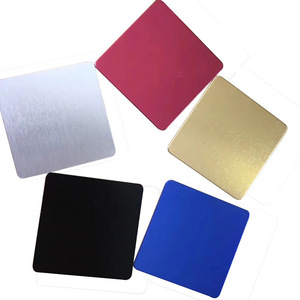
Luxury retail frontages demand monumental door leaf dimensions exceeding 3.5 meters in height without structural sagging. Utilizing aviation-grade 5083 and 6061 alloy internal framework and custom color-anodized or PVDF fluorocarbon coatings, our factory manufactures grand automatic sliding and oversized pivot entrance systems that exceed strict Japanese visual distortion tolerances.
Marine environments subject structural aluminum to accelerated filiform and galvanic corrosion. Our doors exported to coastal Tokyo locations undergo specialized chromate-free pre-treatment followed by 25-micron anodic oxidation (JIS H 8601 compliance) or architectural-grade Qualicoat Class 2 powder coating, passing 3,000-hour acetic acid salt spray tests (AASS).
Staying compliant with Japanese building evolution requires anticipation of strict environmental laws, smart building integration, and modern structural design philosophies.
With Japan committing to carbon neutrality, Tokyo Metropolitan Government regulations require new commercial buildings to meet ZEB-ready thermal metrics. Aluminum entry doors must incorporate multi-cavity thermal insulation strips, EPDM triple-gasket seals, and warm-edge spacer glass integration to restrict thermal bridging.
In accordance with Japan's Heartful Building Law (Barrier-Free Act), modern Tokyo entrance systems require zero-threshold flush transition tracks. Our ultra-low-profile drainage thresholds keep out driven rainwater while permitting smooth wheel-chair and foot passage.
Contactless access control is now standard across corporate Tokyo facilities. Our doors feature pre-milled internal wiring channels, electromagnetic lock pre-cuts, and concealed sensor housing compatible with Japanese smart access systems (e.g., Miwa, Goal, and Felica card readers).
Comparative structural parameters illustrating how our custom aluminum entrance doors conform to international and Japanese testing benchmarks.
| Performance Characteristic | Japanese Standard (JIS) Benchmark | European Standard (CE EN 14351-1) | Our Factory Production Standard |
|---|---|---|---|
| Structural Alloy Composition | JIS H 4100 (A6063, A6061, A5052) | EN AW-6063 / EN AW-6061 T6 | Primary Billet Aluminum (99.7% purity) |
| Wind Pressure Resistance | JIS A 4702 Grade S-6 (3,600 Pa) | EN 12210 Class C5 (2,000 Pa+) | Exceeds 3,800 Pa (Typhoon-Safe) |
| Air Infiltration Rate | JIS A 4702 Grade A-4 (2 m³/h·m²) | EN 12207 Class 4 | 0.8 m³/h·m² (Ultra Airtight) |
| Water Tightness / Resistance | JIS A 4702 Grade W-5 (500 Pa) | EN 12208 Class E1050 | 750 Pa Dynamic Pressure Water Seal |
| Thermal Transmittance (U-Value) | JIS A 4710 Thermal Grade H-5 | EN ISO 10077-2 (Uf ≤ 1.5 W/m²K) | Uf = 1.1 ~ 1.3 W/m²K (PA66 Break) |
| Acoustic Isolation Rating | JIS A 4702 Grade T-3 (35 dB) | EN ISO 140-3 (Rw = 38 dB) | 36 dB to 40 dB Sound Proofing |
| Surface Anodizing Coating | JIS H 8601 (A120 ~ A125) | EN 12373-1 Architectural Class 1 | 20 - 25 Microns Sealed Anodization |
Combining five decades of metallurgical manufacturing heritage with modern extrusion press engineering and rigorous quality control protocols.
We eliminate supply chain delays by engineering custom profile dies in-house. From DXF/STEP CAD verification to physical aluminum sample production, our custom tooling cycle takes only 10 to 15 working days.
Extrusion pressing, age-hardening heat treatment, multi-axis CNC milling, thermal break crimping, and surface finishing are performed within a single production complex. Every order receives comprehensive spectral metal analysis and coating thickness inspection reports.
To prevent surface scratches during maritime transit to Tokyo Port or Yokohama Port, profiles are packed with protective non-residue adhesive film, interleaved with moisture-proof kraft paper, and reinforced inside ISPM-15 compliant timber crates.
Addressing structural compliance, lead times, custom manufacturing, and technical specifications for Japanese construction imports.
While CE certification (EN 14351-1) covers European safety, health, and environmental standards, our engineering team manufactures doors using physical extrusion profiles, alloy chemical compositions (A6063/A6061), and wall thicknesses that directly match or exceed JIS A 4702 performance criteria. We provide independent laboratory test reports for wind load (Grade S-6), water tightness (Grade W-5), and air tightness (Grade A-4) upon request.
Yes. We manufacture customized perimeter sub-frames equipped with flexible EPDM expansion joints and sliding anchor brackets. These assemblies allow a Story Drift Angle (SDA) accommodation of up to 1/100, preventing structural binding, glass shear, or door jams during earthquake occurrences in seismic zones like Tokyo.
For coastal sites in Odaiba, Toyosu, or Yokohama, we strongly recommend our 20 to 25-micron anodic oxidation (JIS H 8601 Class A120+) or Qualicoat Class 2 / PVDF fluorocarbon paint coatings. These surface treatments prevent filiform corrosion and blistering caused by atmospheric sea salt and industrial atmospheric emissions.
Custom matrix die production and sample approval require 10 to 15 working days. Once samples are approved, bulk production takes approximately 15 to 20 days. Maritime shipping from our regional port to Tokyo Port or Yokohama Port typically takes 10 to 14 days, offering a total timeline of 35 to 45 days from drawing sign-off to site delivery.
Yes. Our multi-axis CNC machining centers pre-mill precise lock pockets, cylinder cutouts, wire routing channels, and hinge prep holes matching major Japanese hardware brands including Miwa Lock, Goal, and Ryobi door closers according to your exact CAD specifications.
For standard extruded aluminum profiles, our MOQ is typically 500 kg to 1,000 kg per section. For custom finished architectural entrance door units, we accept project-based orders starting at 10 customized sets, allowing fabricators to source small commercial boutique frontages or large multi-unit residential projects seamlessly.