
EN Contact Us
Factory-direct mill supply engineered for Greater Boston fabricators, facade contractors, and industrial OEMs requiring AAMA 611 anodizing, precise mechanical tolerances, and marine atmospheric resistance.
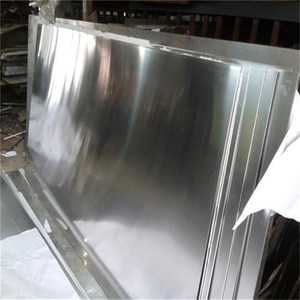
High-strength marine plate with superior stress-corrosion resistance, perfect for coastal Boston architectural framing and saltwater exposure.
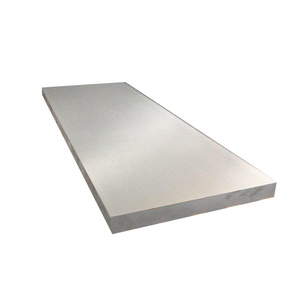
Precision custom-cut aluminum plate designed for exterior spandrel panels, curtain wall backing, and HVAC louvers.
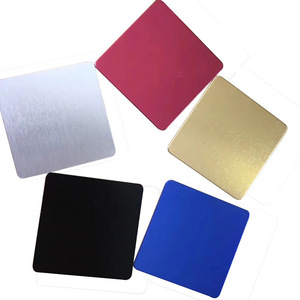
AAMA 611 Class I electrolytic colored anodized sheets for exterior cladding, historic trim matching, and interior metalwork.
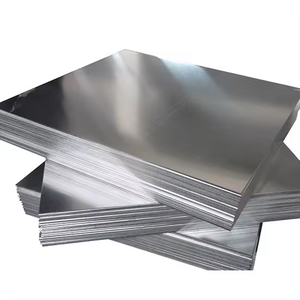
Certified marine-grade alloys designed to withstand salt air degradation in coastal New England waterfront developments.
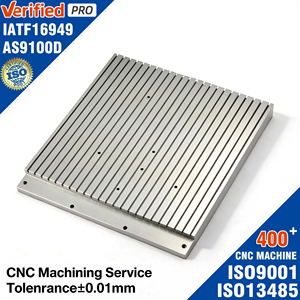
High-precision machined structural extrusions and connector blocks for Cambridge life science labs and robotics OEM applications.
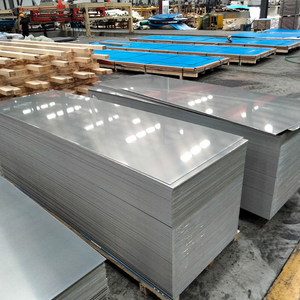
Thick-walled aluminum section plates engineered for heavy structural mullion reinforcing and anchor brackets in tall buildings.
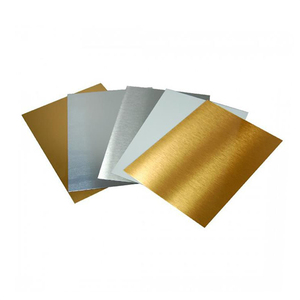
Extruded architectural sections featuring sealed anodic oxide coatings resistant to severe New England freeze-thaw cycles.
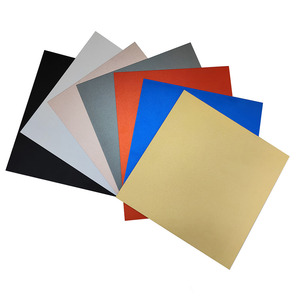
Precision thin-gauge aluminum strips for thermal break wrapping, composite panel skins, and architectural trim accents.
An in-depth guide to alloy selection, anodic coating electrochemistry, and thermal performance compliance under the Massachusetts State Energy Code (10th Edition / IECC 2024).
The Greater Boston architectural landscape presents a demanding dual challenge for facade engineers, glazing contractors, and structural consultants. Buildings located along the Boston Seaport District, East Boston Waterfront, and Quincy Bay are subjected to continuous airborne sodium chloride concentrations, driving aggressive pitting corrosion in sub-standard aluminum profiles. Concurrently, New England’s severe microclimate experiences annual temperature differentials exceeding 100°F (from sub-zero winter freezes to humid summer heatwaves), necessitating extreme dimensional stability and advanced thermal break technology.
As a specialized global manufacturer and direct exporter of Anodized Architectural Aluminum Sections, our enterprise delivers high-precision extruded profiles engineered to exceed North American architectural standards. By maintaining complete mill-to-market control—from billet homogenizing and custom die extrusion to in-house electro-chemical anodizing and 5-axis CNC machining—we supply Boston's commercial construction sector with architectural extrusions that combine structural longevity, thermal isolation, and uncompromised E-E-A-T (Experience, Expertise, Authoritativeness, and Trustworthiness) performance.
Architectural extrusion integrity begins with precise billet chemistry. Selecting the optimal aluminum alloy directly dictates ultimate tensile strength, yield strength, wind-load resistance, and anodizing clarity:
| Alloy & Temper | Tensile / Yield (MPa) | AAMA 611 Anodizing Response | Salt Spray Resistance (ASTM B117) | Primary Boston Application Scenario |
|---|---|---|---|---|
| 6063-T6 | 205 / 170 | Exceptional (Class I Clear & Color) | 3,000+ Hours (Sealed Oxide) | Curtain Wall Mullions, Storefronts, Thermal Windows |
| 6061-T6 | 290 / 240 | High Structural (Slight Gray Tint) | 2,500+ Hours | High-Load Skylights, Structural Canopy Profiles, Anchors |
| 5083-H116 | 305 / 215 | Good (Sheet / Plate Applications) | 5,000+ Hours (Marine Grade) | Boston Seaport Waterfront Cladding & Marine Louvers |
| 5052-H32 | 230 / 195 | Superior Architectural Matte Finish | 4,000+ Hours | Exterior Spandrel Panels & Custom Sheet Break Metal |
| 7075-T6 | 570 / 500 | Hard-Coat Anodize Compatible | 1,500+ Hours (Requires Seal) | High-Stress CNC Brackets for Cambridge Robotics/Labs |
Unlike organic liquid or powder paint coatings that adhere mechanically to the metal surface, Anodizing converts the aluminum substrate itself into an integral, extremely hard aluminum oxide coating ($Al_2O_3$). For the Boston commercial market, specifying the correct coating thickness and sealing methodology is critical to prevent atmospheric pitting and color chalking over decades of exposure.
Our manufacturing facility operates fully automated sulfuric acid anodizing lines with inorganic two-step electrolytic coloring (tin/cobalt salt deposition). We manufacture exclusively to meet and exceed AAMA 611-14 (Voluntary Specification for Anodized Architectural Aluminum) standards:
Mandatory for high-traffic exterior architectural installations in Greater Boston. Our Class I oxide layers measure between 18 to 25 microns thick, providing sapphire-hard surface protection ($7-8 \text{ Mohs hardness}$) that withstands harsh salt spray and abrasive winter grit.
Engineered for interior structural partitions, laboratory trim in Cambridge innovation hubs, and sheltered exterior storefront soffits where direct atmospheric salt-air contact is reduced.
The chemical key to long-term durability. Post-anodizing, profiles undergo high-temperature nickel acetate sealing, completely hydrating the unsealed microscopic pores ($10^{11} \text{ pores/cm}^2$) and ensuring ASTM B680 Acid Dissolution test loss of $< 33 \text{ mg/dm}^2$.
Tailoring structural aluminum profiles and anodized finishes to the distinct architectural requirements of New England's premier commercial and institutional hubs.
Focus: Extreme Salt-Air Resistance & High Wind Load.
Solution: Class I Clear and Dark Bronze Anodized 6063-T6 curtain wall mullions paired with 5083 marine-grade spandrel reinforcement. Hydrothermally sealed to resist constant marine moisture and salt spray along Boston Harbor.
Focus: Precision CNC Tolerances & Cleanroom Performance.
Solution: AS9100-certified 5-axis CNC machined 6061-T6 connectors and hard-coat anodized interior frame profiles. Engineered for low-degassing performance, chemical washdown resistance, and high structural rigidity.
Focus: Historic Landmark Commission Approval & Custom Die Matching.
Solution: In-house die creation (10-15 day turnaround) replicating legacy cast iron/bronze sightlines. Custom 2-step electrolytic dark bronze and champagne anodized finishes matching historic aesthetic guidelines.
Focus: High-Traffic Durability & Mass Thermal Code Compliance.
Solution: Thermal break aluminum entrance doors and window frames utilizing 25mm glass-fiber reinforced polyamide (PA66GF25) struts, cutting frame heat loss and preventing interior winter condensation.
The Commonwealth of Massachusetts has enacted some of the most stringent building energy performance standards in North America, including the Massachusetts Stretch Energy Code and Boston’s Building Energy Reporting and Disclosure Ordinance (BERDO 2.0) targeting net-zero greenhouse gas emissions. For glass curtain walls and commercial windows, these regulations dictate overall assembly U-factors as low as $U-0.24 \text{ Btu/h}\cdot\text{ft}^2\cdot^\circ\text{F}$.
Transitioning from traditional pour-and-debridge urethanes to high-mechanically crimped PA66GF25 thermal struts, enabling thermal isolation up to 55mm wide for ultra-low U-value wall assemblies.
Utilizing hydro-powered primary billet and up to 75% recycled pre-consumer scrap in our extrusions, assisting Boston developers in earning LEED v4.1 Materials & Resources credits.
Replacing legacy hexavalent chromium pretreatments with zirconium/titanium nano-coatings prior to anodizing sealing, eliminating heavy metal runoff in manufacturing.
Eliminating supply chain vulnerability through vertical integration, rigorous quality assurance, and seamless ocean container logistics directly into the Port of Boston.
Our CAD/CAM tooling department reviews DXF, DWG, and STEP files, evaluating extrudability, circumscribing circle limits, and press tonnage. New custom extrusion dies are cut and tested in 10 to 15 working days, with first-article sample reports provided prior to volume press runs.
Operating multiple extrusion presses ranging from 600 to 3,500 metric tons, we extrude profile weights from $0.15 \text{ kg/m}$ up to $25 \text{ kg/m}$, accommodating complex hollow curtain wall mullions up to 300mm circumscribing diameter.
Every extrusion length is wrapped with interleaved protective polyethylene film or neutral kraft paper, tightly bundled, and loaded into timber-framed steel-strapped crates optimized for 20ft/40ft ocean container shipping directly to Conley Terminal (Port of Boston).
Clear, technical answers regarding alloy verification, certification compliance, minimum order quantities, and ocean freight logistics.