
EN Contact Us
Direct Factory Supply for US Contractors, Fabricators, Municipalities, and Industrial Distributors
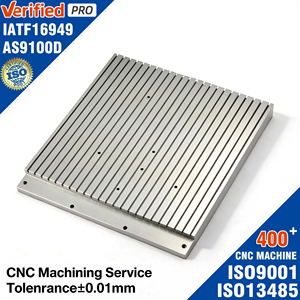
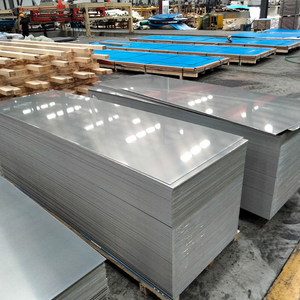
Engineered using mechanical hydraulic swaging and press-locking technology, permanently locking bearing bars and cross bars without thermal stress or heat-affected zone (HAZ) weakening.
Utilizing high-magnesium 5083-H116 and 5052-H32 alloys to prevent intergranular corrosion and stress-corrosion cracking in salt-fog, coastal dock, and offshore splash zones.
Designed with serrated top bearing edges and narrow 1/2" clear spacing options to satisfy Americans with Disabilities Act (ADA) heel-proof requirements and OSHA fall-protection standards.
The demand for high-performance structural aluminum grating in North America has accelerated exponentially due to nationwide infrastructure modernization under the Infrastructure Investment and Jobs Act (IIJA), massive expansions in coastal commercial facilities, and rigid environmental compliance mandates enforced by the US EPA and OSHA. When specifying aluminum grates, architectural engineers, municipal procurement officers, and industrial contractors require rigorous adherence to NAAMM (National Association of Architectural Metal Manufacturers) MBG 531 standards, ASTM B221 material specifications, and verified load-bearing metrics.
As a vertically integrated international aluminum extrusion, casting, and precision-machining industrial group established in 1972, we deliver mill-direct aluminum bar grating, plank grating, trench covers, and architectural sunshade systems engineered specifically for the operational demands of North American job sites.
Not all aluminum grates are manufactured equal. Selecting the proper alloy temper is critical to preventing structural deflection, galvanic degradation, and premature fatigue failure under heavy rolling wheel loads (H-20 and HS-20 traffic specifications).
| Alloy & Temper | Tensile Strength (PSI) | Yield Strength (PSI) | Corrosion Resistance | Primary US Application Scenarios |
|---|---|---|---|---|
| 6061-T6 Aluminum | 45,000 PSI | 40,000 PSI | High (General Industrial) | Heavy-duty structural walkways, platform decking, trench drains, industrial power plants. |
| 6063-T6 Aluminum | 35,000 PSI | 31,000 PSI | Very High (Architectural) | Architectural sunshades, louvered grates, ceiling diffusers, decorative building facades. |
| 5083-H116 Marine Grade | 46,000 PSI | 33,000 PSI | Maximum (Saltwater/Chemical) | Offshore oil platforms, coastal docks, naval vessel gangways, chemical processing vats. |
| 5052-H32 Sheet/Plank | 33,000 PSI | 28,000 PSI | Superior (Forming) | Solid/punched safety planks, ADA heel-proof walkway covers, wastewater scum baffles. |
Aluminum grates engineered by our manufacturing centers serve diverse localized industries across all 50 US states:
Procurement managers serving the US market navigate complex regulatory landscapes, including Section 232 tariffs, Anti-Dumping/Countervailing Duties (AD/CVD), and strict Buy America / BABA compliance rules. To maintain uninterrupted supply chains, US buyers are moving toward direct factory partnerships offering transparent mill test reports (MTRs), dual ASTM/EN international material certification, and custom pre-cut, ready-to-install panel kits that minimize job-site field labor costs in high-wage US metropolitan markets.
With an industrial manufacturing lineage stretching back over five decades to 1972, our metals manufacturing ecosystem integrates raw billet smelting, custom extrusion die sinking, automated surface treatment, AS9100D aerospace-grade CNC machining, and rigorous quality assurance laboratory testing under a single quality management umbrella.
Over 10,000 custom extrusion die profiles available. Rapid prototyping converting customer DXF/STEP files to first-article physical samples within 10 to 15 business days.
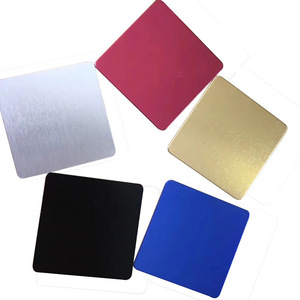
Equipped with fully automated environmentally compliant powder coating and Class I/II anodizing lines capable of delivering customized RAL shades, deep bronze, slick black, and marine silver.
Every shipment is accompanied by complete chemical composition spectrometry analysis, tensile yield physical testing reports, and salt-spray corrosion chamber documentation.
Direct technical answers regarding load calculations, ASTM standards, freight logistics, and compliance
Our aluminum grates are manufactured strictly in accordance with NAAMM MBG 531-17 (Metal Bar Grating Manual), ASTM B221 (Standard Specification for Aluminum-Alloy Extruded Bars, Rods, Wire, Shapes, and Tubes), and ANSI/ADA walkway slip-resistance guidelines. Full Mill Test Reports (MTRs) according to EN 10204 3.1 are provided with every batch.
H-20 highway loading specifies a 16,000 lb. dual-wheel load. For a standard 36-inch clear trench span, a minimum 2" x 1/4" or 2-1/2" x 1/4" 6061-T6 aluminum bearing bar with maximum 1-3/16" bar centers is required. Our engineering team provides custom load table calculations upon drawing submission.
Die production and sample approval require 10–15 days. Bulk manufacturing takes 15–20 days. Ocean transit time to US West Coast ports (Los Angeles, Long Beach, Oakland) is approximately 16–22 days, while East Coast ports (Savannah, Charleston, New York) take 28–35 days. Door-to-door DDP logistics are fully supported.
Swaged grating locks cross bars into pre-punched notch openings in bearing bars through a high-pressure hydraulic tube expansion process. Press-locked grating uses high hydraulic pressure to press slotted cross bars directly into slotted bearing bars. Both methods avoid weld-induced thermal stress and HAZ grain weakness.
Yes. Utilizing 5-axis AS9100-certified CNC routers, we supply factory-fabricated panels cut to exact field dimensions, complete with toe plates, welded end-banding bars, perimeter angles, notch cutouts for pipe penetrations, and pre-drilled countersunk fastener holes.
While FRP has a lower initial material purchase price, aluminum offers superior impact resistance, zero UV degradation over time, complete recyclability, and far higher scrap value. Compared to 304 or 316 stainless steel, aluminum provides similar corrosion resistance at approximately 40% to 50% lower total material cost.