
EN Contact Us
Precision-extruded structural profiles optimized for Austrian civil construction, industrial automation, and heavy Alpine environmental loads.
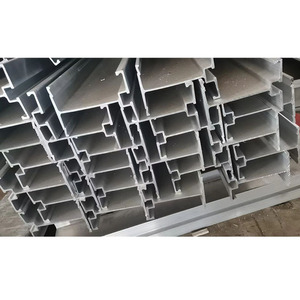
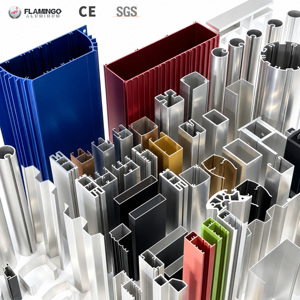
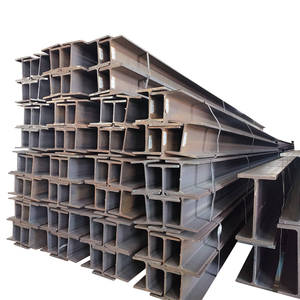
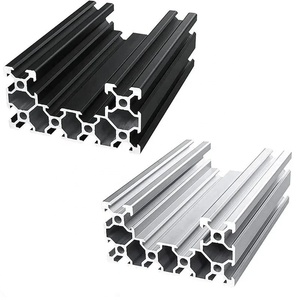
Austria’s industrial and construction sectors operate under some of the most rigorous structural and environmental mandates in the DACH region (Germany, Austria, Switzerland). Positioned in the heart of the Alps, structural components in Austria are subjected to extreme freeze-thaw temperature cycles, severe wind loads in elevated mountain passes, and heavy snow load conditions governed by ÖNORM B 1991-1-3. For structural engineers, procurement managers, and civil contractors in cities such as Vienna, Graz, Linz, and Innsbruck, selecting the correct aluminum beam factory partner requires an in-depth understanding of material science, Eurocode 9 compliance, and precision extrusion capabilities.
As a global leader in advanced extrusion manufacturing with over five decades of metallurgical experience, our organization provides direct factory supply of structural aluminum beams engineered specifically to exceed European EN 755, EN 12020, and Austrian national standards. By controlling every stage of production—from primary billet homogenizing to high-tonnage press extrusion, precision heat treatment, CNC machining, and surface finishing—we deliver information-gain advantages and material reliability that safeguard project budgets and structural integrity.
Key Engineering Takeaway: Unlike standard carbon steel beams, high-strength aluminum structural alloys (such as EN AW-6082-T6) offer a strength-to-weight ratio that reduces structural dead load by up to 65% while maintaining structural yield strengths above 260 MPa, resisting atmospheric corrosion without requiring hazardous zinc galvanizing.
The performance of an aluminum beam in load-bearing applications depends entirely on alloy chemistry, temper selection, and grain structure alignment achieved during extrusion and press quenching. Below is the technical breakdown of the primary structural alloys supplied into the Austrian market:
| Alloy Grade | Temper | Tensile Strength Rm (MPa) | Yield Strength Rp0.2 (MPa) | Elongation A5 (%) | Primary Austrian Market Application |
|---|---|---|---|---|---|
| EN AW-6082 | T6 | ≥ 310 | ≥ 260 | 10% | Heavy civil infrastructure, crane rails, structural bridge girders, high snow-load roof trusses. |
| EN AW-6061 | T6 | ≥ 290 | ≥ 240 | 10% | Industrial automation frames, welded machine beds, truck chassis, structural formwork supports. |
| EN AW-6063 | T6 / T5 | ≥ 215 / 175 | ≥ 170 / 130 | 12% / 8% | Architectural facades, timber-hybrid pergola rafters, glazed roof skylight beams, louvers. |
| EN AW-6005A | T6 | ≥ 270 | ≥ 225 | 8% | Railway carriage structural members, high-rigidity solar mounting beams, structural tubing. |
For load-bearing structural beams installed across Austrian alpine regions, EN AW-6082-T6 is the premier specification choice. Referred to as a structural alloy in Eurocode 9 (EN 1999), 6082 provides exceptional fatigue resistance and high proof stress, making it ideal for dynamic load environments such as overhead gantry crane runways and ski-lift infrastructure supports.
How structural aluminum beams drive innovation across key Austrian industrial hubs and geographic environments.
In regions such as Tyrol, Carinthia, and Vorarlberg, mountain-mounted PV arrays encounter severe wind shear and alpine snow drifts. Extruded 6082-T6 support beams deliver anti-corrosive, ultra-light structural framing that tolerates extreme bending moments without micro-cracking.
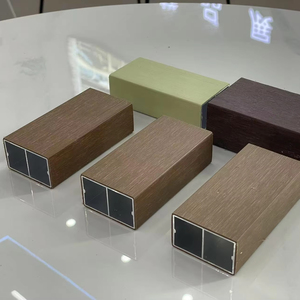
Austria leads Europe in modern mass-timber and timber-hybrid commercial construction. Our coextruded WPC composite and anodized structural aluminum H-beams integrate seamlessly with Glulam timber beams, offering lightweight stiffness for floor cassettes and curtain wall mullions.
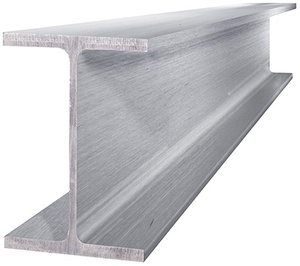
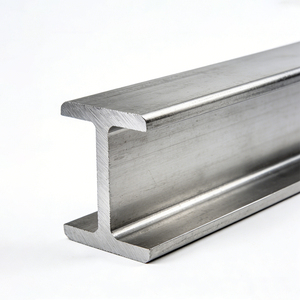
Upper Austria (Linz-Wels industrial triangle) hosts advanced automotive and heavy machinery manufacturing. High-grade 6082-T6 extruded I-beams meeting EN 755 act as lightweight, low-maintenance crane rail runways for indoor factory logistics.
Austrian construction firms rely on high-turnaround aluminum formwork systems for multi-story residential projects. Our German-standard H-beams provide high section modulus, minimizing deflection during heavy concrete pouring while allowing manual handling.
Connecting with ÖBB (Austrian Federal Railways) infrastructure projects, custom aluminum structural extrusions reduce mass in rolling stock assemblies, bridge gantries, and catenary equipment frames, driving operational energy efficiency.
Austrian OEM equipment builders utilize 4080 V-Slot and C-beam extrusions with precision T5/T6 heat treatment, ensuring minimal straightness deviation (≤ 0.5 mm per meter) for automated CNC milling and robotic pick-and-place lines.
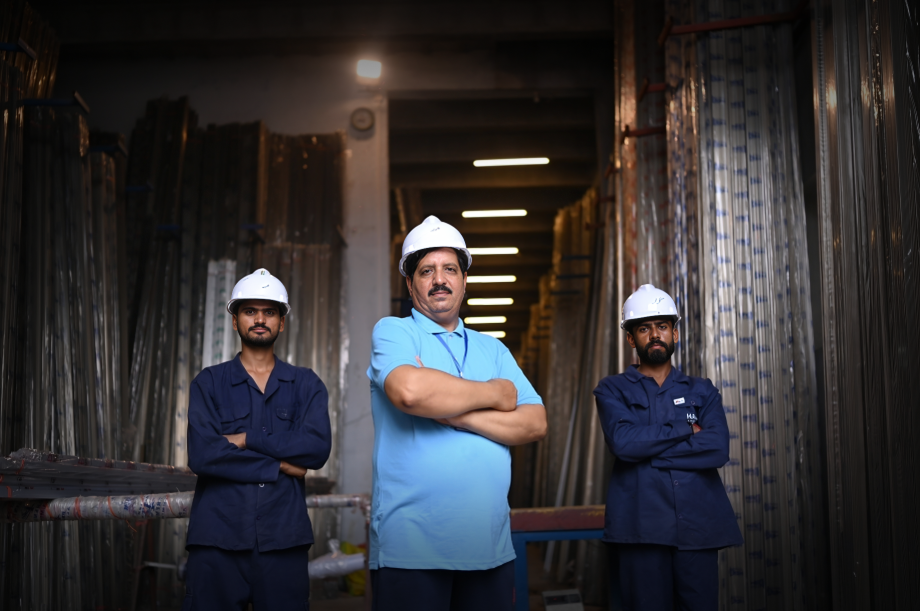
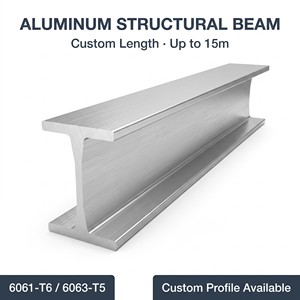
Traced back through a robust industrial legacy established in 1972, our metals manufacturing group has evolved into a powerhouse for precision extrusion engineering. Operating state-of-the-art extrusion lines, automated quenching systems, and continuous aging ovens, we transform certified virgin billet into complex structural aluminum beams up to 15 meters in continuous length.
Our integrated manufacturing hub eliminates supply chain friction by maintaining all critical operations in-house: tool & die design, aluminum extrusion, structural fabrication, precision CNC punching and cutting, and electro-static powder coating.
Procurement teams in Austria are increasingly operating under strict ESG (Environmental, Social, and Governance) mandates driven by the European Green Deal and national Austrian climate neutrality goals for 2040. When evaluating international factory suppliers for aluminum beams, Austrian buyers prioritize three main pillars:
Primary aluminum smelting is energy-intensive. To meet Austrian green building certifications (such as klimaaktiv and DGNB/ÖGNI), our factory utilizes low-carbon primary billet combined with closed-loop internal scrap remelting. By tracking carbon intensity per kilogram of extruded aluminum, we support Austrian partners in obtaining verified EPD documentation for sustainable building tenders.
Standard commercial extrusions often exhibit dimensional twist and bow that cause fitting delays during site assembly. For Austrian high-rise facades and modular civil structures, we supply beams adhering to ÖNORM EN 12020-2 high-precision tolerances, controlling wall thickness variations within fractional millimeter thresholds.
Austria’s severe climate—ranging from hot summers in the Danube basin to freezing alpine winters—demands superior surface protection. We provide:
For custom OEM profiles and architectural designs that fall outside standard cross-sections, our engineering desk offers rapid tooling services. From your submitted 3D CAD drawing (STEP, IGES, or DXF format), our tooling engineers analyze die stress distributions, material flow dynamics, and press tonnage requirements.
We sink custom extrusion dies in-house within 10 to 15 working days, delivering initial sample profiles accompanied by full CMM dimensional inspection reports and material test certificates (MTR) prior to full batch production.
Technical clarity on procurement, standards compliance, customs, and logistics for Austrian clients.
Our structural aluminum beams are manufactured strictly in compliance with EN 755 (1-9) for mechanical properties and dimensional tolerances of structural profiles, EN 12020 for high-precision extrusions, and Eurocode 9 (EN 1999) structural design guidelines. Mill Test Certificates (MTC) according to EN 10204 3.1 are supplied with every shipment.
We handle export sea-freight packaging using container-length wooden crates, inter-leaved protective plastic film, and heavy-duty steel banding suitable for 20ft and 40ft High Cube containers. Shipments arrive via major European entry ports (such as Hamburg, Koper, or Rotterdam) and are transported directly to your job site or warehouse in Austria via rail or truck freight under DAP or DDP incoterms.
Yes. Our in-house fabrication facility features long-bed multi-axis CNC machining centers capable of drilling, milling, slotting, tapping, and miter-cutting aluminum beams up to 15 meters in length. Beams arrive at your Austrian site fully prepared for immediate bolted installation.
For custom die profile orders, our typical MOQ ranges between 500 kg to 1,000 kg per profile cross-section, depending on the circumscribing circle diameter and required alloy. Standard structural shapes (I-beams, H-beams, channel sections) are available with lower minimum batch thresholds.
Unlike composite plastics or compromised timber, structural aluminum alloys retain their ductility, impact strength, and tensile properties at sub-zero temperatures down to -60°C without undergoing ductile-to-brittle transitions. Combined with anodized or Qualicoat surface layers, moisture ingress and freeze-fracturing are entirely eliminated.
For high-altitude, high-UV, and high-moisture alpine environments, we recommend either 20-25 µm clear or bronze hard-coat anodizing (Qualanod certified) or Qualicoat Class 2 super-durable architectural powder coating. Both treatments provide superior resistance to atmospheric oxidation and UV degradation.
Contact our structural engineering desk today to submit your profile drawings, request a competitive factory quotation, or order certified material sample kits tailored for the Austrian market.