EN Contact Us
Explore our export-ready range of electrical conductor grade, cold-heading, anodized, and structural aluminum alloy wires manufactured under rigorous ASTM, EN, and ISO quality management standards.
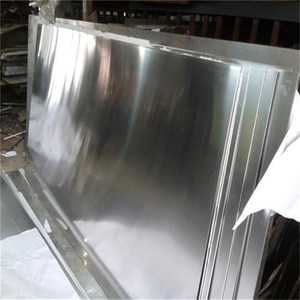
High-magnesium alloy wire offering superior tensile strength, exceptional saltwater corrosion resistance, and flawless drawability for marine and heavy structural applications.
Inquire Now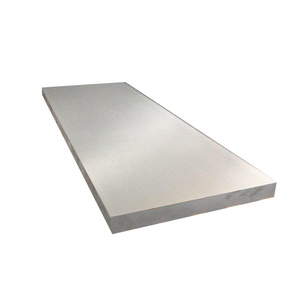
Custom-drawn high-strength heat-treatable wires engineered for aerospace rivets, cold-headed fasteners, precision machining stock, and high-stress structural components.
Inquire Now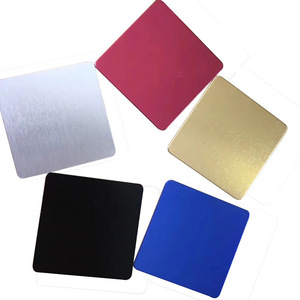
Electrolytically sealed color anodized aluminum wire featuring fade-resistant surface oxide layers, exceptional flexibility, and smooth surface finishing for specialty applications.
Inquire Now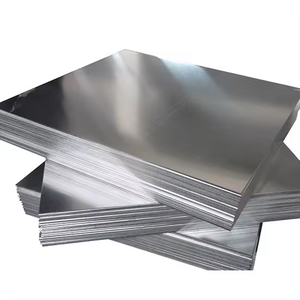
Extruded and cold-drawn alloy wires with precise temper control, designed for rigorous outdoor, architectural, chemical containment, and naval engineering environments.
Inquire Now
Ultra-tight tolerance wire rod manufactured under aerospace-grade quality management, tailored for CNC Swiss turning, automated bending, and high-speed cold heading.
Inquire Now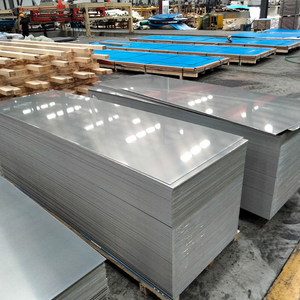
Manganese and magnesium-alloyed aluminum wires providing an optimal equilibrium of weldability, thermal conductivity, ductility, and mechanical endurance.
Inquire Now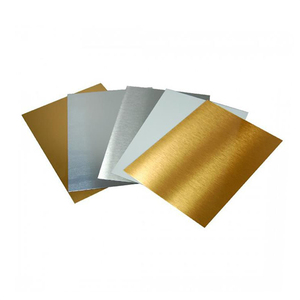
Durable, abrasion-resistant anodized wire stock available in silver, black, gold, and custom RAL colors for architectural trim, mesh weaving, and electronic shielding.
Inquire Now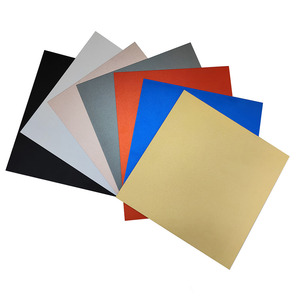
Ultra-fine drawn aluminum wire with uniform grain structure, precise diameter consistency, and high electrical conductivity for delicate electronics and specialized weaving.
Inquire NowIn the modern international B2B industrial landscape, securing a reliable, technically certified aluminum wire manufacturer is paramount for procurement officers, system integrators, and OEM engineers. As a vertically integrated enterprise with a legacy spanning over five decades (established in 1972), our facility combines primary smelting purity control, continuous casting and rolling (CCR), precision wire drawing, thermal annealing, and advanced surface finishing under one unified quality management infrastructure.
Operating from our modern manufacturing hub in Lahore, Pakistan, and delivering to key markets across North America, Europe, the Middle East (UAE, KSA, Qatar, Oman), and Australasia, we solve the core procurement challenges faced by enterprise buyers: batch-to-batch chemical consistency, precise temper repeatability, strict mechanical compliance, and transparent supply chain logistics.
Aluminum wire selection requires a comprehensive understanding of the interplay between alloy composition, thermal temper state, tensile strength, elongation percentages, and volumetric electrical conductivity measured against the International Annealed Copper Standard (% IACS). Below, our senior metallurgical team outlines the primary alloy families engineered within our facilities.
Containing a minimum aluminum purity of 99.5%, EC Grade 1350 wire delivers electrical conductivity reaching up to 61.8% IACS. Ideal for electrical overhead transmission lines, transformer windings, grounding grids, and flexible busbar connectors.
Alloyed with high magnesium content, these non-heat-treatable wires exhibit exceptional work-hardening capabilities, supreme fatigue strength, and complete resistance to alkaline and marine salt-water attack.
Magnesium-silicon (6061, 6262) and zinc-alloyed (7075) wire formulations providing high yield strength after precipitation age-hardening (T6 temper). Designed for cold heading of rivets, aircraft bolts, and structural fasteners.
Refer to this standardized metallurgical data matrix when specifying wire stock for industrial RFP and RFQ documentation:
| Alloy Grade | Standard Temper | Tensile Strength (MPa) | Elongation % (50mm) | Electrical Conductivity | Primary B2B Application |
|---|---|---|---|---|---|
| EC 1350 | O / H19 | 85 – 190 | 12% – 25% | 61.5% – 61.8% IACS | Electrical Cable, Transformer Windings, Magnet Wire |
| 1100 | H14 / H18 | 110 – 165 | 8% – 15% | 59.0% – 60.0% IACS | Chemical Rivets, Metallizing Wire, Thermal Spraying |
| 4043 (AlSi5) | As Drawn | 140 – 210 | 10% – 18% | 42.0% – 48.0% IACS | MIG / TIG Welding Wire, Flame Spraying Stock |
| 5052 | O / H32 / H38 | 190 – 290 | 10% – 20% | 35.0% – 40.0% IACS | Marine Hardware, Zipper Wire, Anodized Fasteners |
| 5356 (AlMg5) | H111 | 250 – 330 | 12% – 22% | 29.0% – 35.0% IACS | High-Tensile Structural Marine Welding & Braiding |
| 6061 | T4 / T6 | 180 – 310 | 8% – 16% | 40.0% – 45.0% IACS | Aerospace Fasteners, Automotive Cold Heading |
| 8000 Series | H24 / O | 110 – 170 | 15% – 30% | 61.0% IACS | Building Construction Wire, Armor Wrap Cable |
The global shift toward electrification, lightweight vehicle architectures, and renewable grid integration is fundamentally altering aluminum wire procurement strategies worldwide.
Global Tier-1 automotive suppliers are systematically replacing copper in low-voltage and high-voltage wiring harnesses with micro-alloyed 6000 and 8000 series aluminum wire. This transition reduces overall harness weight by up to 48%, significantly extending Electric Vehicle (EV) battery range without sacrificing electrical safety.
Utility-scale solar farms and offshore wind installations are scaling up their demand for aluminum tie-wires, grounding conductors, and inverter interconnects. Driven by lower total-cost-of-ownership (TCO) compared to copper, high-purity EC 1350 wire dominates modern HVDC renewable energy transmission projects.
Corporate sustainability mandates now require complete Scope 1, 2, and 3 emissions disclosure. Industrial wire procurement teams prioritize mills utilizing low-carbon primary ingots, closed-loop in-house scrap recycling, and zero-liquid-discharge (ZLD) surface pre-treatment lines to satisfy ESG reporting audits.
The manufacturing of high-reliability aluminum wire has evolved from crude batch extrusion to automated continuous casting and multi-die drawing lines. Our production facility leverages state-of-the-art technological setups designed to eliminate internal metallurgical defects and dimensional variance.
Our automated Properzi-type CCR lines transform molten aluminum directly into 9.5mm wire rod without intermediate billet reheating cycles. This continuous thermal process prevents inclusions, ensures uniform grain growth, and guarantees superior drawability for fine gauge wire production down to 0.10mm.
During the high-speed wire drawing process, real-time laser micrometers continuously monitor wire diameter tolerances within ±0.002mm. Simultaneously, integrated eddy-current flaw detectors inspect 100% of the wire length for surface cracks, seams, or micro-split anomalies.
To achieve exact mechanical temper designations (such as O, H12, H14, H19, T4, T6), drawn wire coils are processed in nitrogen-purged batch annealing furnaces. This inert atmosphere eliminates surface oxidation, leaving the wire completely bright, clean, and ready for immediate downstream processing or plating.
When sourcing industrial wire products internationally, supply chain disruption and non-conforming materials can stall entire assembly lines. At HAQ Aluminium, our operational philosophy is engineered around total risk mitigation and verified material traceability.
Find authoritative technical and commercial answers compiled by our international sales and engineering team.
Our EC Grade 1350 aluminum wire is guaranteed to meet or exceed 61.2% IACS (International Annealed Copper Standard) in the soft (O) temper state, and a minimum of 61.0% IACS in hard-drawn (H19) tempers, fully compliant with ASTM B233 and IEC 60889 international standards.
Yes. In addition to standard metric and AWG diameters (ranging from 0.10mm to 12.0mm), our in-house die-making facility allows us to sink custom diamond drawing dies for precise decimal wire sizes with tolerances as tight as ±0.002mm based on customer technical drawings.
We supply wire on plastic DIN spools (DIN 125, 160, 200, 250, 355), wooden reels, steel stem packs (pay-off drums up to 500kg for automated high-speed wire forming), and catch-weight coils. All export packaging features heat-treated ISPM-15 wooden skids, VCI anti-rust barrier wrapping, and heavy-duty plastic strapping suitable for long-distance ocean freight.
Our computerized, multi-stage electrolytic anodizing line utilizes digital spectrophotometers to maintain tight color hue parameters (Delta E < 0.8) across production runs. This guarantees consistent color brilliance and film thickness (typically 5 to 25 microns) for decorative and industrial orders alike.
Standard production lead times range between 12 to 20 working days depending on alloy availability, drawing complexity, and required surface finishing. Express mill slots can be arranged for contractual OEM buyers maintaining blanket purchase agreements.
Every sea-container shipment is accompanied by a full EN 10204 3.1 Mill Test Certificate, chemical spectrographic analysis reports, physical tensile and elongation test curves, electrical resistivity verification certificates, and dimensional inspection logs certified by our quality control manager.
Connect directly with our metallurgical application engineers and export sales advisors to discuss your specific alloy requirements, target pricing, and custom delivery schedules.