EN Contact Us
Direct factory stock and custom-extruded aluminum structural elements engineered to ASTM B221, EN 755, and AS9100 aerospace specifications.
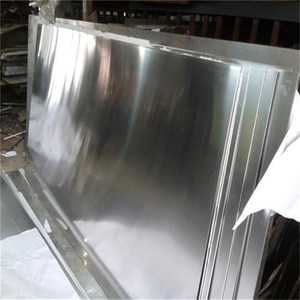
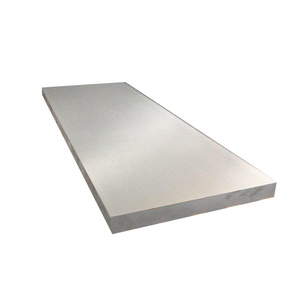
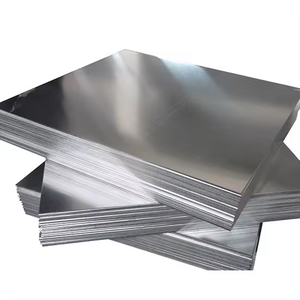
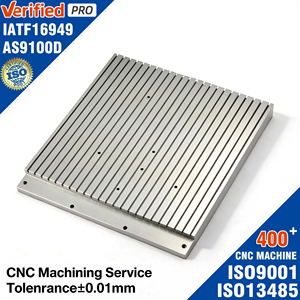
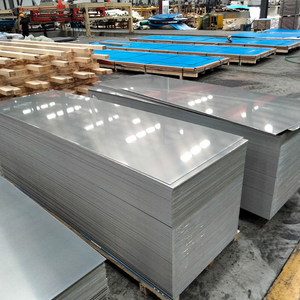
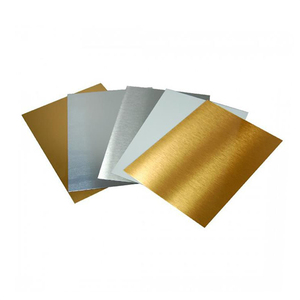
Why tier-1 global contractors, industrial original equipment manufacturers (OEMs), and solar EPC firms specify our extruded aluminum channels and structural shapes.
Every melt lot undergoes optical emission spectrometry (OES) chemical verification. Mechanical property testing—including yield strength, ultimate tensile strength, and elongation—is certified per heat before extrusion tooling engagement.
In-house CAD/CAM tooling design and die sinking capabilities allow rapid prototyping of complex aluminum channels, architectural louvers, interlocks, and hollow structural sections within 10 to 15 working days.
Certified production lines guaranteeing strict dimensional tolerances, straightness, twist limits, and surface defect control per EN 12020-2 and ASTM B221 precision structural standards.
Vertical automated powder coating and anodizing units utilizing Qualicoat-compliant polyester powders and chromate-free pre-treatments, delivering up to 25 years of outdoor corrosion resistance.
Interleaved protective PE film, heavy-duty paper wrapping, corner guards, and ISPM-15 heat-treated timber palleted packaging configured specifically for international sea container transit.
Value-added post-processing including precision miter cutting, CNC milling, drilling, tapping, punching, and deburring to provide drop-in ready structural assembly components for jobsites.
Selecting the optimal aluminum alloy and temper designation is essential to balance mechanical load-bearing capacity, corrosion resistance, weight reduction, and anodizing quality.
Aluminum channels—encompassing U-channels, C-channels, J-channels, hat channels, and architectural structural profiles—are primary structural members across building facades, transportation frames, solar mounting racks, and industrial equipment enclosures. Choosing between heat-treatable alloys (e.g., 6000 and 7000 series) and non-heat-treatable work-hardened alloys (e.g., 3000 and 5000 series) directly dictates structural safety factors and total lifecycle cost.
Engineering Rule of Thumb: For architectural glazing and framing where smooth surface finish and crisp anodizing are paramount, specify 6063-T5 or T6. For heavy structural framework subjected to dynamic mechanical stress, select 6061-T6 or 6082-T6. For marine, off-shore, or chemical contact, utilize 5083-H116 / H321 or 5754-H22.
| Alloy & Temper | Tensile Strength (MPa) | Yield Strength (MPa) | Corrosion Resistance | Machinability & Weldability | Primary B2B Applications |
|---|---|---|---|---|---|
| 6063-T5 / T6 | 150 – 240 | 110 – 210 | Excellent (Atmospheric) | Good Machinability / Excellent Weld | Architectural channels, windows, doors, facades, trim sections. |
| 6061-T6 | 290 – 310 | 240 – 275 | High (General Industrial) | Excellent Machinability / High Weld | Heavy structural channels, truck frames, solar substructures, machinery rails. |
| 5083-H116 / H321 | 305 – 345 | 215 – 240 | Superior (Marine/Saltwater) | Fair Machinability / Superior Weld | Shipbuilding structural ribs, marine channels, cryogenic pressure vessels. |
| 5052-H32 / H34 | 210 – 260 | 160 – 215 | Superior (Marine & Chemical) | Moderate Machinability / Excellent Form | Marine sheet channels, electronic enclosures, fuel tank brackets. |
| 7075-T6 | 530 – 570 | 460 – 505 | Moderate (Requires Finish) | Superior Machinability / Limited Weld | Aerospace structural fittings, high-stress defense equipment, CNC components. |
| 3003-H14 | 140 – 180 | 115 – 150 | Very High (General) | Fair Machinability / Outstanding Form | Light decorative trim, HVAC duct channels, heat exchanger fins. |
Navigating environmental mandates, tariff adjustments, and technological transformations in global B2B metal procurement.
With the European Union's Carbon Border Adjustment Mechanism (CBAM) and global Scope 3 emissions reporting taking full effect, procurement teams are actively switching to suppliers utilizing hydro-powered aluminum smelting. Specifying low-carbon billet (< 4.0 kg CO2e/kg Al) ensures long-term regulatory compliance and avoids carbon import tariffs.
Jobsite labor costs and skilled trade shortages are driving demand for pre-fabricated aluminum channels. Rather than importing raw 6-meter mill lengths, global buyers increasingly require cut-to-length, CNC-notched, drilled, and tapped channel assemblies packaged as modular kits ready for immediate structural bolting.
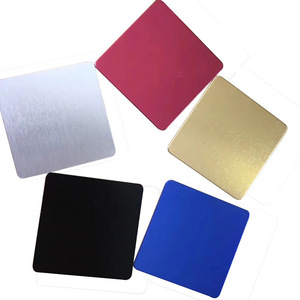
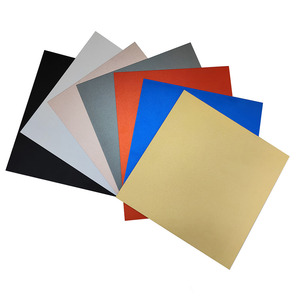
Environmental regulations banning hexavalent chromium pre-treatments have shifted industry benchmarks toward zirconium/titanium-based conversion coatings and architectural anodizing. Multi-color anodic coatings (black, bronze, gold, champagne) combining aesthetic brilliance with extreme weatherability are dominating high-end architectural tenders.
Aluminum channels and custom extrusions provide an unbeatable strength-to-weight ratio (roughly one-third the density of structural steel), allowing engineers to reduce dead weight without sacrificing structural safety. Key industrial deployment sectors include:
Clear, technical answers to common questions asked by procurement managers, structural engineers, and import agents.
For standard stocked profiles (such as equal U-channels and standard 6061/6063 angles), MOQs start at 500 kg per section. For fully customized dies requiring new extrusion die sinking, the typical minimum production lot is 1,000 kg to 2,000 kg depending on press size, alloy billet diameter, and required surface finish.
Extruded profiles pass through automated mechanical stretchers post-quenching to relieve internal stress and correct bow and twist. Dimensional tolerances are continuously monitored using optical profile projectors and laser micrometers complying with EN 755-9 and ASTM B221 precision limits (standard straightness tolerance ≤ 1.5 mm per meter, precision tolerance down to ≤ 0.5 mm per meter upon request).
Architectural anodizing typically specifies an anodic film thickness of 10 to 25 microns (Type II anodizing) per AAMA 611, prioritizing color consistency, aesthetic appeal, and UV stability. Industrial hard-coat anodizing (Type III) creates a dense oxide layer exceeding 50 microns at lower bath temperatures, yielding extreme surface hardness (up to 500 HV) for severe wear, abrasion, and dielectric resistance.
Yes. Our integrated machine shop is equipped with multi-axis CNC machining centers capable of handling extrusions up to 7 meters in length. Services include compound miter cuts, high-precision milling, slotting, counter-sinking, flow-drilling, tapping, and post-machining deburring, enabling direct assembly upon destination arrival.
Every shipment includes a comprehensive EN 10204 3.1 Mill Test Certificate detailing OES chemical ladle analysis, mechanical tension test results, heat treatment history, coating thickness logs, and dimensional inspection sign-offs. Additional third-party inspection (SGS, TÜV, Intertek) can be arranged prior to vessel loading.
Submit your CAD drawings (.DXF, .DWG, .STEP) or material specification sheets. Our engineering sales team will analyze extrudability, die complexity, and mill price per kilogram within 24 hours.
Send an Inquiry