
EN Contact Us
Explore our industrial-grade extruded aluminum beams, engineered for severe structural loads, crane runways, architectural support framing, and specialized OEM machine assemblies.
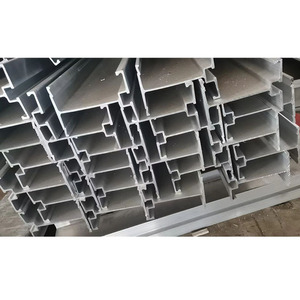
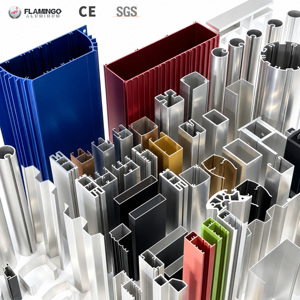
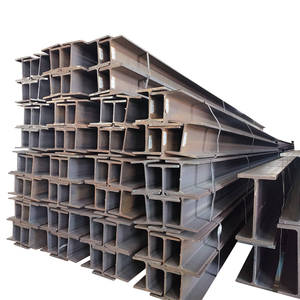
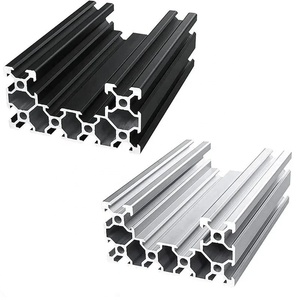
When engineering high-span structural framing, gantry runways, or specialized industrial machinery, structural integrity cannot be compromised. As part of a family metal enterprise with over 53 years of metallurgical mastery, HAQ Aluminium operates as a trusted manufacturing partner for civil contractors, industrial OEMs, and structural steel fabricators worldwide.
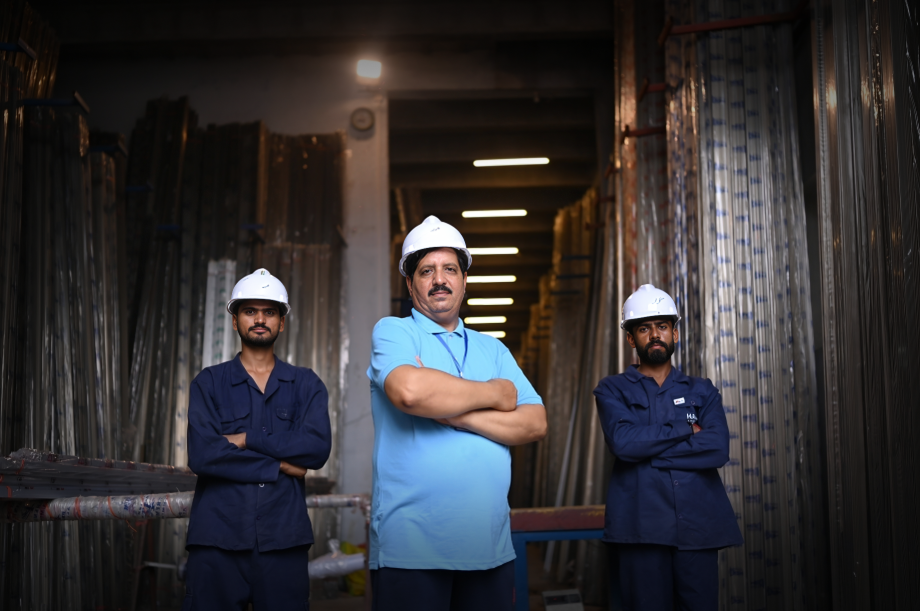
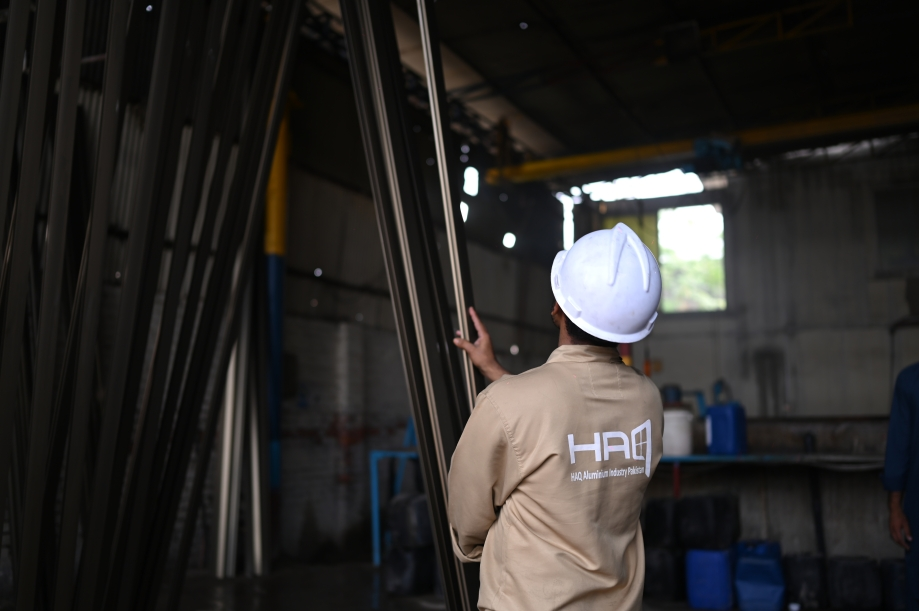
Our integrated manufacturing site in Lahore houses multi-press extrusion lines (ranging from light precision presses up to heavy structural tonnage capacity), automated log heating, inline water/air quenches, artificial aging ovens, and an advanced chromate-free electrostatic powder coating line.
Understanding moment of inertia ($I$), section modulus ($Z$), and microstructural grain orientation when substituting structural steel beams with high-strength extruded aluminum profiles.
In modern civil and industrial engineering, structural aluminum beams are increasingly replacing carbon steel in applications demanding high strength-to-weight ratios, corrosion immunity, and reduced maintenance cycles. However, proper specification requires rigorous evaluation of alloy chemistry, heat treatment temper, cross-sectional geometric geometry, and deflection thresholds.
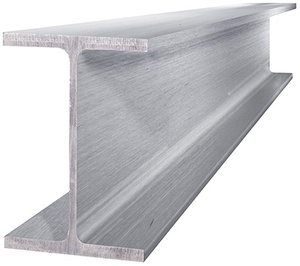
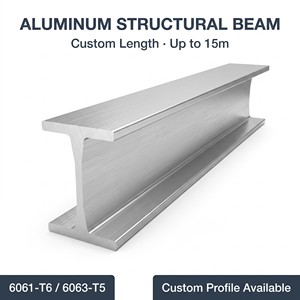
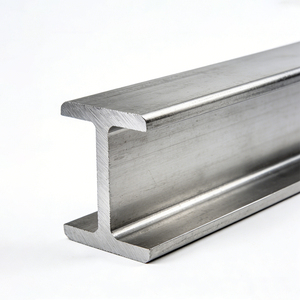
Structural I-Beams and H-Beams distribute material away from the neutral axis to maximize moment of inertia. Extruded aluminum allows non-uniform wall thickness distribution—placing extra mass along flange edges to resist bending moments while minimizing web mass.
While 6061-T6 offers excellent extrudability, weldability, and balanced mechanical strength for standard framing, 6082-T6 delivers approximately 10-15% higher ultimate tensile strength ($R_m \ge 310\text{ MPa}$) and proof strength ($R_{p0.2} \ge 260\text{ MPa}$), making it the primary standard for overhead crane rails and heavy structural formwork.
Unlike steel beams requiring multi-layer organic liquid coatings that chip over time, aluminum naturally forms a protective self-healing oxide layer ($Al_2O_3$). For marine or chemical environments, anodizing ($15-25\,\mu m$) orQualicoat-certified architectural powder coating guarantees zero structural degradation over decades.
| Alloy & Temper | Yield Strength ($R_{p0.2}$) | Tensile Strength ($R_m$) | Elongation ($A_{50}$) | Primary Application Areas |
|---|---|---|---|---|
| 6063-T5 / T6 | 160 – 200 MPa | 210 – 245 MPa | 8 – 10% | Architectural rafters, pergola beams, decorative fascia, solar framing. |
| 6061-T6 | 240 – 270 MPa | 290 – 310 MPa | 10 – 12% | Heavy industrial I-beams, machinery platforms, structural vehicle frames. |
| 6082-T6 | 250 – 280 MPa | 310 – 340 MPa | 10 – 14% | Overhead crane rails, bridge gantry beams, high-stress concrete formwork. |
| 6005A-T6 | 215 – 225 MPa | 260 – 270 MPa | 8 – 10% | Rail transport structural components, high-flexure hollow structural beams. |
How advances in extrusion technology, coextrusion materials, and circular economy requirements are transforming structural aluminum beam procurement.

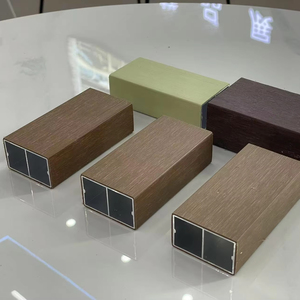
Architectural applications are moving rapidly toward composite timber aluminum coextrusion. By pairing a load-bearing high-strength 6063-T5 hollow aluminum core with an exterior weather-resistant WPC shell, manufacturers eliminate wood rot, warp, and termite degradation while retaining structural span stiffness for outdoor pergolas, architectural louvers, and rafter beams.
The construction industry is shifting from traditional timber and steel formwork to modular aluminum formwork H-Beams. Certified according to German and European construction standards, high-durability aluminum H-beams offer up to 300 reuse cycles per beam—slashing per-square-meter concrete pouring costs and significantly accelerating high-rise construction timelines.
Procurement departments are moving away from receiving raw mill-length extrusions that require site cutting and drilling. Modern structural beam manufacturers provide full 5-axis CNC machining, including precision mitering, notch cutting, counter-sunk mounting holes, and end-milling directly at the factory. This guarantees plug-and-play assembly on project sites.
Global environmental directives require documented Embodied Carbon metrics. Leading extrusion plants are integrating clean hydro-powered primary aluminum billets and closed-loop process scrap remelting. Aluminum's infinite recyclability without property degradation positions extruded aluminum beams as the primary choice for LEED-certified sustainable construction.
Key procurement benchmarks for EPC contractors, structural fabricators, and global buyers seeking high-reliability supply chains.
For custom profile cross-sections, tooling investment is a critical factor. Partnering with a manufacturer capable of transitioning from CAD drawings (DXF/STEP) to 3D die simulation, die steel sinking, and first-article sample production within 10 to 15 working days drastically lowers time-to-market risks.
Freight costs significantly impact landed unit price. Structural beams up to 5.85 meters fit standard 20ft containers, while lengths up to 11.85 meters fit 40ft High Cube containers. For custom long-span beams up to 15 meters, dedicated breakbulk or specialized open-top container bundling strategies are utilized.
Qualified B2B procurement mandates full batch traceability. Ensure your supplier provides mill test certificates (EN 10204 3.1) covering chemical composition spectrography, mechanical tensile results, anodizing thickness checks, and coating cross-hatch adhesion performance reports with every dispatch.
Clear, expert answers regarding alloy selection, structural limits, surface finishes, and factory production protocols.