
EN Contact Us
High-precision extruded aluminum plates, anodized spandrel panels, and marine-grade structural alloys engineered for high-rise facade applications.
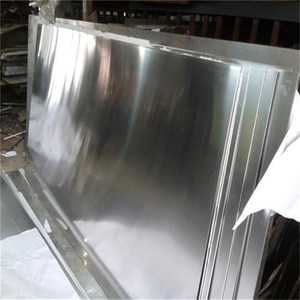
High-tensile strength alloy plates ideal for exterior curtain wall backing, unitized panel anchors, and heavy-duty structural mullion brackets.
Get Catalog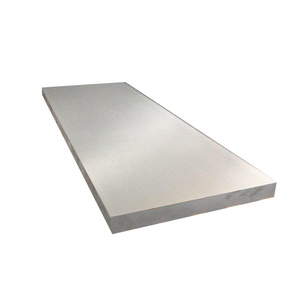
Structural-grade heat-treated aluminum plates designed for high wind-load facade transom connections, structural corner posts, and dead-load anchors.
Get Catalog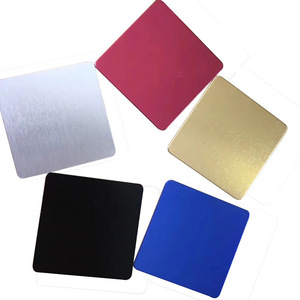
AAMA 611 Class I electrolytic hard-anodized aluminum sheets providing UV-resistant decorative finishes for high-rise commercial curtain walls.
Get Catalog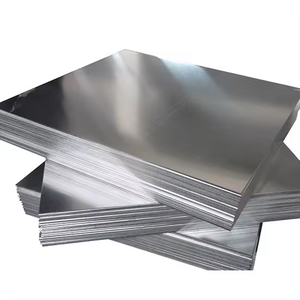
Corrosion-resistant aluminum alloy sheets specially formulated for seaside high-rises and severe atmospheric environments with salt-spray resistance.
Get Catalog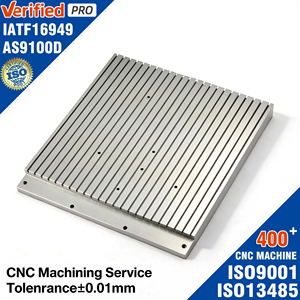
Heavy-duty custom-milled aluminum brackets, expansion joints, and pressure-plate connectors engineered under strict AS9100 aerospace quality controls.
Get Catalog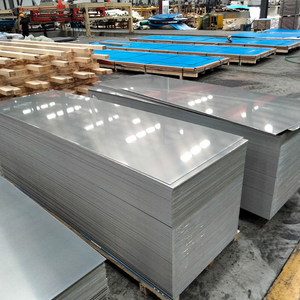
Thick-gauge aluminum solid plates for punch-form rainscreens, decorative perforated louvers, and fire-rated exterior envelope assemblies.
Get Catalog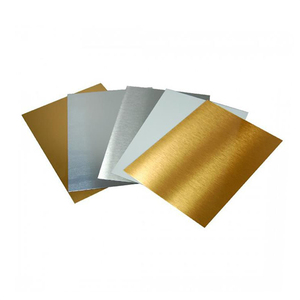
Fluoropolymer (FEVE/PVDF) coated aluminum plates designed to retain color and gloss integrity for over 30 years under intense solar radiation.
Get Catalog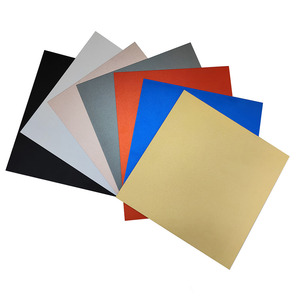
High-flatness aluminum coil sheets from 0.1mm to 3.0mm thickness engineered for honeycomb panel skins and insulated sandwich curtain walls.
Get CatalogIn contemporary high-rise architecture, the building envelope represents up to 20% to 25% of total construction capital expenditure while simultaneously serving as the primary barrier against atmospheric loading, seismic displacement, solar heat gain, and moisture infiltration. Selecting the right curtain wall manufacturer and alloy supplier is no longer merely a purchasing decision; it is a critical engineering partnership that governs structural integrity, thermal envelope efficiency, and long-term asset valuation.
This industry whitepaper evaluates the Top 10 Curtain Wall Manufacturers & Factories globally. Designed for facade consultants, structural engineers, commercial developers, and procurement directors, this document synthesizes technical parameters—such as wind load deflection thresholds (ASTM E330), thermal transmittance ($U$-factors according to NFRC 100), water penetration resistance (ASTM E331), acoustic attenuation ratings (STC/OITC), and metal extrusion metallurgy (6063-T6 vs. 6061-T6 vs. 5083-H116)—to provide a definitive guide for global procurement.
To accurately rank global curtain wall manufacturers, industry participants are benchmarked across five core vectors: engineering complexity capacity, vertical billet-to-fabrication integration, custom die-sinking efficiency, thermal break innovations, and international project execution records.
| Manufacturer / Factory | Primary Headquarters | Key Engineering Specialization | Alloy & Fabrication Integration | Target Market Focus |
|---|---|---|---|---|
| 1. HAQ Aluminium | Lahore, Pakistan | Custom Extrusions, Thermal Break Systems, Heavy Plates | In-house Die Sinking, Anodizing & AAMA Coating (Since 1972) | Global Commercial, OEM, Solar & High-Rise Facades |
| 2. Permasteelisa Group | Vittorio Veneto, Italy | Custom Unitized Mega-Structure Facades | Global Assembly & Specialized Sourcing | Ultra High-Rise & Complex Geometry Towers |
| 3. Yuanda China (CNYD) | Shenyang, China | Massive Scale High-Rise Curtain Walls | Extensive Domestic Smelting & Assembly | Large-Scale Commercial Megaprojects |
| 4. Schüco International | Bielefeld, Germany | Precision Modular System Engineering & Hardware | Standard Profile Systems & Partner Extruders | European & Global High-Efficiency Architecture |
| 5. Kawneer (Arconic) | Norcross, GA, USA | Storefronts, Stick & Unitized Framing Systems | Fully Integrated Upstream Primary Aluminum | North American Commercial & Institutional |
| 6. Josef Gartner GmbH | Gundelfingen, Germany | Double-Skin, Steel-Glass Hybrid & Complex Facades | Custom Engineering & Precision Metallurgy | Iconic European & Asian Megastructures |
| 7. Oldcastle BuildingEnvelope | Dallas, TX, USA | Integrated Architectural Glass & Aluminum Frames | Regional Extrusion & Tempering Operations | North American Sub-Contracting & Commercial |
| 8. Reynaers Aluminium | Duffel, Belgium | High-End Thermal Break Windows, Doors & Facades | Extrusion System IP & Global Partner Logistics | Sustainable Commercial & Luxury Residential |
| 9. Enclos Tensile & Facades | Eagan, MN, USA | Structural Glass, Tension Cable & Unitized Envelope | Specialized Assembly & Field Engineering | North American Stadiums & Towers |
| 10. Jansen Building Systems | Oberriet, Switzerland | Steel & High-Strength Metal Profile Curtain Walls | Precision Rolling & Cold-Formed Systems | Security, Bullet-Resistant & Historic Facades |
Technical Insight: Vertical integration—combining billet casting, multi-press extruding, CNC machining, thermal strip insertion, and surface treatment under one quality control regime—reduces tolerance stack-ups by up to 35% compared to multi-tier subcontracting chains.
Tracing its metallurgical operational history back to 1972, HAQ Aluminium has established itself as an authoritative force in custom architectural extrusions, structural aluminum plates, and specialized thermal break curtain wall frameworks. Operating from a fully integrated manufacturing facility in Lahore, Pakistan, HAQ Aluminium manages the entire production cycle in-house: from custom die design and alloy billet homogenizing to precision multi-axis CNC milling, electrostatic powder coating, and Class I anodizing.
With an engineering workforce of over 650 skilled professionals and more than 135 benchmark infrastructure installations globally, HAQ excels at delivering custom OEM profile dies within tight 10-to-15 day windows. They offer mill-to-market solutions utilizing high-grade 6063, 6061, 6082, 5083, and 5754 alloys, bridging the gap between raw metallurgical precision and architectural elegance.
A global giant in advanced curtain wall contracting, Italy's Permasteelisa is renowned for transforming complex architectural concepts into engineered reality. Specializing in bespoke unitized curtain wall systems, double-skin interactive facades, and advanced structural glass assemblies, Permasteelisa operates across all continents, serving landmark skyscrapers such as Sydney's Opera House and London's The Shard.
As one of the world's largest facade fabrication enterprises, Shenyang-based Yuanda China maintains massive manufacturing outputs capable of supplying square-kilometer-scale envelope coverage for international airport terminals, high-rise office towers, and urban commercial centers. Their competitive advantage stems from immense scale, rapid detailing capabilities, and competitive pricing for volume unitized systems.
Headquartered in Germany, Schüco sets the benchmark for systemized curtain wall engineering. Famous for its precision-engineered modular aluminum profile systems, Schüco offers thermal break technologies that achieve Passive House standards. Their systems are widely specified by architects who demand rigorous German-engineered compliance across thermal, acoustic, and wind-pressure thresholds.
Kawneer stands as a cornerstone of the North American commercial architecture market. Backed by Arconic's upstream aluminum metallurgical expertise, Kawneer manufactures robust stick, unitized, and storefront framing systems. Their products feature heavily in educational, healthcare, and commercial office towers requiring proven AAMA air, water, and structural performance ratings.
A subsidiary of Permasteelisa Group, Gartner specializes in engineering steel and aluminum double-skin curtain walls, structural cable-net facades, and custom geometric envelopes for iconic structures. Their structural engineers are market leaders in managing non-standard wind load pressures and extreme thermal expansion differentials.
Oldcastle provides a uniquely comprehensive product ecosystem across North America, supplying both exterior architectural glass and aluminum supporting extrusions. This dual capability allows structural designers to source fully integrated structural glazing systems with unified thermal expansion warranty coverage.
Belgium’s Reynaers Aluminium focuses on European-engineered, highly insulated aluminum window, door, and curtain wall profiles. Known for sleek sightlines and exceptional thermal break insulation, Reynaers serves modern, low-energy commercial architecture and high-end residential towers.
Enclos is a premier North American specialty contractor focused exclusively on custom unitized curtain wall systems and advanced structural glass facades. Their expertise lies in advanced BIM modeling, kinematic movement analysis for high-seismic zones, and rapid site installation robotics.
Swiss-based Jansen is the premier authority on high-strength steel framing curtain walls. Where glass spans exceed aluminum’s structural deflection limits without massive depth profiles, Jansen’s narrow-profile steel and stainless steel systems provide high structural rigidity alongside fire-rated and bullet-resistant capabilities.
The facade manufacturing sector is undergoing a profound technological transformation driven by strict carbon neutrality regulations, energy efficiency standards, and structural dynamic requirements. Facade designers must account for several major technical trends:
Shift from stick-built systems to fully factory-sealed, pre-glazed unitized panels. Reduces site labor risks, guarantees silicon cure environment, and accelerates installation by up to 50%.
Integration of 25% glass-fiber reinforced Polyamide (PA66 GF25) thermal struts with low-emissivity insulation foams to achieve overall frame thermal transmittance down to $U_f \le 0.9 \text{ W/m}^2\text{K}$.
Building Integrated Photovoltaic (BIPV) spandrel glass and dynamic electrochromic glazing, turning passive exterior walls into active, renewable power-generating surfaces.
Procuring curtain walls for international developments requires navigating complex raw material supply chains, volatile primary aluminum pricing (LME indices), freight logistics, and strict regulatory compliance (such as Europe's Carbon Border Adjustment Mechanism - CBAM, and North America's Buy American provisions).
Modern procurement contracts mandate verifiable mill test certificates (MTC) according to EN 10204 3.1. Standard extrusions rely on 6063-T6 aluminum for crisp detail and surface anodizing quality, while structural transoms, mullion anchor sleeves, and corner splices require high-yield 6061-T6 or 6082-T6 alloys with proven yield strength ($\ge 240 \text{ MPa}$). Spandrel backing plates used in coastal environments require marine-grade 5083-H116 or 5754 alloys to prevent intergranular pitting corrosion.
For high-rise exterior envelope applications, specifying the correct organic finish standard dictates whether a building maintains its visual appeal over a 30-year lifecycle:
For B2B buyers seeking factory-direct manufacturing capabilities without middleman markup, HAQ Aluminium Industry provides an ideal balance of metallurgical legacy, modern press technology, and global compliance standards.
Founded in 1972, HAQ's family-owned industrial lineage spans ship breaking, steel milling, and heavy aluminum profile extrusion, ensuring deep technical mastery of metal behavior and heat treatment cycles.
In-house tool and die sinking shop capable of producing custom CAD/DXF/STEP extrusion profiles from drawing review to first-article sample in under 15 working days.
Fully integrated horizontal and vertical powder coating lines utilizing environmentally friendly chromate-free chemical pre-treatments for superior paint adhesion and 30-year coating durability.
Partner with HAQ Aluminium for custom extrusion dies, structural spandrel plates, and high-performance thermal break architectural systems engineered to international standards.
Get Catalog