
EN Contact Us
Engineered to strict ASTM and AAMA architectural standards, our factory-direct coils, sheets, profiles, and composite panels deliver exceptional UV stability, corrosion barrier performance, and structural integrity.
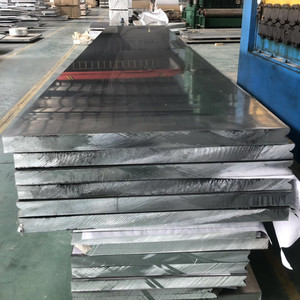
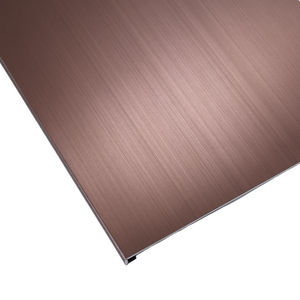
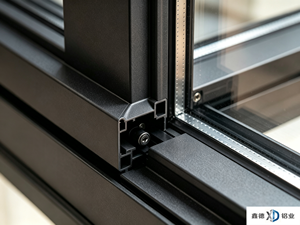
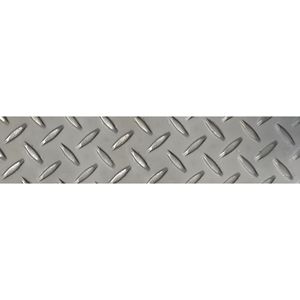
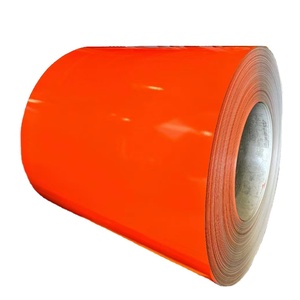
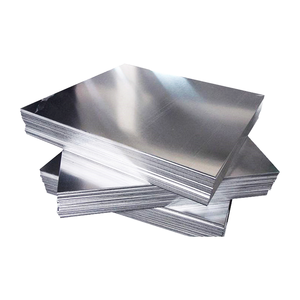

Grounded in a metallurgical history dating back to 1972, HAQ Aluminium represents a multi-generational legacy of metallurgical excellence. From raw billet alloy casting to automated coil coating and multi-axis CNC profile fabrication, our integrated plant eliminates third-party handoffs to preserve uncompromising quality.
Our eco-friendly titanium-zirconium conversion coating ensures maximum polymer paint adhesion and salt-spray corrosion resistance exceeding 3,000 hours, meeting strict European and North American environmental directives.
In-house CAD/CAM tooling shops transform complex DXF/STEP engineering files into finished extrusions in 10–15 working days. First-article inspection reports (FAIR) and mechanical testing accompany every initial sample run.
Full control over 1000, 3000, 5000, and 6000 series aluminum alloys. Our automated heat-treatment aging ovens precisely deliver T3, T4, T5, T6, and T8 tempers tailored to specific yield and tensile stress requirements.
Closed-loop inline optical colorimeters maintain a strict Delta-E (ΔE) < 0.5 variation across multi-ton coil runs, ensuring perfect color consistency between batches on large-scale facade panels.
Interleaved protective polyethylene film, rust-inhibiting kraft wrapping, steel banding, and IPPC ISPM-15 heat-treated wooden pallets ensure damage-free ocean freight delivery to global ports.
Every coil roll, sheet bundle, and profile bundle carries a unique barcode linking to melt heat numbers, chemical composition certs, temper log charts, and dry-film thickness inspection records.
Selecting the optimal surface treatment for coated aluminum requires balancing environmental exposure, design lifecycle, physical impact requirements, and total cost of ownership. The table below outlines key technical specifications per AAMA and ASTM protocols:
| Coating / Finish Type | Chemical Resin Matrix | Dry Film Thickness | AAMA Standard | ASTM B117 Salt Spray | Expected Lifecycle |
|---|---|---|---|---|---|
| Fluorocarbon PVDF (2-Coat) | 70% Kynar 500 / Hylar 5000 | 25 – 35 μm | AAMA 2605 | 4,000+ Hours | 20 – 30 Years |
| FEVE Fluoropolymer | Fluoroethylene Vinyl Ether | 30 – 45 μm | AAMA 2605 | 4,000+ Hours | 25 – 35 Years (High Gloss) |
| Super-Durable Powder | Polyester TGIC-Free Resin | 60 – 80 μm | AAMA 2604 | 3,000 Hours | 15 – 20 Years |
| High-Performance Polyester (PE) | Modified Polyester Resin | 18 – 22 μm | AAMA 2603 | 1,500 Hours | 7 – 10 Years |
| Hardcoat Anodizing (Class I) | Anodic Aluminum Oxide (Al₂O₃) | 18 – 25 μm | AAMA 611 Class I | 3,000+ Hours | 25+ Years (Metallic Finish) |
For high-rise curtain walls, coastal structures, and extreme UV environments (such as the Middle East and tropical zones), 70% PVDF or FEVE coatings certified to AAMA 2605 are mandatory to prevent chalking, color fading, and polymer degradation. For modular framing, sim racing rigs, and interior architectural elements, super-durable electrostatic powder coating provides superior impact resistance and cost efficiency.
The global coated aluminum industry is undergoing a structural transition driven by decarbonization targets, stricter environmental regulations, and advanced automation. Procurement directors and B2B buyers must adapt to five overarching trends shaping supply chain dynamics over the next decade:
Major architectural contractors and automotive OEMs now require Environmental Product Declarations (EPD). Sourcing aluminum produced via renewable hydroelectric smelters reduces carbon intensity from the industry average of 16 kg CO₂/kg Al down to less than 4.0 kg CO₂/kg Al.
Global regulations (REACH, OSHA, RoHS) have accelerated the phase-out of hexavalent chromium pre-treatments. Modern coil-coating and extrusion plants utilize titanium-zirconium chemical conversion layers that deliver equivalent polymer adhesion without toxic sludge hazards.
Buyers are moving away from importing raw mill-finish profiles. Modern procurement contracts prioritize "fabrication-ready" extrusions—pre-cut, CNC milled, punched, thermal-broken, and coated—reducing jobsite labor costs and scrap generation by up to 22%.
Infrared-reflective pigments embedded in coil coatings reduce solar heat absorption on commercial roofs. These specialized PVDF coatings maintain a high Solar Reflectance Index (SRI > 78), significantly cutting HVAC energy consumption in tropical and desert climates.
To meet demanding architectural aesthetics and industrial functionality, primary coated aluminum manufacturers are pioneering key technological breakthroughs:
Key technical, commercial, and quality assurance answers for global buyers sourcing coated aluminum coils, sheets, and extrusions.
For architectural extrusions (windows, doors, facades), 6063-T5 and 6061-T6 are the industry standard due to superior extrudability, structural strength, and surface smoothness. For pre-painted coils and composite panels (ACP), 1100, 3003, and 5052 in H14 or H24 tempers are preferred because they offer excellent flexural ductility for roll-forming and deep drawing without film cracking.
Every production lot undergoes rigorous laboratory verification according to ASTM and AAMA specifications: Cross-Hatch Tape Adhesion (ASTM D3359), MEK Solvent Double Rubs (ASTM D5402) for polymer cure verification, Impact Resistance (ASTM D2794), Pencil Hardness (ASTM D3363), and optical spectrophotometer color matching (ΔE < 0.5).
For standard RAL powder-coated profile orders, MOQ starts at 500 kg per profile section. For custom PVDF pre-painted coils, MOQ is typically 3 to 5 Metric Tons per width/color. New extrusion die fabrication takes 10 to 15 working days, followed by sample delivery. Bulk production standard lead time is 20 to 25 days upon sample approval.
PVDF is a liquid fluoropolymer resin applied via continuous coil coating rollers or spray, curing at high temperatures to form a thin, ultra-durable chemical barrier (25–35 μm) ideal for severe outdoor UV environments. Electrostatic powder coating applies dry resin particles (60–80 μm) via corona spray guns onto 3D profile geometries, offering thicker edge coverage, higher impact resistance, and zero VOC emissions.
We apply protective polyethylene film to painted surfaces, interleave paper or plastic between flat sheets, wrap coil bundles with desiccants and waterproof plastic film, and secure items inside heat-treated ISPM-15 wooden crates. Containers are loaded with VCI (Vapor Corrosion Inhibitor) packs to eliminate humidity condensation during transit across temperature zones.
Send your DXF profile drawings, coil specifications, alloy requirements, or color codes (RAL/Pantone) directly to our engineering desk for immediate quote analysis and laboratory sample dispatch.