
EN Contact Us
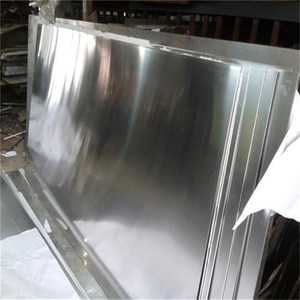
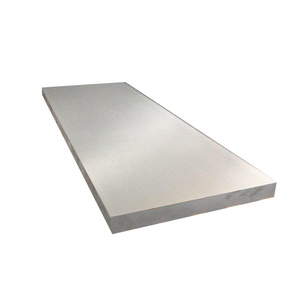
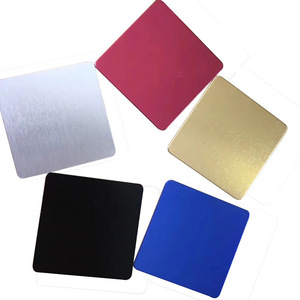
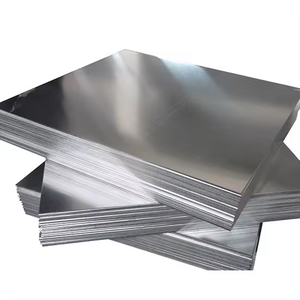
Direct mill supply of seamless drawn tubes, structural extrusions, and anodized engineered sheets compliant with international aerospace and industrial standards.
An engineering guide for procurement managers, structural engineers, and global EPC contractors searching for high-reliability aluminum extrusion and tube mill partners.
Selecting the optimal aluminum tube supplier requires evaluating more than just raw ingot price per metric ton. Engineering procurement decisions rely on critical technical benchmarks: concentricity tolerances, seam integrity (seamless drawn vs. port-hole extrusion), temper consistency (T5 vs. T6 ageing), surface passivation, and AS9100 / ISO 9001 quality audits. This whitepaper provides a rigorous comparative breakdown of the top 10 aluminum tube manufacturers and exporters worldwide, detailing alloy capabilities, die limits, and supply chain resilience.
Comparative structural assessment based on press tonnage capacity, alloy versatility, export compliance, and engineering depth.
Core Strengths: Complete mill-to-market integration. Founded in 1972, HAQ operates advanced direct press extrusions, automated ageing ovens, and precision CNC fabrication facilities in Lahore.
Alloy Range: 6063, 6061, 6082, 5083, 3003 in T4, T5, and T6 tempers.
Value Add: In-house chromate-free powder coating, anodizing, custom die manufacturing in 10-15 days, and full containerized export bundling to GCC, EU, and US markets.
Core Strengths: Recognized global pioneer in low-carbon aluminum tubing (CIRCAL and REDUXA product lines) tailored for automotive heat exchangers and HVAC cold lines.
Alloy Range: Precision 1000 and 3000 series micro-channel tube extrusions.
Sourcing Note: Ideal for European tier-1 automotive OEMs with strict carbon intensity specifications.
Core Strengths: Massive volume capacity with heavy press infrastructure (up to 12,000 tons) for large-diameter structural tubing and marine-grade 5083 pipes.
Alloy Range: Comprehensive spectrum including 2024 and 7075 hard alloys.
Sourcing Note: Excellent for massive infrastructure projects requiring standard bulk shapes.
Core Strengths: Specialists in high-strength aerospace-grade drawn seamless tubing, crash management extrusions, and nuclear-grade aluminum piping.
Alloy Range: Proprietary 6000 and 7000 series high-yield alloys.
Sourcing Note: Premium pricing tier focused on defense and aerospace applications.
Core Strengths: Leading North American manufacturer of seamless drawn aluminum tubing engineered for hydraulic cylinders, driveshafts, and military gear.
Alloy Range: 2024, 6061-T6, 7075-T651 tight-tolerance drawn tubing.
Sourcing Note: High precision compliance with US MIL-SPEC and ASTM B210.
Core Strengths: Integrated primary bauxite mining to extruded profile manufacturing. Strong market share in agricultural irrigation pipes, scaffolding tubes, and electrical conduits.
Alloy Range: 1050, 6063, 6005A structural alloys.
Sourcing Note: Cost-effective supply for general construction and power transmission.
Core Strengths: Major Middle Eastern supplier catering to architectural curtain walls, structural window profiles, and automotive tubing systems across the MENA region.
Alloy Range: Architectural 6060, 6063, and structural 6082 tempers.
Sourcing Note: High-volume capacity with specialized anodizing finishes for desert environments.
Core Strengths: Renowned for extreme precision micro-tubing, thermal management fins, and ultra-high purity aluminum drawn products for the semiconductor industry.
Alloy Range: High-purity 1000 series and custom thermal 3000 series.
Sourcing Note: Gold standard for cleanroom and precise thermal conductivity applications.
Core Strengths: Flexible regional supplier offering quick turnarounds on custom aluminum tubing, architectural louvers, and solar framing rails.
Alloy Range: Standard 6000 series extrusions with custom length stocking programs.
Sourcing Note: Strong partner for North American inventory buffering.
Core Strengths: High-end European manufacturer focused on complex industrial profiles, rail car structural tubes, and heavy engineering extrusions.
Alloy Range: High-stress 6000 and 7000 series with EN 755 testing compliance.
Sourcing Note: Critical choice for European railway and heavy machinery transit applications.
A mechanical property breakdown comparing yield strength, corrosion resistance, and machinability across key commercial alloys.
| Alloy Series | Key Elements | Tensile Strength (MPa) | Yield Strength (MPa) | Corrosion Resistance | Primary B2B Sourcing Applications |
|---|---|---|---|---|---|
| 6063 (T5/T6) | Mg, Si | 150 – 240 | 110 – 210 | Excellent | Architectural tubing, window frames, solar mounts, light poles. |
| 6061 (T6) | Mg, Si, Cu | 290 – 310 | 240 – 275 | Very Good | Structural tubing, drive shafts, hydraulic cylinders, aerospace frames. |
| 6082 (T6) | Mg, Si, Mn | 295 – 340 | 255 – 295 | Very Good | High-stress structural bridges, cranes, trusses, beer kegs. |
| 5083 (H111/H116) | Mg, Mn | 270 – 345 | 125 – 230 | Superior Marine | Shipbuilding pipes, pressure vessels, cryogenic chemical tanks. |
| 3003 (H14) | Mn, Cu | 140 – 190 | 115 – 165 | Excellent | Heat exchanger tubing, HVAC radiator lines, fuel line conduit. |
| 7075 (T6) | Zn, Mg, Cu | 510 – 570 | 435 – 505 | Fair / Moderate | Aerospace structural tubing, defense hardware, high-end sporting gear. |
Market dynamics reshaping procurement strategies over the next decade.
Global buyers are demanding verified carbon foot-printing on imported aluminum extrusions. Driven by the European Union’s Carbon Border Adjustment Mechanism (CBAM), suppliers using hydro-powered smelting and in-house scrap re-melting offer significant tariff advantages. Future-proof mills now log kilowatt-hours per kilogram extruded.
The rapid expansion of Electric Vehicle (EV) battery packs and fast-charging infrastructure has boosted demand for multi-port extrusions (MPE) and liquid cold plates. Aluminum tubes with wall thicknesses under 0.4mm require extreme die precision and specialized metallurgical homogenization.
Leading exporters are replacing traditional trial-and-error die testing with AI FEA flow simulation. By simulating billet heat dynamics and velocity distribution before die cutting, lead times for custom OEM tube profiles have dropped from 30 days to under 10 days.
Geopolitical shipping friction has forced B2B procurement teams to move away from single-source mega-factories. B2B buyers now prioritize flexible mid-sized exporters capable of handling custom low-to-medium MOQs (500 kg – 2,000 kg) with guaranteed container dispatch schedules.
Technical guidance addressing common questions from engineering and purchasing departments.
Port-hole extruded tubes are produced using bridge dies where the metal splits and re-welds under high pressure inside the chamber. They are cost-effective and suitable for architectural and general structural work. Seamless drawn tubes are pierced from a solid round billet without longitudinal weld seams, making them mandatory for high-pressure hydraulic lines, compressed gas cylinders, and critical aerospace applications where weld seam failure is a risk.
Temper designates mechanical treatment: T5 temper is artificially aged after cooled from an elevated temperature shaping process (extrusions), providing good dimensional stability and clean surface finish suitable for architectural work. T6 temper undergoes solution heat treatment followed by artificial ageing, reaching significantly higher yield and tensile strength, essential for load-bearing industrial framing and mechanical components.
B2B buyers should request a formal Mill Test Certificate (MTC) compliant with EN 10204 3.1, detailing chemical composition analysis via optical emission spectrometry, mechanical tensile test reports, wall thickness dimension logs, and surface finish thickness certs (e.g., anodizing micron level or powder coat cross-hatch adhesion records).
For custom die extrusions, standard factory MOQs range between 500 kg and 1,000 kg per profile depending on the press size required. Standard stocked shapes (round tubes, square box profiles, structural angles) often have much lower MOQs or can be bundled into mixed container shipments.
While aluminum naturally forms a thin oxide layer, severe environments require added protection. Anodizing electrochemically thickens the natural oxide coating (10–25 microns), yielding superior abrasion and marine salt-spray resistance. Electrostatic Powder Coating applies a durable polyester or PVDF layer (60–80 microns) offering custom RAL color choices and long-term UV protection.
Combining 50+ years of family metallurgical heritage with modern multi-press extrusion lines and controlled finishing.
From primary alloy billet verification to automated quench monitoring and coating thickness checks, every production run is logged against drawing specifications.
Send a STEP/DXF drawing or physical sample. Our tooling department reviews extrudability, circumscribing circle, and press tonnage before sinking the die.
Interleaved protective film, heavy-duty kraft paper wrapping, strapped wooden pallets, and steel-reinforced framing ensure zero scratches during ocean transport.
Upload your aluminum tube drawings, alloy specs, or estimated annual volume. Our engineering sales team responds within 24 business hours.
Contact Us