
EN Contact Us
As a tier-1 integrated manufacturer and global B2B supplier, our production facility combines direct-chill billet casting, precision extrusion, 5-axis CNC machining, and automated sulfuric acid anodizing lines. We supply high-precision alloy plates, custom sheets, and structural profiles certified to international standards.
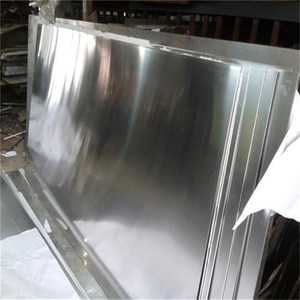
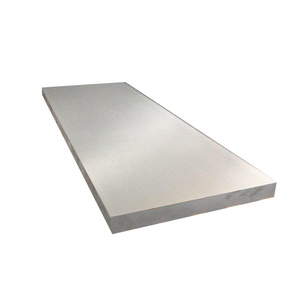
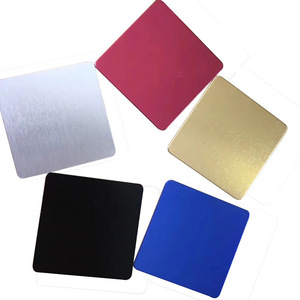
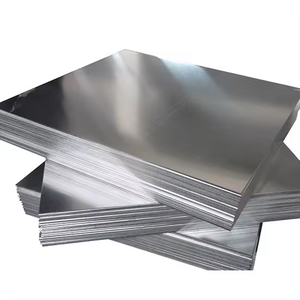
Operating as an authoritative OEM/ODM manufacturer in the non-ferrous metal matrix, our facility bridges raw alloy synthesis with advanced electrochemical surface engineering. Built upon over four decades of metallurgical mastery, we provide engineering procurement teams with end-to-end control over material temper, dimensional tolerances, and coating performance.
Unlike outsourcing job-shop electroplaters, our plant houses fully automated, continuous sulfuric acid anodizing lines with real-time bath chemistry monitoring. This guarantees consistent anodic oxide layer growth across complex extrusions and large-format sheets.
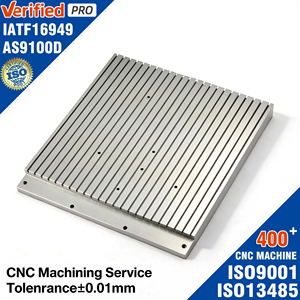
High-speed CNC milling centers supporting structural aerospace and automotive components. Full post-machining anodizing prevents unpassivated bare edges.
Equipped with Eddy Current film thickness meters, CMM dimensional scanners, ASTM B117 salt spray chambers, and spectrophotometers for color consistency.
Rapid die design and sinking from STEP/DXF CAD files. First-article samples provided within 10–15 working days for full engineering validation.
The global anodized aluminum market is undergoing a structural transition driven by decarbonization mandates, lightweighting in electric mobility, and rigorous environmental chemical compliance. Strategic procurement officers must adjust their vendor evaluation frameworks to account for the following emerging trends:
Regulatory frameworks such as the European Union's Carbon Border Adjustment Mechanism (CBAM) are forcing industrial buyers to audit scope 1, 2, and 3 emissions. Leading OEM/ODM suppliers now incorporate hydro-powered primary aluminum and post-consumer scrap blending, reducing the carbon footprint from the industry average of 16.5 kg CO²e/kg Al down to under 4.0 kg CO²e/kg Al.
Global environmental restrictions on Per- and Polyfluoroalkyl Substances (PFAS) and heavy metals are accelerating the phase-out of traditional nickel acetate hot sealing. Modern procurement specifications demand high-temperature deionized water sealing or green fluoride-free nickel-alternative chemistry that satisfies 1,000-hour neutral salt spray (NSS) testing without hazardous effluents.
With the rapid adoption of 800V silicon carbide (SiC) architectures in Electric Vehicles, aluminum thermal cold plates, battery module housings, and inverter heat sinks require dual-function surface treatments: high dielectric breakdown strength and thermal dissipation. Hardcoat anodizing (MIL-A-8625 Type III) is replacing liquid coatings due to its superior dielectric insulation (> 800 V/mil) and wear resistance.
Geopolitical volatility and freight disruptions have exposed vulnerabilities in fragmented supply chains where extrusions, machining, and surface anodizing are handled by separate vendors. Procurement teams are consolidating contracts with fully integrated factories capable of providing single-site accountability, lowering lead times by up to 35%.
Surface engineering of aluminum alloys has progressed far beyond decorative coloring. Recent breakthroughs in electrochemistry and material science have expanded the functional capabilities of anodic films:

Plasma Electrolytic Oxidation (PEO) creates a thick, ceramic-like crystalline oxide matrix (dominated by α-Al²O³ and γ-Al²O³ phases) on aluminum substrates. This technology offers extreme micro-hardness (up to 1500 HV), exceptional thermal barrier properties, and superior fatigue resistance compared to traditional sulfuric acid anodizing.
By modulating the pore structure of the porous anodic alumina layer using modified alternating current (AC) electrolysis, optical interference effects are created within the oxide film itself. This produces fade-free architectural colors (bronze, blue, green) that rely entirely on light refraction, eliminating organic dyes vulnerable to UV degradation.
Post-anodizing functionalization using silane coupling agents alters the nanoporous structure of the anodic film, creating superhydrophobic surface angles (> 150°). This technology is deployed in marine components (5083/5086 alloys) and outdoor telecom enclosures to prevent ice accretion and salt-crust buildup.
Below are technical inquiries evaluated by our engineering desk regarding alloy selection, anodizing characteristics, and international compliance.
MIL-A-8625 Type II refers to standard sulfuric acid anodizing, typically yielding film thicknesses between 5μm and 25μm. It is ideal for decorative consumer products, architectural trims, and general corrosion protection. Type III (Hardcoat Anodizing) is performed at lower bath temperatures (0°C–5°C) with higher current densities, producing dense oxide films from 25μm up to 100μm. Type III is specified for high-wear industrial applications, automotive pistons, aerospace actuators, and dielectric insulation.
Alloys with high purity or balanced Mg-Si contents (such as 6063, 6061, and 5052) anodize with high clarity, excellent color uniformity, and bright metallic luster. High-copper alloys (e.g., 2024) and high-silicon casting alloys (> 7% Si) form darker, grainier anodic films due to secondary phase intermetallics that do not dissolve during sulfuric acid anodizing. For decorative colored parts, 5052 and 6063 are recommended; for structural high-strength parts where a dark grey finish is acceptable, 7075-T6 or 6061-T6 hardcoat is preferred.
Anodizing is a conversion process where aluminum metal is converted into aluminum oxide (Al²O³). Roughly 50% of the total anodic film thickness grows into the substrate metal, and 50% builds outward on the surface. For example, a specified 50μm hardcoat layer will result in a net dimensional increase of approximately 25μm per surface (or 50μm total on a cylindrical diameter). Engineering drawings must specify whether dimensions apply pre- or post-plating.
Color variation in anodizing is controlled by three variables: alloy chemical composition, electrolytic bath temperature/time, and dye absorption density. Our factory uses single-origin prime billets, automated PLC-driven hoist lines with ±0.5°C bath temperature control, and spectrophotometer color matching to keep total color deviation below ΔE 0.5 compared to the master approved sample.
We perform three standard tests on every production lot: (1) Acid Dissolution Test (ASTM B680) to measure weight loss of the sealed film; (2) Admittance / Impedance Testing (ISO 2931) to check sealing quality non-destructively; and (3) Neutral Salt Spray Testing (ASTM B117) running from 336 hours (Type II) up to 1,000+ hours (Type III) without pitting or corrosion product generation.
Anodized oxide layers act as electrical insulators and have a melting point exceeding 2000°C (compared to 660°C for base aluminum). Therefore, parts cannot be welded directly through an anodized layer. For OEM weldments, we either mask designated weld areas during anodizing or complete all TIG/MIG welding prior to chemical surface treatment.
Whether you require custom extrusions, precision CNC plate cutting, aerospace-grade hardcoat anodizing, or high-volume architectural sheets, our engineering team provides complete DFM (Design for Manufacturability) support, material certifications, and rapid prototyping.
Upload STEP, IGES, or DXF files alongside alloy, temper, and coating specifications.
Receive an engineering review, tooling feasibility analysis, and formal quote within 24 hours.
Rapid die sinking and sample dispatch with full CMM dimensional and anodize test reports.
Automated extrusion, CNC machining, anodizing, and export container packing.