
EN Contact Us
Explore our high-precision structural and seamless tubing, custom-cut alloy plates, and surface-treated OEM/ODM components manufactured to strict international tolerances.
Aluminum tubing represents a cornerstone of modern industrial design, thermal management, aerospace framing, and fluid transport systems. Selecting the optimal combination of alloy chemistry, temper, wall thickness uniformity, and manufacturing method (porthole die vs. seamless bridge die extrusion) directly determines product fatigue life, burst pressure limits, and structural efficiency.
As a vertically integrated OEM/ODM aluminum tubing manufacturer and global exporter with manufacturing roots trace back to 1972, HAQ Aluminium combines advanced billet homogenization, custom multi-cavity press technology, controlled atmosphere heat treatment, and precision cold drawing to deliver engineered tubular profiles that meet rigorous ASTM B221, EN 755, and AS9100 specifications.
Understanding the fundamental distinction between structural porthole tubing and true seamless drawn tubing is essential for B2B procurement engineers and technical sourcing directors:
| Alloy Grade | Standard Temper | Tensile Strength (MPa) | Yield Strength (MPa) | Corrosion Resistance | Primary Application Focus |
|---|---|---|---|---|---|
| 6063 | T5 / T6 | 150 – 245 | 110 – 210 | Excellent | Architectural frames, conduit, furniture, heat dissipation profiles. |
| 6061 | T6 / T6511 | 290 – 310 | 240 – 275 | Very Good | Structural tubing, high-stress scaffolding, automotive drive shafts. |
| 5083 / 5754 | H111 / H116 / H32 | 270 – 350 | 125 – 250 | Superior (Marine) | Marine piping, cryogenic vessels, offshore structural conduits. |
| 7075 | T6 / T651 | 530 – 570 | 460 – 505 | Fair | Aerospace struts, high-strength defense tubing, hydraulic cylinders. |
| 3003 | H14 / H18 | 140 – 200 | 115 – 180 | Excellent | HVAC heat exchangers, micro-channel cooling lines, fluid lines. |
Our in-house die design center utilizes 3D CAD/CAM extrusion simulation software to optimize metal flow dynamics, pressure distribution, and thermal gradients before sinking dies. This predictive engineering guarantees:
By consolidating billet casting, press extrusion, precision heat treatment, surface finishing, and compliance testing under a single quality regime, we eliminate third-party markup and reduce lead time volatility.
Leveraging continuous operation in metals since 1972, our engineering team manages alloy grain refinement and age-hardening (T4 to T6) with extreme process repeatability.
Equipped with high-speed multi-axis CNC machining centers, specialized pipe notchers, and bending equipment for complete end-to-end fabrication.
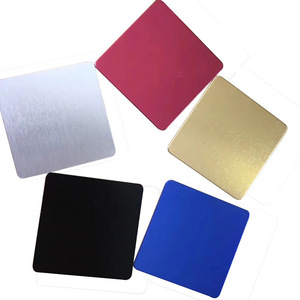
In-house chromate-free pre-treatment, architectural anodizing (Type II & III Hardcoat), wood-grain sublimation, and QUALICOAT-standard powder coating.
100% batch testing including eddy current flaw detection, hydrostatic pressure verification, spectral chemical analysis, and CMM dimensional audits.
Heavy-duty protective interleaved film, anti-corrosion VCI wrapping, plastic end-caps, and wooden crate bundling tailored for 20ft/40ft ocean container shipping.
Flexible production scheduling with standard profile production completed within 15–20 days and customizable low MOQs for high-value technical orders.
The global market for extruded aluminum tubing and structural profiles is undergoing a major transformation driven by decarbonization mandates, electric vehicle (EV) expansion, and high-density liquid cooling demands in data center infrastructure.
With power densities rising across electric vehicle power electronics, solar inverters, and AI data server racks, traditional air-cooled extruded heat sinks are rapidly being replaced by multi-port micro-channel extruded aluminum tubing (MPE) and liquid cold plates. Made primarily from high-purity 3003 and 6063 alloys, micro-channel tubes offer unprecedented thermal transfer efficiency per unit weight.
Global original equipment manufacturers (OEMs) are increasingly enforcing strict Scope 1, 2, and 3 emissions targets. Strategic procurement now demands aluminum tubing sourced from primary smelters utilizing renewable hydro-power or verified secondary post-industrial recycled content (retaining over 95% energy savings compared to primary smelting). HAQ Aluminium actively integrates closed-loop scrap recovery within its Lahore remelt furnace facility.
Weight reduction remains a critical objective across automotive, aerospace, and portable medical hardware. By adopting secondary cold-drawing processes post-extrusion, manufacturers can achieve ultrathin wall profiles (under 0.8 mm) without sacrificing yield strength or structural stiffness.
Direct technical answers to common questions asked by B2B buyers, procurement managers, and mechanical design engineers.
Send your 2D/3D CAD drawings (DXF, STEP, DWG) or material specifications directly to our engineering desk. Receive a technical extrudability feedback report and factory-direct quotation within 24 hours.