EN Contact Us
Executive Engineering Summary: Modern structural lightweighting, thermal management, and marine architecture require more than standard off-the-shelf aluminum products. As a premier OEM/ODM Aluminum Alloy Manufacturer backed by over five decades of metallurgical experience since 1972, our advanced manufacturing plants integrate continuous Direct Chill (DC) casting, precision heavy plate rolling, multi-axis CNC machining, and automated architectural anodizing/powder coating lines. This technical whitepaper explores critical alloy matrix selection, global procurement shifts, future technological roadmaps, and turnkey custom manufacturing capabilities engineered for high-rigor B2B buyers.
Explore our engineering-grade aluminum alloy sheets, marine plates, precision-cut structural profiles, and custom CNC components manufactured under strict ISO 9001 and AS9100 quality regimes.
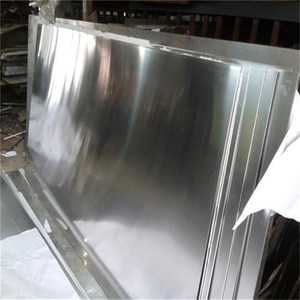
Engineered for extreme marine environments and pressure vessels. Features outstanding resistance to seawater corrosion, superior weldability, and stress-corrosion cracking protection in H116 and H321 tempers.
Inquire Now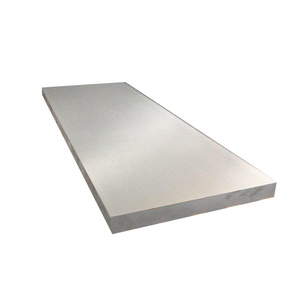
Direct factory supply of cold-rolled and hot-rolled aluminum sheets. Available in thicknesses from 0.1mm to 300mm with custom shearing, precision sawing, and surface protective film application.
Inquire Now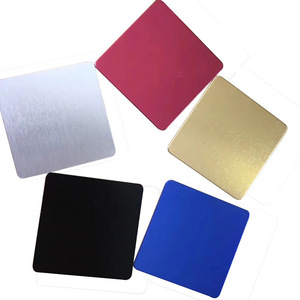
High-aesthetic surface treated plates in Gold, Pink, Black, Blue, and Silver. Electrochemically sealed oxide layer (10–25µm) offers enhanced scratch resistance and long-term UV color stability.
Inquire Now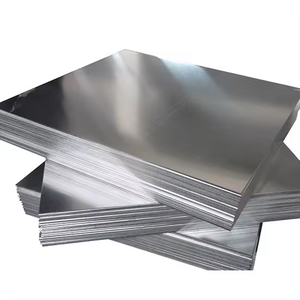
Full compliance with international classification society standards. Ideal for hull plating, offshore superstructures, tank containers, and cryogenic equipment operating under dynamic fatigue loading.
Inquire Now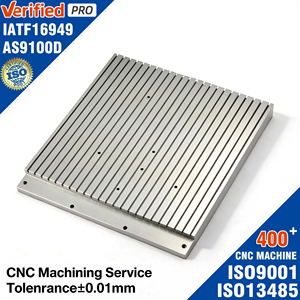
High-precision 5-axis CNC turning, milling, and boring for critical machinery, automotive, and aerospace assemblies. Tolerances maintained down to ±0.01mm with full CMM inspection reports.
Inquire Now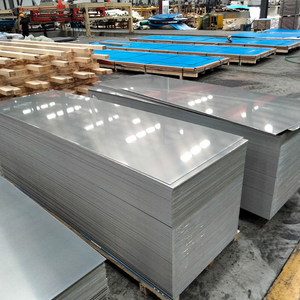
Heavy-gauge aluminum alloy plates customized for mold making, toolings, and industrial automation bases. Stress-relieved via stretching process to prevent deformation after high-speed machining.
Inquire Now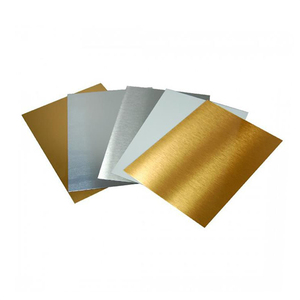
Premium 5052-H32 alloy plates modified with uniform electrolytic anodizing. Excellent formability, workability, and medium-to-high strength suitable for architectural facades and electronic enclosures.
Inquire Now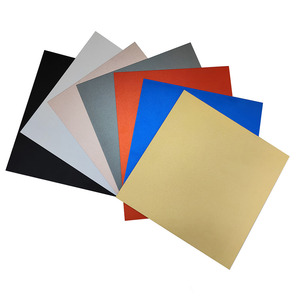
Micro-thickness aluminum sheets (0.1mm to 0.4mm) with high flexural resilience and colorful protective anodized coats. Ideal for nameplates, EMI shielding, thermal barriers, and decorative crafts.
Inquire NowSelecting an OEM/ODM aluminum alloy manufacturer requires rigorous technical evaluation of their in-house processing depth. Relying on trading intermediaries often introduces tolerance mismatches, temper inconsistencies, and unverified alloy chemistry. Our manufacturing facilities resolve these risks by bringing casting, extrusion, rolling, machining, and surface finishing under a unified quality management system.
We initiate production using primary high-purity aluminum ingots (99.7% A00 standard) combined with precise micro-alloying elements (Mg, Si, Mn, Cr, Zn, Cu). DC casting eliminates macro-segregation and internal porosity, ensuring homogeneous grain structures crucial for heavy plate rolling and extrusion integrity.
Our tooling shop translates DXF, STEP, or physical samples into production-ready dies within 10 to 15 working days. Using advanced Finite Element Analysis (FEA) to simulate metal flow, we optimize extrusion press speed and cooling quench regimes, eliminating surface tearing and dimensional distortion.
Every production heat undergoes Optical Emission Spectrometry (OES) chemical analysis. Finished products undergo mechanical tensile/yield testing, Brinell/Vickers hardness checks, Ultrasonic Flaw Detection (ASTM E2375), and salt spray corrosion testing (ASTM B117) before mill test certificates (MTC) are issued.
Understanding metallurgical characteristics ensures correct alloy selection for your specific industrial application:
| Alloy Series | Primary Alloying Elements | Key Mechanical Properties | Typical OEM/ODM Applications | Workability & Weldability |
|---|---|---|---|---|
| 1xxx Series | Pure Aluminum (≥99.0%) | Low strength, high electrical & thermal conductivity | Busbars, transformer windings, chemical equipment | Excellent cold forming & gas/TIG welding |
| 3xxx Series | Manganese (Mn) | Medium strength, high work ductility, non-heat-treatable | Heat exchangers, beverage cans, roofing, HVAC fins | Excellent drawability & corrosion resistance |
| 5xxx Series | Magnesium (Mg) | High fatigue strength, superior marine corrosion resistance | Ship hulls, pressure vessels, fuel tanks, armor plate | Superior weldability (5083, 5086, 5754) |
| 6xxx Series | Magnesium & Silicon (Mg-Si) | Medium-to-high structural strength, heat-treatable (T5/T6) | Architectural glazing, structural profiles, EV battery trays | Excellent extrudability & structural machining |
| 7xxx Series | Zinc & Magnesium (Zn-Mg) | Ultra-high yield strength, high hardness, aerospace-grade | Aircraft spars, high-stress defense equipment, mold slabs | Machinable; requires controlled welding parameters |
Strategic procurement leaders in the automotive, aerospace, renewable energy, and building construction sectors are shifting away from transactional spot purchases toward integrated long-term OEM/ODM manufacturing partnerships. Key procurement macro-trends shaping global supply chains include:
With the implementation of the European Union's Carbon Border Adjustment Mechanism (CBAM) and strict global Scope 3 emission targets, enterprise buyers now mandate low-carbon smelting certified by ASI (Aluminium Stewardship Initiative). Procuring aluminum produced via hydro-power or utilizing integrated closed-loop scrap recycling dramatically reduces carbon tariffs and corporate environmental footprint.
To combat rising labor costs and machining scrap waste, procurement managers are requesting near-net-shape custom extruded profiles supplied complete with secondary CNC machining (milling, tapping, deburring, and surface finishing). Sourcing pre-machined, installation-ready components reduces on-site labor and eliminates multi-vendor logistical friction.
The rapid growth of Electric Vehicles (EVs) and high-speed marine transport has accelerated demand for advanced 5xxx and 7xxx series alloys modified with Scandium (Sc) and Zirconium (Zr). These additions refine grain structure, yielding lightweight aluminum plates that match mild steel in tensile performance while retaining full weldability.
Advancements in metallurgical processing have transformed aluminum from a simple structural metal into a high-performance engineered system. Leading aluminum alloy factories are implementing key technological breakthroughs:
A. Advanced Thermal Break & Isothermal Polyamide Technology: In architectural curtain wall and window systems, structural aluminum extrusions are joined using multi-chambered glass-fiber-reinforced polyamide (PA66GF25) strips. This mechanical barrier cuts frame thermal conductivity by over 60%, drastically improving building energy efficiency and satisfying global LEED green building standards.
B. Chromate-Free Surface Passivation & Eco-Friendly Powder Coating: Environmental regulations have rendered traditional hexavalent chromium pre-treatments obsolete. Modern factories utilize titanium-zirconium conversion coatings paired with automated electrostatic polyester and PVDF powder lines, delivering 30+ year salt-spray and UV durability without toxic heavy-metal effluents.
C. Automated Tension Levelling & Stress-Relieving: Heavy aluminum plates intended for high-speed CNC milling (such as 6061-T6 and 7075-T6 slabs) are subjected to mechanical stretching (Tx51 temper modification) up to 1.5%–3% permanent set. This neutralizes internal residual stresses, guaranteeing zero warping or distortion during deep cavity machining.
Building on a manufacturing heritage established in 1972, our enterprise group stands as a fully integrated metallurgical powerhouse. When you specify our OEM/ODM custom services, you gain access to significant technical advantages:
Find authoritative engineering answers to common technical queries regarding custom aluminum alloy manufacturing, temper selection, surface treatments, and export ordering logistics.
Both H116 and H321 are specifically developed for 5xxx series marine plates (containing >3% Mg) to resist intergranular corrosion and exfoliation. H116 temper involves strain-hardening followed by a specialized thermal stabilizing treatment. H321 temper involves strain-hardening during warm rolling to achieve controlled magnesium-aluminum precipitate distributions. Both tempers meet DNV, ABS, Lloyd's, and CCS marine classification requirements.
To evaluate extrudability and quote tooling/production costs, please provide a detailed 2D CAD drawing (DXF/DWG with dimensions and tolerances) or a 3D STEP/IGES file. Specify the target alloy (e.g., 6063, 6061), required temper (T5 or T6), surface finish (mill finish, anodized, powder coated), cut lengths, estimated annual volume, and any post-extrusion CNC machining requirements.
Our standard aluminum extrusions adhere to EN 755-9 and ANSI H35.2 standards. For high-precision architectural and industrial components, we manufacture to high-precision EN 12020-2 specifications. CNC machined components can achieve critical tolerances down to ±0.01mm verified by coordinate measuring machines (CMM).
Hard-coat anodizing (Type III) converts the aluminum surface into an integral aluminum oxide layer (25–50+ µm) with extreme hardness (up to 500 HV), making it ideal for severe abrasive and marine wear. Architectural powder coating applies a organic polymer resin film (60–100 µm) available in virtually unlimited RAL colors and wood-grain textures, offering superior chemical resistance against acidic rain and masonry mortar contact.
Standard MOQ for custom extrusion profiles is typically 500 kg to 1,000 kg per section depending on press size and billet dimension. For custom aluminum plates and sheets, MOQ starts at 1,000 kg per specification. Custom die manufacture requires 10–15 days, with sample approval followed by 15–25 days for bulk containerized production.
Yes. Every export shipment includes a certified EN 10204 3.1 Mill Test Report detailing the chemical composition analysis, tensile strength, yield strength, percentage elongation, hardness test results, and surface finish compliance corresponding to your specific batch heat numbers.
Partner with an established OEM/ODM aluminum alloy manufacturer. Connect directly with our engineering desk to review your CAD files, select optimal alloys, and receive direct factory pricing within 24 business hours.