EN Contact Us
Engineered to exacting tolerances, ISO9001:2015 certified, and optimized for structural integrity, aesthetic finishing, and heavy-duty industrial applications.
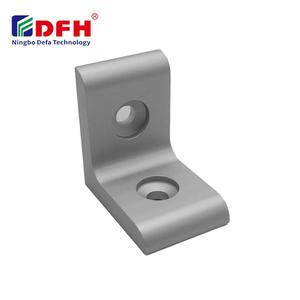
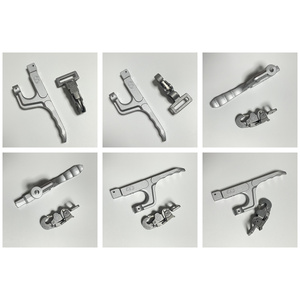
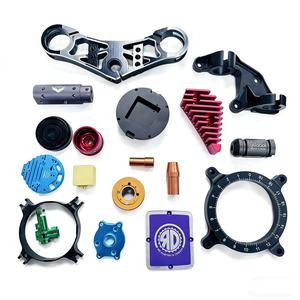
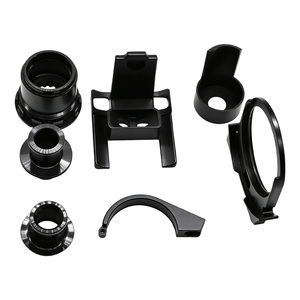
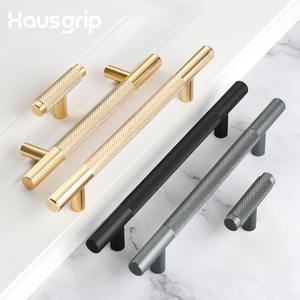
As a world-class custom OEM aluminum hardware factory and supplier, we specialize in transforming raw non-ferrous alloys into mission-critical structural hardware, architectural connectors, high-stress rigging components, and precision decor fittings. Aluminum's unique strength-to-weight ratio, combined with custom alloying and advanced mechanical processing, positions it as the premier metal for modern industrial design.
Information Gain Insight: Selecting the correct aluminum alloy and manufacturing technique directly impacts yield strength, fatigue resistance, thermal conductivity, and salt-spray corrosion longevity. OEM procurement teams must evaluate material tempers (T5 vs. T6) and micro-structural density before finalized tooling production.
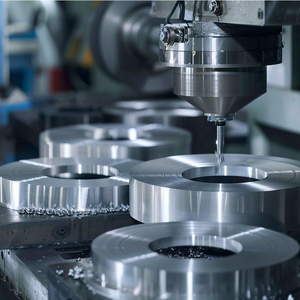
Utilizing multi-axis CNC milling centers and high-speed CNC lathes, we execute complex geometric hardware with tolerances tight to ±0.005mm. Ideal for custom brackets, wire EDM broached blocks, and structural mounting clamps.
Engineered for high-volume structural production, such as safety clip levers, rigging components, and housing brackets. Die casting provides high dimensional repeatability and exceptional structural wall density.
Custom die sinking extrudes profile slots, 30x30 transition corner brackets, and linear architectural rails. In-house billet homogenization ensures structural integrity across continuous linear sections.
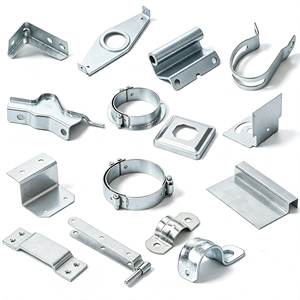
High-speed progressive stamping presses convert aluminum sheet coil into complex mounting plates, cabinet fittings, and reinforced structural brackets with automated burr-free edging.
For internal keyways, ultra-fine slots, and hardened steel insert pairings, wire EDM cutting delivers micron-level accuracy without inducing thermal stress into the aluminum alloy lattice.
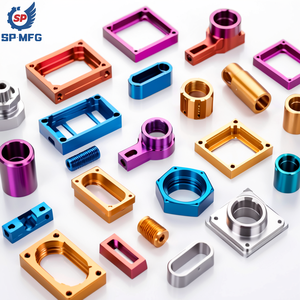
In-house anodizing tanks produce Type II & Type III hard-coat oxidized layers (10-25 microns). Chemical chromate-free conversion lines ensure optimal adhesion for architectural powder coatings.
Review mechanical properties, thermal characteristics, and recommended application environments across standard industrial aluminum grades:
| Aluminum Grade | Temper Options | Yield Strength (MPa) | Corrosion Resistance | Primary Industrial OEM Usage |
|---|---|---|---|---|
| 6063 Aluminum | T5 / T6 | 145 - 214 MPa | Excellent (Marine/Outdoor) | Architectural corner brackets, 30x30 slots, extruded trim, door pull handles |
| 6061 Aluminum | T6 / T651 | 240 - 276 MPa | High (Industrial) | CNC milled mounting blocks, heavy-duty clamps, structural rigging hardware |
| 7075 Aluminum | T6 / T6511 | 435 - 505 MPa | Moderate | Aerospace-grade safety clip levers, high-stress load fittings, tactical hardware |
| ADC12 / A380 | As-Cast | 160 - 180 MPa | Good (Coated) | High-pressure die-cast handles, complex enclosures, rigging lever bodies |
| 5052 Aluminum | H32 / H34 | 193 - 215 MPa | Superior (Saltwater) | Precision stamped brackets, bent sheet metal hardware, marine decorative trim |
Global B2B procurement strategies are shifting rapidly due to environmental compliance, automated smart-building integrations, and supply chain resiliency mandates. Buying directors must align tooling and custom manufacturing choices with these long-term technology shifts:
European and North American buyers are specifying low-carbon primary aluminum scrap blends (>75% recycled content) to comply with CBAM and Scope 3 carbon tracking. In-house remelting of extrusion butts and machining swarf reduces total embodied energy by up to 95% without compromising yield strength.
Combining 3D metal printing for internal cooling channels with ultra-high-speed 5-axis CNC milling allows complex aluminum hardware components to reduce weight by up to 35% while maintaining critical breaking-strength requirements.
Modern architectural hardware now requires integrated cable routing channels, magnetic lock sensor cavities, and modular 90-degree transition joints that connect seamlessly with automated access control systems and smart cabinetry.
Inline AOI scanning machines verify surface anodizing uniformities, micro-cracks, and dimensional thread pitch tolerances in real-time, eliminating manual sampling errors for mass-produced safety clips and rigging components.
Drawing from over 50 years of metallurgical heritage, our integrated factory floor eliminates third-party job shop handovers. From raw billet alloy formulation and die sinking to multi-axis CNC machining, wire EDM, electrostatic powder coating, and CMM quality verification—every phase remains under single-site oversight.
By managing aluminum extrusion, precision casting, mechanical finishing, and anodizing under one roof, we eliminate cross-facility delays and protect your proprietary drawing designs.
Our senior tooling engineers analyze 3D STEP/DXF files prior to die cutting, suggesting wall-thickness adjustments and radius optimizes that slash unit production costs by up to 20%.
Batch quality reports include CMM dimensional audits, spectrographic alloy chemical analysis, hardness checks (Webster/Vickers), and 720-hour salt spray corrosion testing (ASTM B117).
Essential technical and commercial answers for sourcing managers, mechanical engineers, and hardware distributors.
Consult with our metallurgical engineers, request a rapid DFM drawing evaluation, or receive a competitive factory-direct quote within 24 hours.
Send an Inquiry