
EN Contact Us
The global architectural sector is undergoing a structural paradigm shift driven by stringent thermal envelope mandates, carbon accounting regulations (such as Europe's CBAM), and the integration of smart building automation. As the world's primary metallurgical hub, Chinese wholesale window frame factories produce over 60% of the world's structural aluminium extrusions. However, navigating this vast ecosystem requires deep technical discernment regarding alloy selection, temper treatments, surface anodizing depth, and precision tolerances.
This technical whitepaper provides commercial procurement directors, façade engineers, and real estate developers with an unvarnished engineering guide to evaluating China-based window frame exporters. By detailing raw material alloy chemistry (from architectural 6063-T6 to marine-grade 5083 and high-tensile 7075 series), in-house die-sinking metrics, and advanced thermal break assembly techniques, this report equips buyers to eliminate supply chain vulnerabilities, optimize landed costs, and guarantee decades of field performance.
Direct supply of high-grade extrusion profiles, custom CNC components, and marine-class structural framing sections directly from our certified manufacturing lines.
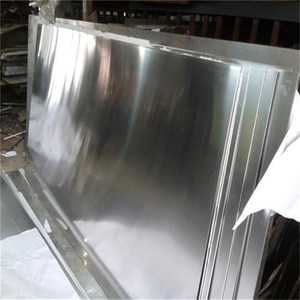
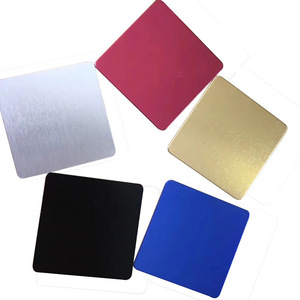
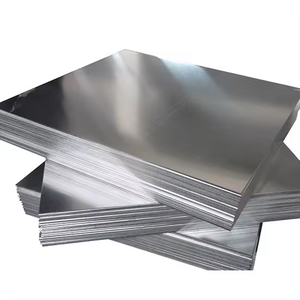
As commercial building energy codes (such as US ASHRAE 90.1 and EU EPBD directives) tighten global efficiency requirements, traditional aluminum window frame manufacturing is evolving rapidly. Forward-thinking Chinese exporters have transitioned from standard non-thermal extrusion production to advanced high-performance systems. The following four macro trends define the future landscape of wholesale window frame procurement:
Standard aluminum is highly conductive ($k \approx 200 \text{ W/m}\cdot\text{K}$). To meet Passive House and net-zero standards, Chinese factories now universally integrate mechanically knurled and crimped Polyamide (PA66 with 25% glass fiber) thermal barriers. Advanced multi-cavity thermal break designs cut frame U-values below $1.3 \text{ W/m}^2\cdot\text{K}$, eliminating indoor condensation risks while preserving structural wind-load capacity.
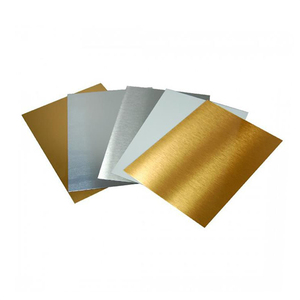
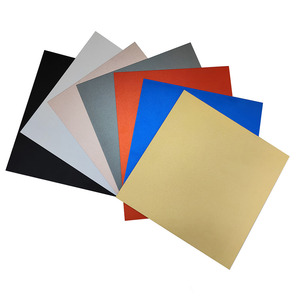
Environmental regulations have reshaped surface finishing lines. Modern exporters have phased out hexavalent chromium pre-treatments in favor of zirconium/titanium-based conversion layers. Combined with PVDF (polyvinylidene fluoride) fluorocarbon spraying and Qualicoat Class 2 / Class 3 architectural powder coatings, frame surfaces can endure 3,000+ hours of neutral salt spray testing without pitting or adhesion loss.
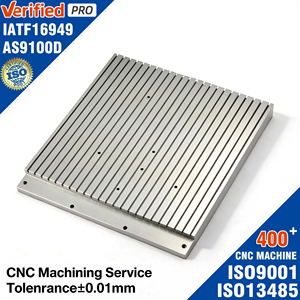
On-site installation labor shortages in North America, Australia, and Europe have pushed buyers toward unitized, prefabricated window frame modules. Chinese factories are heavily investing in 5-axis CNC machining centers capable of milling 6-meter extrusions in a single clamping. Pre-drilled screw ports, CNC corner cleats, and factory-installed EPDM gaskets drastically cut jobsite installation time.
Decarbonization is now a core requirement in vendor qualification. Leading factories utilize scrap recycling re-melting furnaces paired with hydro-powered aluminum smelters. By incorporating 30% to 75% post-industrial recycled content (PIR) into 6063 billets without sacrificing tensile strength or anodizing clarity, suppliers can offer certified low-carbon extrusions ($< 4.0 \text{ kg CO}_2/\text{kg Al}$).
Choosing the correct aluminum alloy and temper is vital to preventing frame deflection under severe wind loads, thermal buckling, or coastal corrosion. The table below illustrates the key physical properties and recommended application domains for common extrusion alloys utilized by tier-1 Chinese manufacturers:
| Alloy & Temper | Tensile Strength (MPa) | Yield Strength (MPa) | Corrosion Class | Primary Window Application |
|---|---|---|---|---|
| 6063-T5 / T6 | 200 – 245 | 165 – 210 | High (Atmospheric) | Standard Residential & Commercial Sliding/Casement Windows, Complex Profiles |
| 6061-T6 | 290 – 310 | 240 – 275 | Very High | Heavy-Duty Curtain Wall Mullions, Structural Window Framing, High-Rise Anchors |
| 6082-T6 | 310 – 340 | 260 – 290 | Very High | High-Stress Load-Bearing Window Lintel Sections, Large Span Skylights |
| 5083-H116 | 305 – 380 | 215 – 280 | Exceptional (Marine) | Coastal/Offshore Window Sub-Frames, High-Salinity Marine Structure Windows |
| 7075-T6 | 540 – 570 | 470 – 505 | Moderate | Ultra-High-Strength Custom CNC Corner Connectors, Heavy Security Window Hardware |
*Note: Mechanical values are derived from standard ASTM B221 and EN 755 testing benchmarks. Custom age-hardening cycles can be requested during die trial validation.
Procuring window frames directly from Chinese manufacturers offers substantial cost efficiencies, but requires a structured quality assurance workflow. To avoid common pitfalls such as dimensional distortion, improper temper, or coating flaking, commercial buyers should implement a strict 5-stage procurement protocol:
Before launching volume production, supply 2D DXF drawings and 3D STEP models to the factory's engineering desk. Ensure the die tooling team calculates extrusion stretch factors and wall thickness symmetry. A professional Chinese die shop will deliver a first-article sample along with a coordinate measuring machine (CMM) dimensional inspection sheet within 10 to 15 working days.
Insist on mill test certificates (MTC) conforming to EN 10204 3.1 for every billet batch. Chemical analysis via optical emission spectrometry guarantees that trace elements (such as Iron, Silicon, and Magnesium ratio) stay strictly within alloy boundaries, ensuring consistent anodizing color uniformity across different extrusion runs.
For thermally broken profiles, audit the mechanical crimping shear strength (evaluated per EN 14024). For anodized profiles, confirm minimum film thickness (AA15 or AA25 grade, 15–25 microns). For powder-coated sections, verify cross-hatch adhesion testing (ISO 2409 / ASTM D3359 Grade 4B/5B) and MEK rub resistance before packaging.
Extrusion surfaces are susceptible to scratch damage during ocean transport. Quality exporters apply protective polyethylene film to every profile face, place paper interleaving between layers, and bundle sections into strapped steel or fumigated timber cradles sized for 20ft/40ft high-cube containers.
Supported by more than 53 years of metallurgical expertise, our industrial manufacturing ecosystem bridges raw alloy processing with precision window extrusion engineering. Operating out of advanced manufacturing plants, we provide global contractors and window system fabricators with an uncompromised, vertically integrated production partner.
From initial billet casting, die-sinking, multi-press extrusion, and age-hardening to 5-axis CNC machining and automated powder coating, every step takes place on a single site. This eliminates third-party handling delays and guarantees tight tolerance control.
Our quality management system is audited against aerospace and architectural standards. Batch traceability connects every shipped bundle to its specific press operator, die log, billet batch, and coating furnace run.
Our die development workshop manages complex, multi-hollow extrusions. OEM customers can transition from drawing approval to first-article sample testing in 10–15 business days with guaranteed dimensional compliance.
We supply custom window frame profiles and industrial extrusions to contractors across North America, Europe, the Middle East, and Australia, complete with full customs documentation and mill test reports.
Key technical answers regarding alloy selection, MOQs, surface finishes, and custom tooling to streamline your B2B sourcing process:
MOQ is typically governed by billet press charge weights and die size. For standard architectural profiles (6063-T5/T6), our baseline MOQ is generally 500 kg to 1,000 kg per profile cross-section for stock finishes. For custom color powder coating or specialized anodizing runs, MOQ is set at 1,000 kg per color batch.
Color consistency is controlled through strict electrolyte bath chemistry management, automated computerized immersion timing, and computer-controlled current density. Additionally, we enforce tight iron (Fe) and silicon (Si) limits in our raw 6063 billets to eliminate base metal color shifting.
Once 2D/3D CAD drawings are approved, die sinking and EDM wire-cutting take 10 to 15 working days. Initial sample extrusions are immediately tested for dimensional tolerance (EN 755-9 / ASTM B221) and shipped via express courier alongside CMM inspection reports for client sign-off.
Yes. Our facility operates dedicated thermal break assembly lines equipped with automated knurling, strip insertion, and three-stage rolling/crimping equipment. We conduct continuous transverse shear strength tests to ensure the assembled frame withstands high wind loading.
For coastal and marine installations, we recommend specifying 5083 or 5754 alloy sub-frames, or opting for 6063-T6 profiles with Class 2/3 PVDF fluorocarbon coatings or 25-micron hard-coat anodizing (AA25 standard), certified to withstand 3,000+ hours of continuous salt spray exposure.
Speak directly with our metallurgical engineers and die tooling specialists. Send your DXF/STEP drawings or request a comprehensive wholesale quotation today.