EN Contact Us
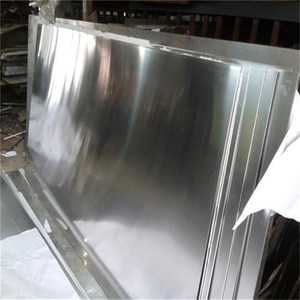
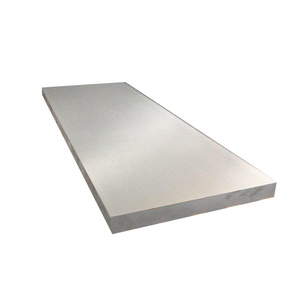
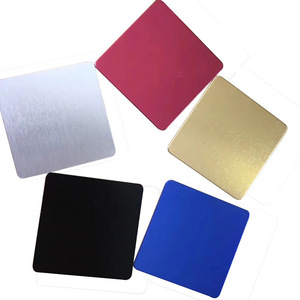
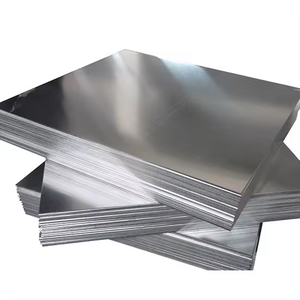
Direct-from-factory aluminum heat sink extrusions, marine-grade plates, color-anodized sheets, and AS9100-certified precision CNC components built for extreme thermal dissipation.
Thermal management is the premier bottleneck in modern high-power electronics, renewable energy converters, telecommunications infrastructure, and electric vehicle (EV) powertrains. As power densities increase exponentially within shrinking mechanical footprints, selecting an authoritative, direct-source China wholesale heat sink factory and exporter becomes a strategic imperative for global Original Equipment Manufacturers (OEMs) and Tier-1 engineering procurement teams.
Heat sinks serve as passive heat exchangers that transfer heat generated by electronic or mechanical devices into a fluid medium (typically air or liquid coolant), where it is dissipated away from the device. Achieving minimal thermal resistance ($R_{th}$) requires rigorous control over material thermal conductivity ($k$), convective surface area, boundary layer airflow dynamics, structural flatness, and interface boundary integrity.
The core thermal efficiency of an aluminum heat sink depends fundamentally on the atomic structure and chemical purity of the underlying extrusion alloy. While pure aluminum (such as 1050/1060 series) provides high intrinsic thermal conductivity (~220 W/m·K), its low tensile yield strength renders it unsuitable for complex structural profiles or high-torque screw-fastened electronics enclosures. Industrial engineering requires optimized aluminum alloys:
| Alloy Grade | Thermal Conductivity (W/m·K) | Tensile Strength (MPa) | Machinability & Extrudability | Primary Industrial Application |
|---|---|---|---|---|
| 6063-T5 / T6 | 201 - 209 | 185 - 240 | Exceptional / Superior | High-aspect-ratio extruded fin heat sinks, LED drivers, solar inverters. |
| 6061-T6 | 152 - 166 | 290 - 310 | Excellent / High | CNC liquid cold plates, heavy machinery heat exchangers, aerospace enclosures. |
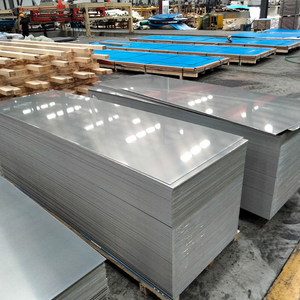
| 5083-H116 / 5052 | 117 - 138 | 270 - 345 | Moderate / Medium | Marine thermal enclosures, battery pack baseplates, anti-corrosive heat shields. |
| 7075-T6 | 130 - 134 | 540 - 570 | Good / Low (Hard Alloy) | High-stress aerospace structural cooling chassis, military avionics cold frames. |
By operating our own casting, homogenizing, and billet-preheating equipment, our plant controls chemical segregation, eliminating internal porosity and non-metallic inclusions. This guarantees uniform thermal conductivity throughout the length of extrusions up to 12 meters.
As AI computing clusters, high-voltage EV traction inverters, and 5G/6G telecom base stations escalate thermal loads beyond traditional air-cooling limits, heat sink manufacturing undergoes transformative shifts.
Advancements in high-tonnage indirect extrusions allow fin height-to-gap aspect ratios exceeding 25:1. This dramatically increases surface area without requiring heavy assembly or secondary soldering.
Transitioning from forced-air cooling to closed-loop liquid cooling. Internal micro-channels machined via 5-axis CNC or friction stir welded (FSW) deliver thermal flux handling >300 W/cm².
Hard-coat black anodizing, micro-arc oxidation (MAO), and specialized ceramic coatings boost thermal radiation emissivity ($\epsilon$) from 0.05 (raw mill finish) to over 0.92, increasing total radiation dissipation.
Hybrid heat sink designs embedding planar vapor chambers or copper heat pipes directly into extruded aluminum bases resolve localized hot-spot spreading resistance in high-power GPUs/CPUs.
Procurement managers and supply chain directors facing volatile aluminum raw material pricing (LME index fluctuation) and carbon border adjustment mechanisms (CBAM) must navigate key strategic trends:
European and North American OEMs increasingly mandate environmental product declarations (EPDs) detailing carbon intensity per metric ton of extruded aluminum. Leading Chinese heat sink factories are integrating hydro-powered and recycled aluminum scrap billets (low carbon footprint <4.0 t CO₂/t Al) into production lines without sacrificing mechanical or thermal properties.
Subcontracting extrusion to one shop, CNC machining to a second, and anodizing to a third introduces cumulative tolerance stacks, surface scratching risks, transit delays, and multi-vendor quality disputes. Sourcing trends favor fully integrated manufacturing hubs offering billet casting, tool die fabrication, extrusion, precision CNC milling, surface coating, and pre-installed thermal interface material (TIM) application under one quality roof.
To reduce sample iteration cycles from months to days, leading Chinese suppliers now provide preliminary Design for Manufacturability (DFM) analyses combined with Computational Fluid Dynamics (CFD) thermal-hydraulic modeling before cutting steel dies. This ensures optimized pressure drop and fin thickness before capital investment.
Rooted in over 50 years of metallurgical experience, our manufacturing ecosystem combines advanced extrusion technology with aerospace-grade AS9100 quality control.
Operating multi-ton extrusion presses ranging from 800 to 5,000 tons. Our in-house EDM and die-making center produces custom profiles with circumscribing circles up to 450mm within 10 to 15 working days.
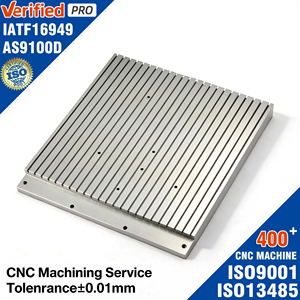
Equipped with high-speed 3-axis, 4-axis, and 5-axis CNC machining centers capable of milling ultra-flat base surfaces (flatness within 0.02mm) to minimize contact thermal resistance against silicon dies and IGBT modules.
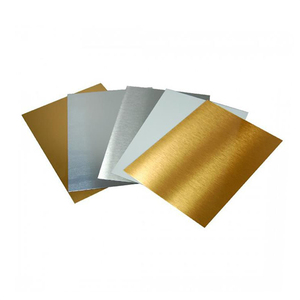
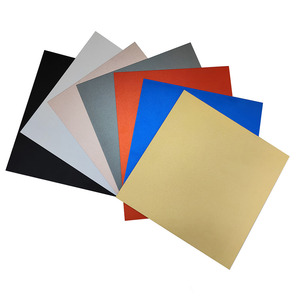
Fully automated chromate-free passivation, sulfuric acid anodizing (black, silver, gold, clear), hard-coat anodizing (>50μm thickness), and electrostatic architectural powder coating guaranteeing 1000+ hours neutral salt spray resistance (ASTM B117).
Every export shipment undergoes CMM dimensional checking, eddy-current coating thickness measurements, thermal conductivity testing, spectrometer alloy analysis, and mechanical tensile validation backed by mill test certificates (MTC EN 10204 3.1).
Detailed technical answers to common procurement, engineering, and international logistics questions.
Upload your 2D/3D technical drawings today for a comprehensive Design for Manufacturability (DFM) review and competitive factory-direct wholesale quote within 24 hours.
Contact Us