
EN Contact Us
Explore our primary alloy classifications, fully compliant with ASTM B209, EN 485, and AS9100D aerospace standards. Direct mill export options with custom shearing and surface treatments.
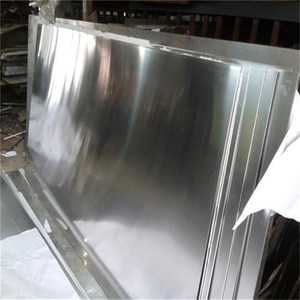
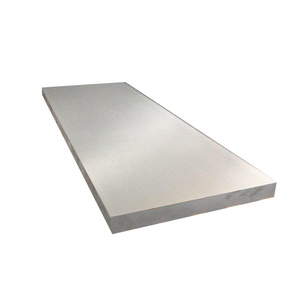
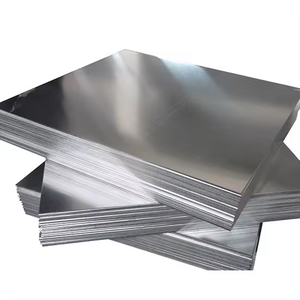
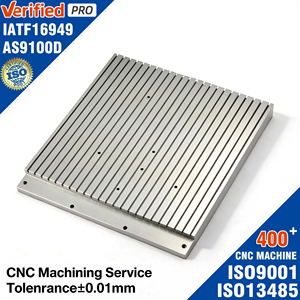
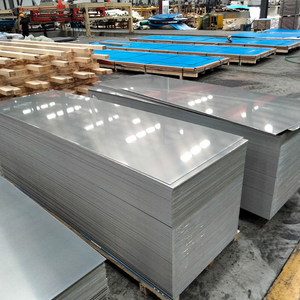
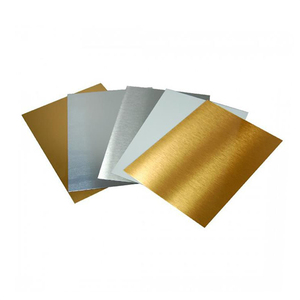
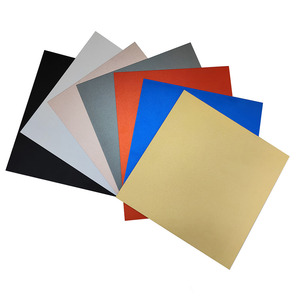
As a premier Chinese aluminum panel manufacturer and global exporter, our industrial eco-system integrates Direct Chill (DC) casting, continuous hot rolling, cold reduction mills, heat treatment quenching, and full-spectrum surface finishing under a single unified Quality Management System (QMS).
Unlike non-integrated traders, our mill maintains 100% melt-to-shipment traceability. Every aluminum plate—from 1000-series pure sheets to complex 7075-T651 aerospace tooling slabs—undergoes rigorous optical emission spectrometry, ultrasonic flaw detection (AMS-STD-2154 Class AA), and tension-leveling processes to eliminate internal stress and prevent warping during high-speed CNC machining.
Selecting the correct aluminum alloy requires balancing yield strength, weldability, stress corrosion cracking (SCC) resistance, and surface anodizing response. Below is our engineering benchmark table comparing core export-grade alloys manufactured in our plant.
| Alloy Series | Key Elements | Tensile Strength (MPa) | Yield Strength (MPa) | Elongation (%) | Primary Industrial Applications |
|---|---|---|---|---|---|
| 3003 (Al-Mn) | Mn: 1.0–1.5%, Fe: 0.7% | 140 – 180 | 115 – 160 | 10 – 18 | Chemical equipment, HVAC heat exchangers, architectural roofing |
| 5052 (Al-Mg) | Mg: 2.2–2.8%, Cr: 0.15–0.35% | 210 – 260 | 130 – 200 | 12 – 20 | Fuel tanks, marine enclosures, sheet metal chassis, signage |
| 5083 (Al-Mg-Mn) | Mg: 4.0–4.9%, Mn: 0.4–1.0% | 275 – 350 | 125 – 240 | 12 – 16 | Marine hull plating, cryogenic pressure vessels, offshore rigs |
| 5754 (Al-Mg) | Mg: 2.6–3.6%, Cr+Mn: 0.6% | 220 – 270 | 100 – 180 | 14 – 21 | Automotive body panels, flooring, heavy welded structures |
| 6061-T6 (Al-Mg-Si) | Mg: 0.8–1.2%, Si: 0.4–0.8% | 310 – 330 | 276 – 290 | 12 – 17 | Structural frames, heavy machinery components, aerospace fixtures |
| 7075-T651 (Al-Zn) | Zn: 5.1–6.1%, Mg: 2.1–2.9% | 540 – 580 | 470 – 510 | 8 – 11 | High-stress aerospace structures, mold manufacturing, military gear |
When specifying material for high-corrosion marine environments (such as commercial shipbuilding or offshore oil platforms), buyers must pay careful attention to alloy temper. For instance, **5083-H116** and **5083-H321** undergo specialized stabilization thermal treatments to prevent intergranular corrosion along grain boundaries, guaranteeing long-term fatigue strength under saltwater immersion.
Industrial buyers face evolving environmental mandates, volatile LME raw material pricing, and shifting trade regulations. Key procurement trends shaping the next decade include:
With the EU’s Carbon Border Adjustment Mechanism (CBAM) coming into full effect, enterprise procurement is prioritizing primary aluminum smelted via hydropower and inert-anode technology. Our mill offers verified low-carbon aluminum sheets carrying certified carbon intensity below 4.0 kg CO2/kg Al, ensuring tax-compliant importation.
To reduce internal machining scrap and lower freight weights, OEMs are shifting from buying standard 4x8 slabs to requesting factory-milled, cut-to-length, and pre-drilled plates. Direct mill machining cuts customer production cycle times by up to 35% while eliminating secondary handling fees.
Navigating raw material price spikes requires hedging flexibility. Leading exporters now offer buyers locked-in forward pricing against the London Metal Exchange (LME) alongside flexible premium structures, shielding major infrastructure projects from unexpected cost overruns.
Next-generation industrial applications demand surface durability far beyond basic mill finishes. Key technology breakthroughs in aluminum manufacturing include:
Combining 70% fluorocarbon PVDF resins with inorganic nanoceramic particles yields surface coatings capable of enduring 4,000+ hours of continuous salt-spray testing (ASTM B117). These panels self-passivate microscopic surface scratches, extending architectural facade lifespans past 30 years.
Accelerated electrification in EV power modules, solar inverters, and AI data centers requires extreme thermal dissipation. Precision 6063/6063A skived fin thermal plates deliver heat transfer co-efficients 40% higher than traditional extruded heatsinks.
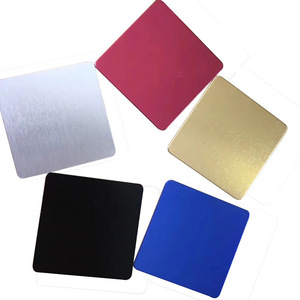
By depositing metallic salts into sulfuric-acid anodized pore structures via multi-frequency AC pulses, we achieve vibrant interference-based colors (deep black, royal blue, champagne, metallic pink) with zero fading under high UV radiation, ideal for electronics and luxury architectural cladding.
Direct technical answers addressing quality control, export packaging, tolerances, and custom ordering procedures.
Our standard production conforms to ASTM B209 and EN 485-2. For critical applications, our precision cold mills achieve half-standard commercial tolerances (e.g., ±0.015mm on 2.0mm sheets). Plates undergo automated roller-leveling to guarantee flatness under 2mm/m bow and twist.
All sheets feature protective laser-film masking (PE or PVC, 50μm–100μm). Interleaving neutral pH anti-corrosion paper is placed between unmasked plates. Bundles are fully vacuum-sealed in heavy-duty polyethylene barrier film with desiccant packs, then strapped in wooden crates built for 20ft/40ft container loading.
Every lot includes a EN 10204 3.1 Mill Test Certificate detailing chemical analysis (spectrometry), mechanical properties (tensile, yield, elongation), grain structure, and anodizing thickness test results. Third-party inspections by SGS, Bureau Veritas, or TÜV are routinely accommodated.
Standard stocking alloys (3003, 5052, 6061) carry an MOQ of 1 metric ton per thickness. Custom alloys, non-standard widths (up to 2600mm wide plates), or custom color anodizing lines require an MOQ of 3 to 5 metric tons based on billet casting batch sizes.
Our pricing formula is completely transparent: Base Price = LME Official Cash Price + Alloy Fabrication Premium + Surface Coating Fee + Packing/Logistics Fee. Quotes are available in USD, EUR, or RMB under FOB China, CIF destination port, or DDP terms.
Specify DC (Direct Chill) if your process involves deep drawing, severe 90°/180° bending without cracking, high-grade anodizing aesthetic uniformity, or structural marine welding. CC (Continuous Cast) is cost-effective for general ductwork, simple flat signs, and non-structural roofing.
Connect directly with our senior metallurgical engineers to review drawing tolerances, alloy selections, or custom anodizing specifications. Fast-track quote turnarounds within 24 hours.
Inquire Now