
EN Contact Us
Explore our mill-direct aluminum alloys, precision-cut plate blanks, anodized sheet metals, and AS9100-certified CNC machined structural bracket components designed for heavy-duty load conditions.
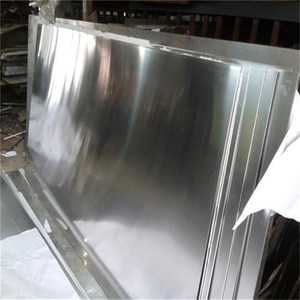
Direct-chill (DC) cast marine-grade aluminum plates with ultra-high yield strength and salt-water corrosion resistance, ideal for structural bracket blanks.
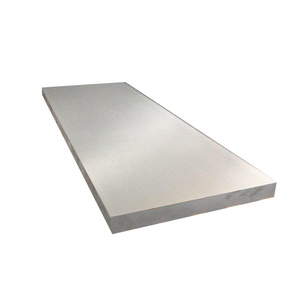
Precision mill-finished plate stock cut-to-size for heavy industrial brackets, featuring isotropic mechanical properties and zero stress deformation.
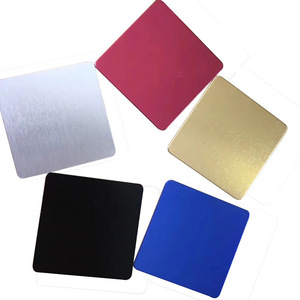
Electrochemically sealed hard-anodized plates available in gold, black, blue, and silver. Outstanding scratch resistance for architectural bracket facades.
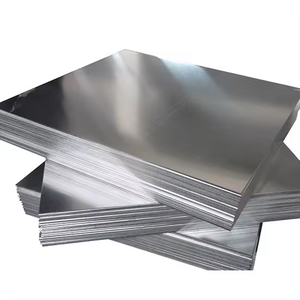
DNV and ABS certifiable marine-grade sheet plates engineered for harsh offshore solar tracking brackets and shipbuilding framework mounts.
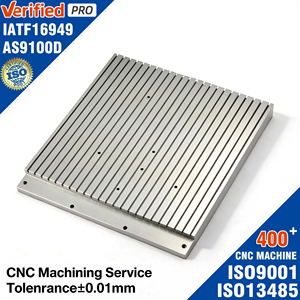
High-speed 5-axis CNC machined aerospace brackets holding tight dimensional tolerances down to ±0.005mm with full CMM inspection reports.
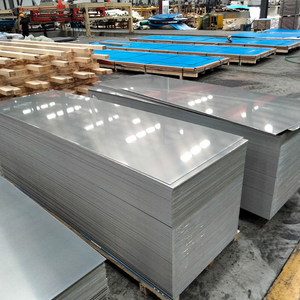
High-formability 5052/5083 alloy plates pre-cut for rapid bracket stamping, welding, and bending operations across industrial equipment lines.
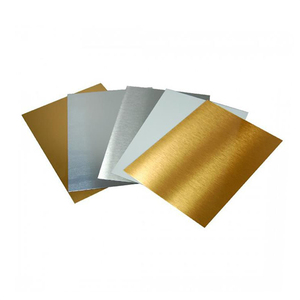
Satin anodized finishes in white, gold, and black delivering superior weathering, UV resistance, and uniform optical reflectivity for building mounts.
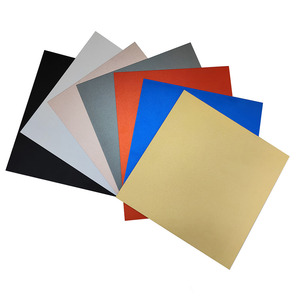
Micro-gauge anodized aluminum alloy shims and mounting clips designed for high-density electronic thermal management and precision leveling brackets.
Leveraging over five decades of metallurgical excellence, advanced billet extrusion, direct-chill casting, and 5-axis CNC machining centers, we provide global B2B procurement teams with vertically integrated bracket manufacturing.
We control chemical purity from raw ingot melting to homogenizing heat treatment. By strictly controlling trace elements (Fe, Si, Cu, Mn, Mg, Cr, Zn), our custom 6061, 7075, and 5083 aluminum bracket blanks achieve optimal grain refinement, maximizing fatigue life and shear strength under dynamic stress loads.
Our engineering team performs advance finite element structural simulations on custom OEM bracket geometry. By analyzing stress concentration vectors, torsional deflection, and mechanical resonance, we optimize bracket rib wall thickness to minimize component weight while raising yield strength performance.
Every manufacturing lot undergoes rigorous ultrasonic flaw detection, coordinate measuring machine (CMM) dimensional verification, Spectro metallurgical chemical analysis, and optical profilometry. Comprehensive EN 10204 3.1 Mill Test Certificates accompany all outbound container shipments.
Selecting the optimal aluminum alloy and temper for industrial brackets requires a rigorous evaluation of working mechanical stresses, environmental exposure, thermal loads, and joining methods. Structural brackets used in solar tracking, aerospace frames, EV battery enclosures, and curtain wall glazing must balance high strength-to-weight ratios with long-term resistance to stress corrosion cracking (SCC) and galvanic degradation.
| Aluminum Alloy & Temper | Tensile Strength (MPa) | Yield Strength (MPa) | Corrosion Resistance | Primary Industrial Bracket Applications |
|---|---|---|---|---|
| 6061-T6 | 310 MPa | 276 MPa | High (Atmospheric/Freshwater) | Solar PV mounting brackets, structural building connectors, automotive chassis brackets. |
| 7075-T6 | 572 MPa | 503 MPa | Moderate (Requires Hard Anodizing) | Aerospace structural mounts, high-stress defense brackets, precision robotics joints. |
| 5083-H116 | 305 MPa | 215 MPa | Exceptional (Marine & Chemical) | Offshore wind turbine brackets, shipbuilding structural supports, cryogenic vessel mounts. |
| 5052-H32 | 230 MPa | 195 MPa | Very High (Salt Spray) | Sheet metal mounting brackets, enclosure mounting flanges, decorative architectural trim. |
| 6082-T6 | 340 MPa | 310 MPa | High (European Standard Structural) | Heavy-duty bridge brackets, crane booms, transport machinery load-bearing brackets. |
Aluminum brackets constructed from heat-treatable alloys (6000 and 7000 series) rely on controlled solution heat treatment followed by artificial aging (T5, T6, T651) to achieve peak intermetallic precipitate distribution. During solution treatment at temperatures ranging between 520°C and 540°C, alloying elements such as Mg2Si or Zn-Mg phases dissolve uniformly into the alpha-aluminum matrix.
Subsequent rapid water quenching suppresses grain boundary precipitation. Artificial thermal aging at 160°C–180°C then precipitates coherent GP zones and sub-microscopic needle-like phases that effectively block dislocation movement under external mechanical shear and bending stresses.
Bare aluminum forms a thin (~2–5nm) natural oxide layer (Al2O3) that provides basic protection against mild atmospheric moisture. However, for structural brackets subjected to salt spray, industrial sulfur dioxide, or high UV radiation, engineered electrolytic anodizing is required.
In our automated sulfuric acid anodizing baths (15–20% H2SO4 at 18–22°C), controlled direct current density converts the outer metal surface into a durable porous aluminum oxide layer with controlled pore diameters. For heavy-duty brackets, Type III Hardcoat Anodizing produces coating thicknesses exceeding 50 microns (HV400+ microhardness), creating an impermeable barrier against abrasion and chemical erosion.
Global B2B enterprise buyers across Europe and North America are accelerating carbon-accounting audits (Scope 1, 2, and 3 emissions). Future aluminum bracket procurement heavily favors manufacturers utilizing hydro-powered aluminum smelters and high-ratio recycled scrap integration (post-industrial and post-consumer scrap). Re-melting secondary aluminum consumes only 5% of the energy needed for primary smelting, cutting greenhouse gas emissions by up to 95% while maintaining strict chemical purity through electromagnetic stirring and degassing systems.
Traditional block-machined brackets are rapidly being replaced by topology-optimized structural geometries generated through AI algorithms. By redistributing mass strictly along load vector pathways, engineered aluminum brackets achieve weight reductions of 30% to 50% without sacrificing mechanical yield limits. Manufacturers are pairing 3D generative design software with high-speed multi-axis CNC milling centers to produce light-weighted brackets for electric vehicle battery frames, aerospace nacelles, and satellite solar arrays.
As utility-scale solar installations expand across harsh desert and offshore environments, demand for heavy-gauge extruded and stamped aluminum solar tracker brackets is surging. Unlike traditional galvanized steel brackets that suffer from edge rust and heavy weight, high-strength 6005A-T6 and 6061-T6 aluminum mounting brackets provide zero-maintenance corrosion protection, faster site erection, and lower foundation soil stress.
Procurement contracts are transitioning toward zero-defect supply chains. Future-ready manufacturing plants are deploying inline automated 3D laser scanners and AI optical inspection systems integrated directly into CNC machining units. Every manufactured bracket is digitally scanned against CAD step files in real-time, verifying hole center distances, thread pitch, surface roughness (Ra), and chamfer dimensions before automated packaging.
Key technical answers to common questions asked by overseas procurement managers, structural engineers, and supply chain directors.