
EN Contact Us
Engineered to exceed ASTM B209, EN 485, and Qualicoat Class 2 standards. Direct factory supply for high-rise, commercial, and extreme marine environments.
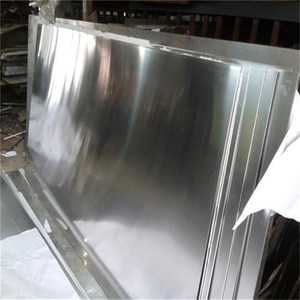
Heavy-duty structural aluminum plates designed for high wind-load facades, marine structures, and industrial cladding with superior stress-corrosion cracking resistance.
Send an Inquiry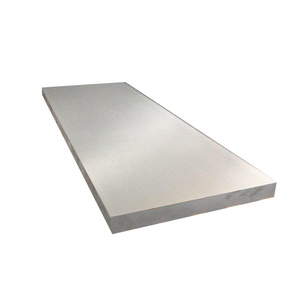
Custom cut-to-size aluminum alloy plates (3003, 5052, 6061, 7075) available in mill finish, PVDF pre-painted, and anodized temper conditions for architectural framing.
Send an Inquiry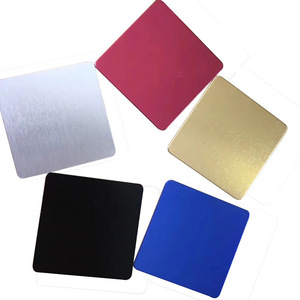
Electro-chemically sealed anodized sheets in Gold, Rose Pink, Deep Black, Cobalt Blue, and Satin Silver. UV-stable and weather-resistant surface for iconic building envelopes.
Send an Inquiry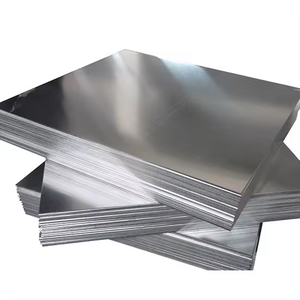
Certified marine-grade 5005, 5052, 5083, and 5086 alloy plates engineered for coastal curtain walls exposed to severe salt-spray atmosphere and tropical humidity.
Send an Inquiry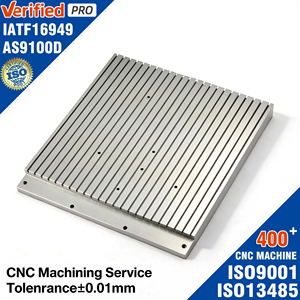
Aerospace-standard 5-axis CNC machined structural brackets, facade connectors, and unitized curtain wall anchor blocks engineered from 6061-T6 and 7075 alloys.
Send an Inquiry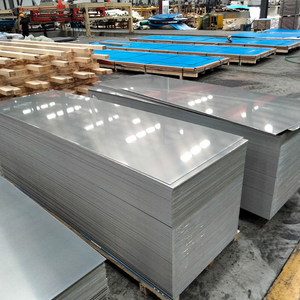
Precision-flat 3003, 5052, and 5083 alloy plates for solid aluminum facade panels, perforated exterior louvers, and architectural sunshades.
Send an Inquiry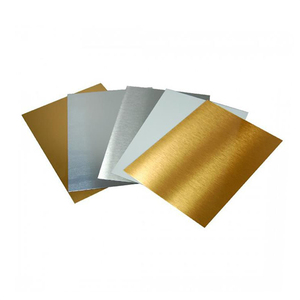
Premium 5052-H32 anodized decorative plates providing rich depth, metallic luster, and color consistency across massive exterior surface areas.
Send an Inquiry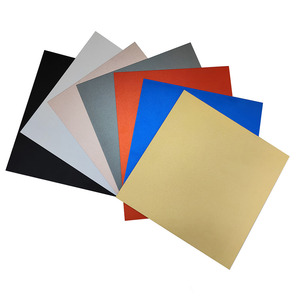
High-ductility multicolor anodized aluminum thin sheets for interior feature walls, kinetic dynamic facades, ceiling baffles, and lightweight composite panels.
Send an InquiryBacking architectural vision with metallurgical mastery, in-house die tooling, automated chromate-free pre-treatment, and rigorous quality auditing.
From primary aluminum smelting and billet homogenizing to precision extrusion (800T–4000T presses), 5-axis CNC machining, and automated powder coating under a single site.
Operating under strict aerospace and automotive quality management standards. Full heat-lot chemical spectrometry, eddy-current coating checks, and CMM inspection per batch.
In-house CAD/CAM and wire-EDM die cutting studio capable of turning around complex custom extrusion dies within 10 to 15 working days, accompanied by first-article inspection reports.
In-house Qualicoat Class 2 architectural polyester powder coating and 3-coat Kynar 500 PVDF fluoropolymer systems engineered to endure 3,000+ hours salt-spray testing (ASTM B117).
Advanced mechanical crimping lines for polyamide (PA66GF25) thermal barriers, significantly reducing overall curtain wall thermal transmittance (U-values) for LEED-certified projects.
Interleaved non-staining protective film, corner guards, moisture-proof wrapping, and reinforced steel-strapped timber pallets optimized for 20ft and 40ft High Cube container shipping.
Select the optimal aluminum alloy based on mechanical strength, atmospheric corrosion resistance, and surface finishing requirements.
| Alloy & Temper | Tensile Strength (MPa) | Yield Strength (MPa) | Corrosion Resistance | Anodizing Response | Primary Facade Application |
|---|---|---|---|---|---|
| 3003-H14 / H24 | 140 – 180 | 115 – 150 | High | Good (Metallic Gray) | Solid Cladding Panels, Sheet Metal Flashing, Spandrel Backing |
| 5052-H32 / H34 | 210 – 260 | 160 – 200 | Superior | Excellent (Bright Clear/Color) | Perforated Screens, Exterior Louvers, High-Humidity Facades |
| 5083-H116 / H321 | 275 – 350 | 200 – 250 | Marine Grade | Moderate (Industrial) | Coastal High-Rise Cladding, Offshore Platforms, Extreme Wind Zones |
| 6063-T5 / T6 | 150 – 245 | 110 – 210 | Very High | Exceptional (Architectural) | Extruded Curtain Wall Mullions, Transoms, Window Framing Systems |
| 6061-T6 | 290 – 310 | 240 – 270 | High Structural | Good (Mechanical) | Heavy Load-Bearing Sub-Frames, Structural Brackets, Skylight Ribs |
In modern architectural engineering, the building envelope represents the critical intersection between aesthetic expression, structural integrity, and environmental thermodynamic management. Selecting the appropriate China Best Aluminum Facade Supplier requires an in-depth technical understanding of aluminum metallurgy, structural load calculations, alloy temper behaviors, and surface finishing technologies.
Aluminum is specified in modern curtain walling and structural facades due to its high strength-to-weight ratio (density approximately 2.70 g/cm³), inherent atmospheric corrosion resistance, and complete recyclability. However, specifying the correct alloy family is crucial to prevent premature material fatigue, galvanic corrosion, or optical distortion (oil-canning).
Engineering Principle: Avoid oil-canning in large solid aluminum facade panels by maintaining an minimum thickness ratio relative to panel span. For unstiffened panels exceeding 1200mm in width, a minimum sheet thickness of 3.0mm in 5052-H32 is recommended alongside structural perimeter framing.
Facade aluminum profiles are continuously subjected to solar ultraviolet (UV) radiation, industrial acid rain, thermal cycling, and airborne particulate abrasion. China’s top facade suppliers utilize two main protective coating technologies:
Polyvinylidene Fluoride (PVDF) liquid coating systems applied in a 2-coat, 3-coat, or 4-coat process provide the gold standard for exterior architectural durability. Complying with AAMA 2605 specifications, PVDF finishes contain 70% fluorocarbon resin, offering unmatched color retention and resistance to chalking under intense tropical sunshine.
Anodizing converts the aluminum surface into a decorative, durable, corrosion-resistant, and anodic oxide layer. By utilizing multi-stage sulfuric acid bath electrolysis followed by metal salt electro-coloration (cobalt, tin, or bronze salts), the oxide layer achieves a thickness of Class I (20 microns minimum). This inorganic barrier cannot peel, chip, or flake over its 50+ year design life.
With stringent global building codes demanding reduced operational carbon footprints and lower HVAC loads, non-thermal aluminum framing is obsolete for climate-controlled structures. Heat conduction through aluminum frames ($k \approx 200 \text{ W/m}\cdot\text{K}$) must be interrupted by structural thermal barriers.
Our engineered facade extrusions integrate mechanically crimped glass-fiber reinforced polyamide strips (PA66GF25). PA66GF25 exhibits a thermal conductivity of only $0.30 \text{ W/m}\cdot\text{K}$, matching the coefficient of thermal expansion of aluminum ($23 \times 10^{-6}/\text{K}$). This prevents structural delamination during severe thermal shock while dropping system U-values down to $\le 1.5 \text{ W/m}^2\cdot\text{K}$.
Global procurement teams sourcing aluminum facade systems from China must align with emerging environmental and technological trends:
Clear, technical, and commercial answers directly from our senior metallurgical and export engineering team.
Send your DXF/STEP CAD drawings, profile specifications, or project bill of quantities directly to our engineering desk for a comprehensive proposal within 24 hours.
Send an Inquiry