
EN Contact Us
Precision-engineered aluminum profiles and structural alloy components certified for European and international construction markets.
In modern architectural engineering and international real estate development, procuring aluminum window profiles is no longer a simple transactional purchase based on price per kilogram. With the strict enforcement of the European Union Construction Products Regulation (CPR 305/2011) and updated energy efficiency directives (such as the EPBD 2024 revisions), façade engineers, system fabricators, and commercial contractors demand certified compliance, uncompromising alloy consistency, and audited thermal performance.
This technical whitepaper provides an exhaustive procurement guide for selecting verified CE Certified Window Profile Factories & Suppliers. Covering raw material metallurgy (6063-T5 vs. 6061-T6), Factory Production Control (FPC) audit requirements under EN 14351-1, thermal break polyamide assembly dynamics, and upcoming carbon accounting standards (CBAM), this document equips global sourcing teams with the metrics required to eliminate procurement risks and ensure seamless regulatory clearance across European, Middle Eastern, and North American markets.
Core Procurement Insight: True CE Certification under EN 14351-1 requires more than a third-party laboratory test certificate. It mandates a complete Factory Production Control (FPC) system, ongoing Initial Type Testing (ITT), traceable mechanical yield stress logs, and certified declared performance metrics for thermal transmittance ($U_f$), air permeability, watertightness, and wind load resistance.
For architectural window profile assemblies to be legally placed on the market within the European Economic Area (EEA), suppliers must prove full compliance with EN 14351-1:2006+A2:2016 (Windows and doors - Product standard, performance characteristics). For global B2B procurement managers, evaluating an OEM aluminum profile factory involves verifying four non-negotiable structural compliance layers:
Extrusion profile factories must supply verifiable Initial Type Test (ITT) data from an accredited Notified Body covering the following physical criteria:
| Performance Characteristic | Harmonized Test Standard | Standard Compliance Range | High-Performance Commercial Target |
|---|---|---|---|
| Thermal Transmittance ($U_f$) | EN ISO 10077-2 | 1.6 – 2.4 W/m²K | ≤ 0.8 – 1.0 W/m²K (Passive House) |
| Air Permeability | EN 12207 | Class 2 – Class 3 | Class 4 (600 Pa positive/negative pressure) |
| Watertightness | EN 12208 | Class 5A – 7A | Class E1050 (1050 Pa severe exposure) |
| Resistance to Wind Load | EN 12210 | Class B2 – C3 | Class C5 (Relative deflection < 1/300) |
| Dangerous Substances | REACH / RoHS | Declaration of Conformity | Zero Lead, Cadmium, or Hexavalent Cr |
A legitimate CE-certified supplier maintains an internal FPC system adhering to ISO 9001 and EN 14351-1 annexes. FPC requires automated logging of press extrusion speed, quench rate (cooling gradient), artificial aging oven temperature curves (typically 175°C to 185°C for 6 to 8 hours), and daily Webster/Vickers hardness testing on every production lot. Procurement specialists should explicitly request raw batch log sheets during vendor qualification.
The structural longevity and surface finish of an architectural profile depend fundamentally on billet chemical purity and extrusion die design. Standard architectural window frames utilize Magnesium-Silicon (Al-Mg-Si) aluminum alloys, primarily EN AW-6063 and EN AW-6060, with EN AW-6061 reserved for structural load-bearing mullions.
| Alloy Standard | Si (%) | Mg (%) | Fe (%) | Tensile Strength $R_m$ (MPa) | Yield Stress $R_{p0.2}$ (MPa) |
|---|---|---|---|---|---|
| EN AW-6063 T5 | 0.20 – 0.60 | 0.45 – 0.90 | ≤ 0.35 | ≥ 160 | ≥ 110 |
| EN AW-6063 T6 | 0.20 – 0.60 | 0.45 – 0.90 | ≤ 0.35 | ≥ 215 | ≥ 170 |
| EN AW-6061 T6 | 0.40 – 0.80 | 0.80 – 1.20 | ≤ 0.70 | ≥ 290 | ≥ 240 |
To achieve strict dimensional tolerances required for high-rise unitized curtain walls, extrusions must conform to EN 12020-2 (Extremely precise architectural profiles). Deviations in wall thickness, web concavity, or twist must not exceed ±0.15 mm, ensuring that weather-stripping EPDM gaskets and corner-cleat crimping machines fit without manual adjustment.
Raw aluminum exhibits a high thermal conductivity ($K \approx 200 \text{ W/m}\cdot\text{K}$). Uninsulated aluminum frames create thermal bridges that cause severe interior condensation and massive energy loss in heating and cooling seasons. CE-compliant thermal break window profiles solve this via mechanical insertion of polyamide thermal barrier strips.
Leading suppliers utilize Polyamide 66 reinforced with 25% glass fiber (PA66 GF25). Glass fiber reinforcement ensures that the thermal expansion coefficient ($\alpha \approx 2.8 \times 10^{-5} /\text{K}$) matches aluminum precisely, preventing frame shear failure under extreme temperature fluctuations (-30°C to +80°C). Multi-cavity thermal break profiles integrated with low-emissivity polyolefin foam inserts can reduce frame thermal transmittance down to $U_f < 0.9 \text{ W/m}^2\text{K}$.
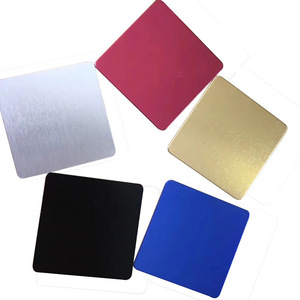
Surface finishing must withstand decades of aggressive solar UV radiation, acidic rain, and salt spray corrosion in coastal environments:
The global window profile procurement landscape is undergoing a structural shift driven by decarbonization mandates, digital manufacturing, and geopolitical supply chain restructuring:
As CBAM transition phases expire, importers of aluminum profiles into the EU must report embedded Scope 1, 2, and 3 greenhouse gas emissions. Primary aluminum produced via coal-fired smelting emits approximately 14 to 20 kg $CO_2$e per kg of metal. Leading CE certified factories are shifting to hydro-powered primary billets or green billets incorporating 75%+ post-consumer recycled scrap, cutting embedded carbon to under 4.0 kg $CO_2$e/kg. Requesting verifiable Environmental Product Declarations (EPDs ISO 14025) during bidding is now an industry standard best practice.
Architectural preferences lean heavily toward minimalist sightlines, frame-concealed hinges, automated motorization channels, and structural silicone glazing (SSG). Modern profile extrusion mills now co-extrude flexible EPDM gasket channels and custom hardware tracks directly into the frame profile, reducing site fabrication labor by up to 35%.
Leveraging over five decades of metallurgical experience dating back to 1972 (HAQ Group heritage), our integrated aluminum extrusion facility offers complete end-to-end control from raw billet smelting to finished architectural window assemblies:
Rapid CAD/CAM tooling workshop converting 3D STEP/DXF architectural drawings into trial sample extrusions within 10 to 15 working days.
Automated extrusion presses ranging from 600 to 3,500 US tons capacity, enabling extrusions up to 350 mm circumscribing circle diameter.
On-site optical emission spectrometers, universal tensile test rigs, cross-section projector scanners, and accelerated salt spray chambers.
Fully automated vertical and horizontal chrome-free powder coating plant guaranteeing superior adhesion and color batch consistency.
Precision CNC knurling and three-stage roller crimping machinery with continuous shear strength monitoring ($T \ge 24 \text{ N/mm}$).
Interleaved protective polyethylene film, non-marking strapping, shrink wrapping, and heavy-duty ISPM-15 heat-treated wooden crates.
Send us your 2D/3D CAD drawings (DWG, DXF, STEP) or performance tender specifications today. Our senior metallurgical and façade engineering team will provide a comprehensive engineering review, die feasibility assessment, and competitive FOB/CIF quotation within 24 hours.