
EN Contact Us
Explore our flagship architectural sub-frames, heavy-duty alloy profiles, and customized CNC machined door frame solutions certified for global export and compliance with EU CPR 305/2011 requirements.
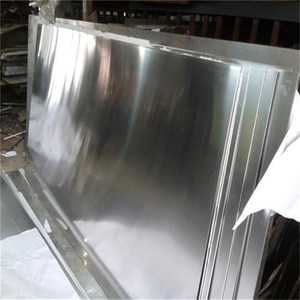
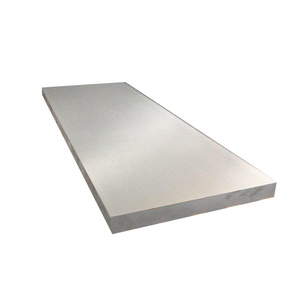
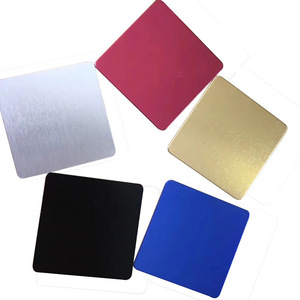
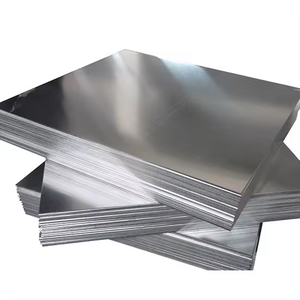
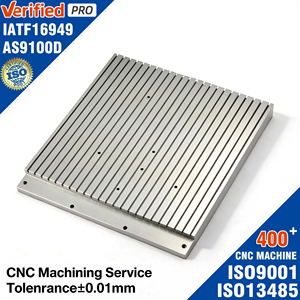
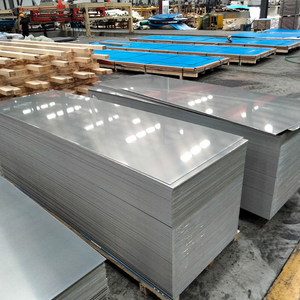
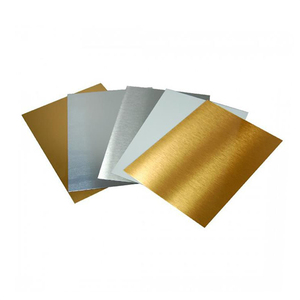
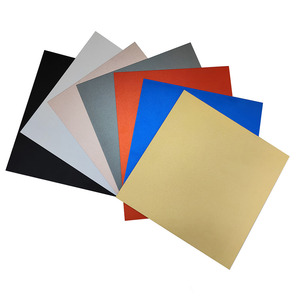
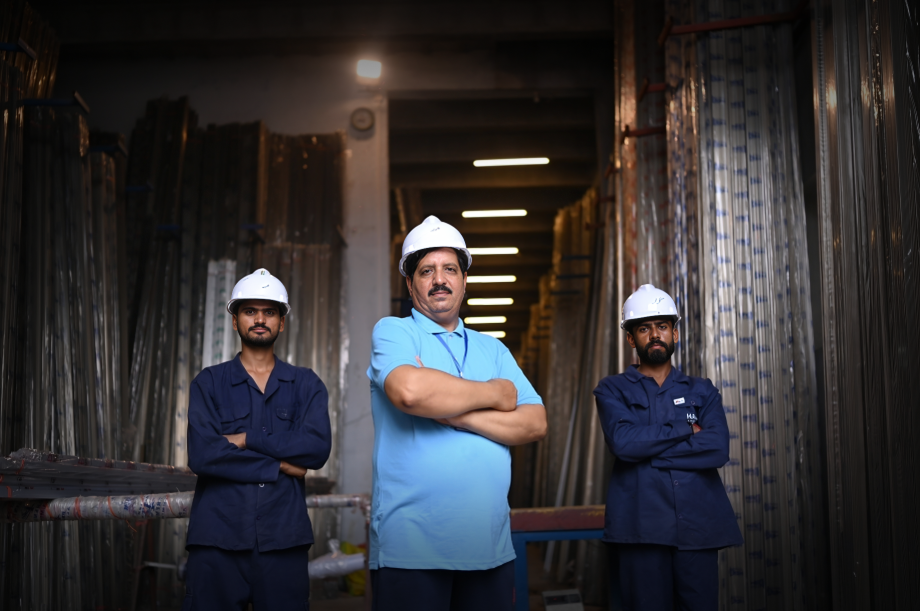
As a leading CE Certified Door Frame Manufacturer & Exporter, HAQ Aluminium (operating under a family metallurgical enterprise established in 1972) brings over five decades of material engineering, billet casting, and precision extrusion capability to global B2B procurement markets. Operating from an integrated industrial complex in Lahore, Pakistan, our facility bridges structural robustness with architectural aesthetics, serving tier-1 general contractors, door fabricators, and commercial building developers across the Middle East, Europe, Australia, and North America.
Our operational framework integrates the entire production lifecycle on a unified site: primary billet selection, heated matrix extrusion, automated stretching and tension-leveling, multi-zone artificial aging, 5-axis CNC high-speed milling, thermal break polyamide assembly, and electrostatic powder coating or anodizing. By maintaining end-to-end control over metallurgical properties, dimensional wall tolerances, and surface chemistry, we guarantee that every door frame extrusion leaving our plant satisfies rigorous European Construction Products Regulations (CPR 305/2011).
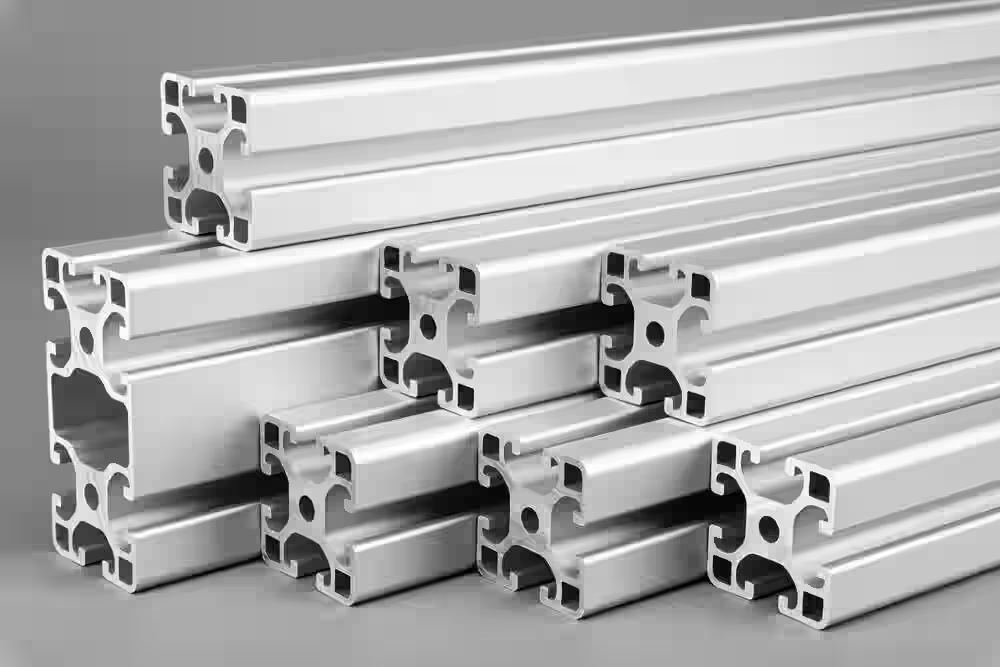
Custom door frame extrusions demand extreme dimensional consistency to accommodate multi-point locking mechanisms, acoustic rubber gaskets, and thermal break strips. Our tooling division utilizes advanced CAD/CAM modeling software to simulate billet flow dynamics prior to wire-EDM die cutting. This ensures zero cross-sectional distortion across long-span frame profiles.
We work seamlessly across a wide matrix of wrought aluminium alloys, including 6063-T5/T6 for architectural glazing, 6061-T6 for structural load-bearing frames, 5083-H116 for marine coastal exposure, and 7075-T6 for high-security commercial entries.
Full Declaration of Performance (DoP) documentation provided per export batch. Compliant with EN 14351-1 for external pedestrian doorsets and EN 12020-2 for dimensional extrusion tolerances.
Rapid prototyping from DXF/STEP drawings to physical sample extrusion. Custom hollow and semi-hollow door jamb profiles manufactured with zero die-lock defects.
Vertical powder coating lines running QUALICOAT-standard architectural polyester powders alongside chromate-free pre-treatment, offering 25+ year color retention warranties.
Selecting the appropriate aluminium alloy temper and structural cross-section is critical when specifying door frame extrusions for wind load resistance (EN 12210), air permeability (EN 1026), and water tightness (EN 1027). The technical matrix below highlights the mechanical boundaries and ideal engineering applications for our core alloy line-up:
| Alloy & Temper | Tensile Strength (MPa) | Yield Strength (MPa) | Hardness (HB) | Corrosion Resistance | Primary Door Frame Application |
|---|---|---|---|---|---|
| 6063-T5 | ≥ 150 | ≥ 110 | ≥ 60 | Excellent | Standard interior architectural door jambs, slim sliding profiles |
| 6063-T6 | ≥ 205 | ≥ 170 | ≥ 75 | Excellent | Commercial entrance storefronts, high-traffic hinged door frames |
| 6061-T6 | ≥ 290 | ≥ 240 | ≥ 95 | High | Heavy-duty structural sub-frames, bullet-resistant entrance doors |
| 5083-H116 | ≥ 305 | ≥ 215 | ≥ 85 | Superior (Marine) | Offshore platform doors, coastal resort exterior fenestration |
| 7075-T6 | ≥ 540 | ≥ 480 | ≥ 150 | Moderate | Ultra-high security door corners, heavy-duty mechanical pivots |
Information Gain - Thermal Transmittance ($U_f$) Optimization: Our thermal break aluminium door frame systems incorporate mechanically crimped Polyamide (PA66-GF25) reinforced with 25% glass fiber. This reduces frame thermal conductivity from $160\text{ W/m}\cdot\text{K}$ (solid aluminium) down to under $2.1\text{ W/m}^2\cdot\text{K}$, eliminating interior surface condensation and lowering overall HVAC building energy demands by up to 32%.
As sustainable building regulations tighten across Europe (via the EU Energy Performance of Buildings Directive) and North America (LEED v4.1 requirements), procurement directors are fundamentally shifting how door frame systems are specified and sourced. Key trends driving the global market include:
With the implementation of the European Union's Carbon Border Adjustment Mechanism (CBAM), importers of aluminium extrusions must verify the embodied carbon footprint ($kg\text{ CO}_2/kg\text{ Al}$) of their supply chain. Forward-thinking door manufacturers are transitioning to primary billets smelted using renewable hydropower or incorporating up to 75% recycled post-industrial scrap. HAQ Aluminium utilizes strict in-house scrap re-melting and closed-loop scrap recovery systems, reducing primary material waste and helping export partners meet decarbonization metrics.
Architectural trends favor ultra-slim door frames that maximize glass surface area while maintaining structural rigidity under positive and negative wind pressure load testing. This necessitates hollow profiles with variable wall thicknesses—thicker at mechanical hinge anchorage points and thinner along non-load-bearing trim lines. Precision 5-axis CNC machining allows for the pre-milling of concealed hardware slots, hydraulic door closer pockets, and drop-down acoustic bottom seals directly at the factory floor, dramatically reducing site installation labor.
Global labor shortages on construction sites have accelerated the demand for unitized or semi-unitized pre-assembled door frame kits. Rather than receiving bulk 6-meter raw extrusions, buyers increasingly require miter-cut, corner-keyed, and gasketed frame sets packed in flat-pack export crates ready for rapid field assembly. Our factory provides complete fabrication-ready supply services, including thermal break crimping, corner cleat crimping, and EPDM weather-strip installation.
Detailed technical answers to common questions asked by international buyers, specification engineers, and curtain wall fabricators.
Our door frame profiles and sub-assemblies comply with EN 14351-1:2006+A2:2016 (Windows and doors product standard). For structural load-bearing extrusions, we supply material in accordance with EN 1090-3 (Execution of aluminium structures) and dimensional tolerances per EN 12020-2. Full Factory Production Control (FPC) audit reports and Declarations of Performance (DoP) are made available with every export order.
Standard MOQ for custom die door frame profiles is 500 kg to 1,000 kg per profile section depending on the alloy batch and circumscribing circle diameter. For existing catalog dies, MOQ starts at 300 kg. Die sinking takes 10–15 working days, followed by sample confirmation. Full bulk production and container loading are typically completed within 20–25 days from sample sign-off.
Our in-house powder coating line incorporates a multi-stage chromate-free chemical pre-treatment process that removes oxide layers and deposits a conversion coating to maximize resin adhesion. Applied coatings conform to QUALICOAT and AAMA 2604/2605 specifications, undergoing mandatory cross-hatch tape adhesion (ISO 2409) and 1,000+ hour neutral salt spray testing (ISO 9227) per production lot.
Yes. Because our thermal break door frame profiles are assembled after surface finishing, we offer dual-color customization: for example, an anodized dark bronze finish for the exterior profile to match facade aesthetics, and a white RAL powder coating on the interior profile to blend with indoor interior design schemes.
Profiles are individually wrapped with protective PE interleave film or kraft paper to prevent surface abrasion. Extrusions are then strapped into compact bundles, corner-protected with heavy-duty cardboard edge boards, and packed onto ISPM-15 heat-treated wooden skids or enclosed steel cradles optimized for 20ft and 40ft HQ container loading.
Send your CAD drawings, profile specifications, or project bill of quantities (BOQ) to our engineering desk for a comprehensive quote and technical extrudability review within 24 hours.