
EN Contact Us
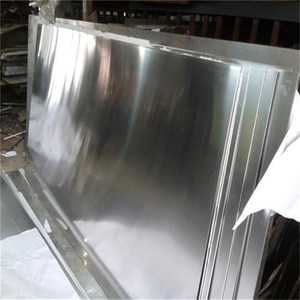
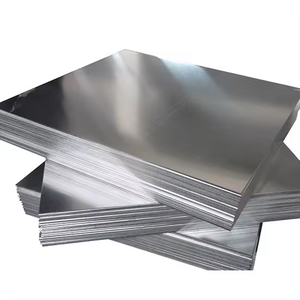
In modern industrial engineering, civil construction, marine vessel fabrication, and renewable energy racking, aluminum angles (L-shaped structural extrusions) are critical load-bearing elements. Achieving certified compliance under CE EN 15088 (Factory Production Control for Structural Metallic Products under Construction Products Regulation) requires rigorous metallurgical control, tight mechanical yield guarantees, and flawless dimensional tolerances according to EN 12020-2 / EN 755-2.
As an established global manufacturer and exporter operating since 1972, our metallurgical group enforces end-to-end quality controls. Every extrusion billet undergoes Optical Emission Spectrometry (OES) chemical verification before heat treatment, press extrusion, stretch straightening, and artificial ageing (T5/T6/T66 tempers).
| Alloy Standard | Temper | Tensile Strength $R_m$ (MPa) | Yield Strength $R_{p0.2}$ (MPa) | Elongation $A_5$ (%) | Primary Application & Corrosion Class |
|---|---|---|---|---|---|
| EN AW-6063 | T6 | ≥ 215 | ≥ 170 | ≥ 8 | Architectural framing, window/curtain walls, light structure (Good finish) |
| EN AW-6061 | T6 | ≥ 290 | ≥ 240 | ≥ 10 | Heavy structural frameworks, truck beds, machinery frames (High strength) |
| EN AW-6082 | T6 | ≥ 310 | ≥ 260 | ≥ 10 | Bridges, cranes, high-stress structural angles (European Structural Standard) |
| EN AW-5083 | H116 / H321 | ≥ 305 | ≥ 215 | ≥ 12 | Marine vessel hull stiffeners, offshore platforms (Extreme Saltwater Resistance) |
| EN AW-7075 | T6 | ≥ 540 | ≥ 470 | ≥ 6 | Aerospace brackets, defense CNC machined structural blocks (Ultra-high yield) |
Equal leg ($A = B$) and unequal leg ($A \neq B$) structural aluminum angles provide optimized section modulus ($Z_x, Z_y$) and flexural rigidity while reducing structural dead weight by up to 62% compared to carbon steel S235 JR. This strength-to-weight advantage directly cuts logistics, erection, and lifecycle maintenance costs.
Our engineering center utilizes 3D CAD/CAM modeling and FEA extrusion flow simulation to design custom dies for OEM profiles. From drawing approval to first-article sample verification takes just 10–15 working days.
In-house Qualicoat-compliant chromate-free pre-treatment and architectural polyester powder coating lines ensure uniform film thickness (60–80 μm), superior cross-hatch adhesion, and extended salt spray resistance (over 1,000 hrs ASTM B117).
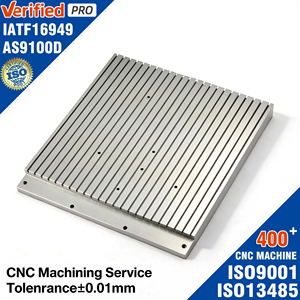
We deliver ready-to-install aluminum angle sections equipped with precision CNC miter cutting, slotted hole punching, notch milling, countersinking, and pre-assembly capabilities to eliminate job-site labor.
As global supply chains navigate stringent ESG frameworks, energy transition mandates, and volatile logistics costs, industrial procurement teams must adapt their sourcing strategies. Key market shifts transforming aluminum angle procurement include:
With the European Union’s Carbon Border Adjustment Mechanism (CBAM) entering full enforcement, international buyers are prioritizing extruders with low embodied carbon. Modern mills integrate up to 80% recycled clean scrap (closed-loop recycling) and utilize hydro or renewable power during smelting, cutting Scope 1 & 2 emissions below 4.0 kg CO2/kg Al.
Dependence on single-country export centers carries tariff risks and shipping delays. Global B2B buyers now mandate dual-region extrusion capabilities, certified Mill Test Certificates (MTC to EN 10204 3.1 standard), and transparent container packing logs with batch-level QR code traceability.
To counter soaring job-site labor costs, EPC contractors and OEM equipment manufacturers are shifting from buying standard 6-meter raw mill finish profiles to specifying ready-to-assemble, pre-punched, anodized, or powder-coated sub-assembly kits directly delivered to job sites.
Advances in metallurgical processing equipment and surface chemistry are significantly extending the operational lifespan and structural efficiency of extruded aluminum angles:
CE certification under standard EN 15088 guarantees that extruded aluminum angles comply with Factory Production Control (FPC) regulations required for structural load-bearing products sold into Europe and international markets. It verifies that chemical compositions, yield/tensile strength, elongation, and dimensional tolerances are continuously tested and certified via EN 10204 3.1 Mill Test Certificates.
We extrude structural angles according to high-precision European standard EN 12020-2 (for precision architectural profiles) and EN 755-9 (for standard industrial extrusions). This dictates tight control over leg width, wall thickness tolerance (±0.15 mm to ±0.35 mm depending on size), angularity (±0.5° right-angle accuracy), twist, and straightness (max 1.5 mm per meter).
For marine environments or coastal sub-framing exposed to heavy salt fog, non-heat-treatable 5083-H116 or 5052-H32 magnesium-alloy profiles are recommended due to their high resistance to intergranular corrosion. For heat-treatable structural applications requiring higher load capacity, 6082-T6 or 6061-T6 profiles with a hard-anodized surface finish (20–25 μm coating thickness) are ideal.
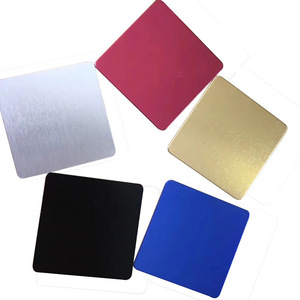
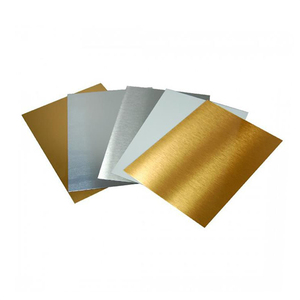
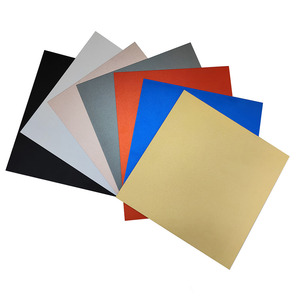
We offer a full spectrum of surface finishes: Mill Finish, Anodized (Clear, Black, Bronze, Gold, Blue, Silver in 10–25 μm thickness), Chromate-Free Electrostatic Powder Coating (Polyester, Superdurable, RAL color palette with 60–80 μm film thickness), Electrocoating (E-Coat), and Wood-Grain Sublimation Transfer.
Yes. Send your CAD files (DXF, DWG, STEP) or physical profile samples. Our engineering team conducts a feasibility review regarding die press tonnage, circumscribing circle diameter, and alloy flow. Custom dies are manufactured within 10–15 working days, followed by sample delivery for your testing and approval before mass production.
Standard MOQ is typically 500 kg to 1,000 kg per profile section depending on size. For export, profiles are interleaved with protective non-scratch PE film or kraft paper, tightly bundled with steel/plastic strapping, wrapped in waterproof woven plastic, and secured on fumigated wooden pallets or steel frames designed for 20ft/40ft container loading.
Every extrusion lot undergoes batch testing in our metallurgical laboratory. Tests include tensile strength ($R_m$), yield strength ($R_{p0.2}$), percentage elongation ($A_5$), Webster hardness testing, coating thickness gauge checks, and cross-hatch paint adhesion testing. Mill Test Certificates (MTC) detailing chemical and physical properties accompany every shipment.