
+92 317 811 1453 +92 328 496 8283 Supportteam@haqaluminium.com
0%

China’s aluminum industry supplies a wide range of structural profiles to construction, machinery, transport, and infrastructure projects. For global buyers, finding a capable manufacturer takes more than comparing catalog prices. Structural Aluminum Angles must match the project’s alloy, temper, dimensions, and intended load conditions. Small differences in wall thickness or angle consistency can affect assembly and performance.

“Top” should describe verifiable capability, not a universal ranking. Buyers can assess manufacturers through production equipment, quality-control procedures, inspection records, and experience with export orders. Ask for technical drawings, material certificates, tolerance details, and sample pieces where practical. A clean sample helps, but it cannot replace routine production checks. That distinction is easy to overlook.

This guide introduces Chinese manufacturers and the criteria buyers can use to compare them. It considers product range, customization, finishing options, communication, documentation, and delivery planning. Clear specifications make quotations easier to compare, especially when surface treatment or cut-to-length services are required. Buyers should also confirm how defects, changes, and delays are handled before placing an order. Online claims can be useful starting points, but they need verification. No supplier is automatically the right choice for every project; sometimes a less polished presentation hides solid manufacturing, and sometimes it does not. The aim is a practical shortlist, built around evidence and the demands of the application.
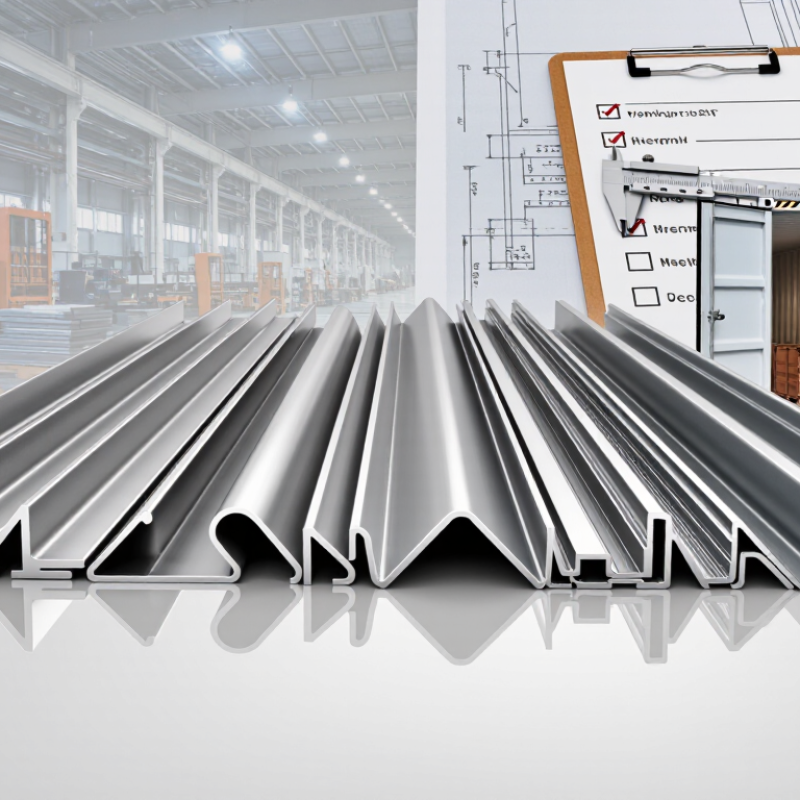
China Top Structural Aluminum Angles Manufacturers for Global Buyers

What Structural Aluminum Angles Are and Where They Are Used

Structural aluminum angles are L-shaped extrusions with two legs meeting at a right angle. They connect frames, reinforce edges, and support light structures where weight matters. One leg may fasten to a panel while the other braces a post or rail. Not merely trim. Their load capacity depends on alloy, temper, thickness, leg length, and how they are fixed. A thin angle can twist under an eccentric load, even when its dimensions look substantial.

Common uses include window and door frames, equipment enclosures, shelving, roof edges, and modular frameworks. The International Aluminium Institute’s Global Aluminium Cycle data identifies buildings and construction as roughly one-quarter of aluminum’s end use. That helps explain why angles appear across architectural and construction assemblies. The USGS Mineral Commodity Summaries 2024 estimated global primary aluminum production at about 70 million metric tons in 2023, reflecting the scale of the material supply chain—not the availability of every profile size.

For buyers, specify dimensions, alloy, temper, finish, tolerances, and the intended load before comparing quotations. Check cut ends and hole positions against the assembly drawing; small mismatches can complicate installation. A catalog drawing cannot replace a structural calculation. Fit matters.

How China’s Structural Aluminum Angle Industry Is Organized

China’s structural aluminum angle industry is organized across several linked stages. Primary aluminum and billet suppliers provide the starting material. Extrusion plants then press heated billets through dies to create equal or unequal angle profiles. The process looks simple from the outside. It is not. Die design, alloy selection, and temperature control can affect straightness, surface quality, and strength.

Many manufacturers also handle cutting, drilling, machining, or surface finishing, while trading and export teams coordinate orders for overseas buyers. Some factories focus on standard dimensions; others make custom profiles after reviewing drawings and expected loads. Buyers should compare alloy, temper, wall thickness, dimensional tolerance, and inspection records—not just price. A tidy sample can still hide inconsistent production. Ask how measurements are checked across a full batch, and confirm packaging protects corners from dents during shipping. The supply chain is not always neat, and that matters. Clear technical communication helps reveal gaps before production begins.

How Manufacturers Produce and Quality-Test Structural Angles

Structural aluminum angles are commonly produced by extruding heated billets through shaped steel dies. The die forms the two legs and their internal corner in one pass. Press operators monitor billet temperature, extrusion speed, and pressure. These settings affect surface finish and dimensional consistency. A worn die can leave uneven edges. Small details matter.

After extrusion, profiles are cooled, stretched to reduce distortion, and cut to order length. Some alloys receive heat treatment to meet specified strength and temper requirements. Inspectors check leg width, thickness, squareness, and straightness with calipers, gauges, and straightedges. They also look for cracks, dents, and surface marks. Small deviations can affect assembly. Not every issue is visible at a glance.

Reliable quality testing combines measurements with material verification. Manufacturers may test alloy composition and use tensile samples to check mechanical properties against the purchase specification. Coating thickness and adhesion are checked when a finish is required. Buyers can request inspection records, test reports, and batch traceability before shipment. Paperwork alone is not proof. Independent inspection can help clarify concerns, especially for large orders, but sampling has limits. Clear tolerances and acceptance criteria make factory discussions more useful.

How Global Buyers Can Evaluate Chinese Manufacturers

Choosing a Chinese structural aluminum angle supplier requires more than comparing quoted prices. Start with the drawing: specify leg dimensions, thickness, corner radius, alloy, temper, and acceptable tolerances. These details affect load behavior, fit-up, and machining. Vague requirements invite mismatched quotations. Ask whether the factory extrudes profiles in-house or relies on outside mills, and how it controls batch consistency.

Review evidence, not just product photos. Request a recent inspection report showing measured dimensions, surface condition, and the test method used. For structural applications, confirm material certificates and traceability from billet to finished bundle. Ask how defects are recorded, who approves corrective action, and whether rejected pieces are separated. A polished sample can still mislead. Check several lengths from a production batch; small twists or uneven anodizing may appear only across longer sections.

Evaluate delivery and communication with the same care. Ask for a realistic production schedule, packaging details, export experience, and clear answers about minimum order quantities. Confirm drawing revisions in writing before tooling or production begins. A small trial order can reveal packing damage, labeling quality, and actual tolerance control. Don’t assume every delay signals poor capability; tooling changes and raw-material swings matter. Still, missed updates are a warning. Compare suppliers with a simple scorecard, but leave room for judgment: documents rarely capture every shop-floor habit.

China Top Structural Aluminum Angles Manufacturers for Global Buyers - How Global Buyers Can Evaluate Chinese Manufacturers

Evaluation Area What to Request How to Verify Buyer Decision Signal
Alloy and temper Specify the alloy and temper on the drawing or purchase order. Common extrusion alloys include 6061, 6063, and 6082; temper affects mechanical properties. Review the material test certificate and confirm that its alloy, temper, and applicable specification match the order. Use independent testing when risk or contract terms warrant it. Accept only when material identification and required mechanical properties are documented against the agreed specification.
Product standard and tolerances Agree on the governing product standard and drawing tolerances. ASTM B221 covers specified aluminum-alloy extruded products; EN 755-2 addresses mechanical properties and EN 755-9 addresses dimensional tolerances for extruded profiles. Check the standard edition, product form, alloy, and temper. Compare the supplier’s inspection results with the actual drawing and agreed tolerance requirements. The quotation and inspection plan identify the same standards and tolerances as the purchase documents.
Profile design and manufacturability Provide a dimensioned drawing showing leg lengths, thickness, inside corner, cut length, and any holes or machining. Ask for a design review before tooling or production. Request written confirmation of extrusion feasibility, critical dimensions, proposed inspection points, and any design changes that could affect fit or strength. A capable supplier flags unclear or difficult-to-control features before quoting or making a die.
Mechanical properties State the required tensile properties and applicable test method or product standard. Requirements vary by alloy, temper, product form, and governing specification. Review test reports linked to the production lot. Confirm the reported values and test method meet the purchase specification; arrange third-party testing if needed. Do not rely on alloy designation alone; require evidence for the ordered temper and lot.
Dimensional and visual inspection Agree on sampling, measurement locations, surface condition, straightness, twist, and acceptable defect criteria before production. Request a production inspection report with measured results and traceability to the order or lot. Use a pre-shipment inspection where the shipment risk justifies it. Inspection criteria are written, measurable, and agreed by both parties before goods are made.
Surface finish and corrosion protection Specify mill finish, anodizing, powder coating, or another finish only when required. Define appearance, coating requirements, and any applicable test criteria in the order. Confirm the finishing process, inspection records, and agreed acceptance criteria. For coated products, identify the relevant coating specification and tests in the contract. Finish claims are backed by defined requirements and verifiable inspection records, not by a generic description alone.
Quality management and traceability Request the quality-management certificate scope, sample inspection records, and the proposed method for identifying production lots. Verify certificate validity and scope with the issuing certification body where possible. Check that sample records connect material, production, inspection, and shipment. A management-system certificate supports supplier assessment but does not replace product-specific testing or inspection.
Tooling and sample approval Clarify die ownership, maintenance, storage, and charges. Require a first-article sample or production sample for custom profiles before full-scale production. Approve samples against the signed drawing and record any deviations in writing. Confirm who may authorize design or process changes. Production starts only after sample approval and written agreement on tooling terms.
Packaging and export documentation Agree on protection against scratching, bending, moisture, and handling damage. List required commercial and shipping documents in the purchase order. Review a packaging specification or sample photos and confirm that product labels and documents match the order and destination requirements. Packaging and document responsibilities are clear before dispatch.
Quotation and commercial terms Request a written quotation covering alloy, temper, dimensions, finish, quantity, tooling, packing, inspection, delivery terms, and quotation validity. Compare quotations on the same technical scope and delivery basis. Confirm payment milestones, change control, claims handling, and applicable Incoterms® rule and named place. A comparable, itemized quotation reduces the risk of hidden scope differences and shipment misunderstandings.

What to Consider When Sourcing and Importing Aluminum Angles

For global buyers, an aluminum angle is only as reliable as its specification. State the alloy, temper, leg dimensions, thickness, length, corner radius, and dimensional tolerances on the purchase order. Ask for mill test certificates and confirm that the reported chemistry and mechanical properties match the ordered grade. Small details matter. A drawing that omits corner radius can cause fit-up problems on the assembly line.

The International Aluminium Institute reported global primary aluminium production of about 70.6 million tonnes in 2023. That figure shows the scale of supply, not the availability of a particular angle, alloy, or temper. Ask suppliers about extrusion capacity, minimum order quantities, production lead times, and inspection methods. Request sample measurements before approving a large run. A polished quotation is not proof of consistent quality.

Import planning deserves equal care. UNCTAD’s Review of Maritime Transport 2024 documented major shipping-route disruptions, a reminder that transit estimates can shift. Compare Incoterms, cargo insurance, packing methods, and port-to-door costs; confirm who handles export documents and import duties. Specify protective film, dry storage, and bundle restraints to reduce scratches and water exposure. Review local customs classification with a qualified broker. One awkward gap often remains: buyers compare unit prices but overlook inspection and inland delivery costs.

Approximate Density of Common Structural Aluminum Alloys

Compare nominal alloy densities when estimating the weight of aluminum angle profiles for sourcing and shipping.

Typical published values are approximate; exact density varies slightly with alloy composition. Density alone does not indicate structural strength, so confirm the required alloy, temper, dimensions, and applicable product standard with your supplier.

FAQS

What is a structural aluminum angle?

It is an L-shaped extrusion with two legs meeting at a right angle. One leg may attach to a panel while the other braces a post. Not merely trim.

Where are structural aluminum angles commonly used?

They appear in window and door frames, equipment enclosures, shelving, roof edges, and modular frameworks. They suit light structures where weight matters.

What affects an angle’s load capacity?

Alloy, temper, thickness, leg length, and fastening all matter. A thin angle can twist under an off-center load, even if it looks substantial.

What details should buyers specify before requesting quotations?

Give the leg dimensions, thickness, corner radius, alloy, temper, finish, tolerances, and intended load. Clear drawings help prevent mismatched quotations.

How can buyers check product quality?

Request a recent inspection report with measured dimensions, surface condition, and test methods. Check several lengths from one batch. Small twists can hide.

Why ask about material certificates and traceability?

They help connect the finished bundle to its original material. Ask how defects are recorded and rejected pieces kept separate.

What should buyers confirm before production starts?

Confirm drawing revisions in writing, along with delivery timing, packaging, export experience, and minimum order quantities. Small details matter.

Can a sample order reveal supplier performance?

Yes. A small trial order can show packing damage, labeling quality, and tolerance control. It is useful, but not a complete guarantee.

Is a supplier scorecard enough to make a decision?

It helps compare suppliers, but documents rarely capture every shop-floor habit. Leave room for judgment; I might still miss something.

Conclusion

Structural Aluminum Angles are widely used in construction, manufacturing, transportation, and infrastructure because they provide dependable support while remaining relatively lightweight and adaptable. This overview explains common angle profiles and applications, then outlines how China’s manufacturing sector serves domestic and international demand through producers, processors, and supply-chain partners. It also describes typical production stages, including alloy selection, extrusion or forming, finishing, dimensional checks, and quality testing.

For global buyers, choosing a manufacturer involves more than comparing prices. Buyers should assess product specifications, production capacity, quality-control procedures, communication, documentation, and the ability to meet project requirements consistently. The article also highlights practical sourcing considerations such as confirming dimensions and tolerances, reviewing samples and inspection arrangements, planning packaging and transportation, and accounting for lead times and import costs. A structured evaluation helps purchasers make informed decisions and source aluminum angles suited to their intended use.

Ethan

Ethan

Ethan is a dedicated marketing professional with a strong understanding of the company’s products, customers, and industry landscape. Through years of experience in market research, content strategy, and customer communication, he has developed the ability to explain complex product features in a......