
0%

Buying Textile Machinery Aluminum Extrusions requires more than comparing prices. The right profile supports machine accuracy, operator safety, and long-term production stability. A poorly selected section can twist under load, vibrate near high-speed rollers, or fail during repeated cleaning.

Dr. J. Gilbert Kaufman, a respected aluminum metallurgy authority, explains, “Alloy performance depends on composition, processing, and heat treatment.” This principle matters when selecting profiles for frames, guides, covers, and modular supports. Buyers should check the alloy grade, temper, dimensional tolerance, wall thickness, and surface condition. Ask for mill certificates and inspection records. Do not rely only on attractive samples.

The seven tips in this guide focus on practical purchasing decisions. They cover supplier experience, die design, machining accuracy, anodizing quality, load requirements, delivery control, and total cost. A 40-millimeter profile may look strong, yet its internal geometry can change stiffness dramatically. Small variations around bolt channels also affect assembly.

Look closely.

In real projects, specifications are sometimes incomplete. I have seen buyers approve drawings without confirming thread depth or corner radius. That mistake can create expensive rework. A better process includes sample testing, measured tolerances, and a written approval stage. However, testing every possible operating condition may be unrealistic for smaller buyers. This limitation deserves honest consideration.

Reliable Textile Machinery Aluminum Extrusions should fit the machine, the production environment, and the maintenance routine. Price matters, but predictable performance matters longer.
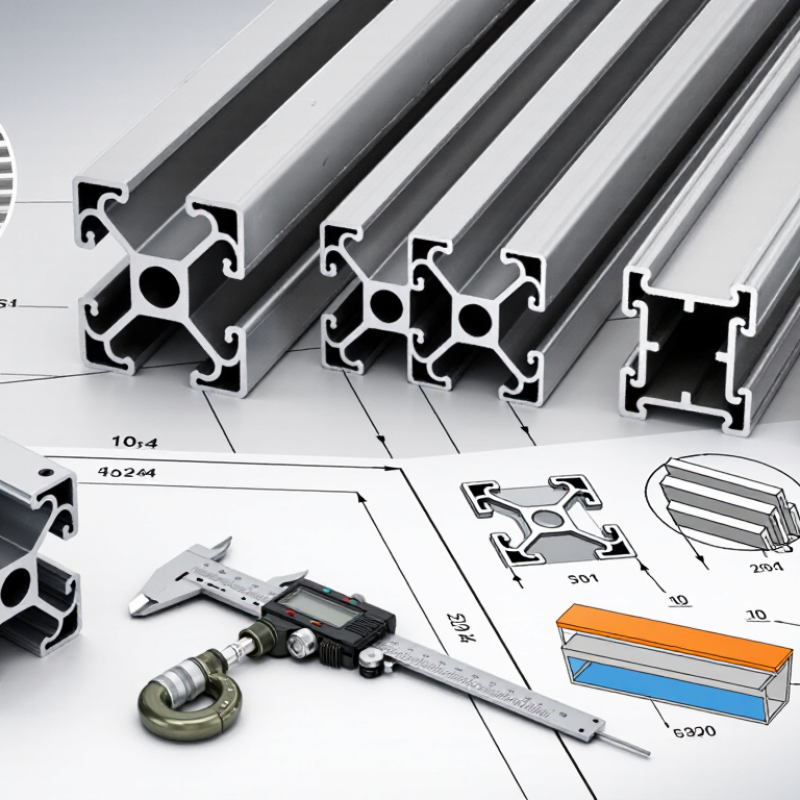
7 Tips for Buying Textile Machinery Aluminum Extrusions?

Define the Performance Requirements for Textile Machinery Aluminum Extrusions

Before requesting quotes, translate textile machine tasks into measurable extrusion requirements. A guide rail, frame, and sensor mount rarely need identical performance. Record static loads, moving masses, belt tension, and expected vibration. Include the duty cycle, not only the peak load. In practice, a profile that survives assembly can still deflect during high-speed operation. That difference matters. Specify allowable deflection at the working span, such as 0.5 mm, and state how it will be measured. “Strong enough” is not engineering language.

For spinning, winding, or weaving equipment, cleanliness and surface stability deserve explicit attention. Define alloy condition, wall thickness, straightness, and dimensional tolerance before comparing samples. Ask whether anodizing or another finish must resist lint, oil mist, humidity, and repeated cleaning. A polished surface may look excellent, yet a soft finish can scratch around clamps. Check thermal behavior too. Motors and heated zones can create expansion that shifts alignment. Require test data for hardness, tensile properties, and coating thickness from a traceable inspection process. Certificates help, but unclear sampling plans do not.

Joint design completes the requirement. State fastener loads, thread engagement, slot compatibility, and maintenance access. If the extrusion carries a rotating assembly, request vibration testing or a calculated natural-frequency review. I have seen teams specify only length and appearance, then discover loose joints after weeks of running. That mistake is avoidable, though not always cheap. Leave room for review. Recheck the profile after the first machine trial. Real lint accumulation, cleaning chemicals, and operator handling may expose assumptions missed in the drawing. Ask for packaging details too; bent ends can ruin an accurate installation before production begins.

Select the Appropriate Aluminum Alloy and Extrusion Profile

Selecting the right aluminum alloy and extrusion profile is the core of buying textile machinery aluminum extrusions. In plant trials, 6063 alloy often works well for guide frames, guards, and light-duty supports. Its smooth surface and good extrudability help produce clean, accurate profiles. For heavier bases or vibration-sensitive assemblies, 6061 alloy offers higher strength after heat treatment. However, stronger is not always better. A thick 6061 profile can increase machining time, weight, and cost.

The International Aluminium Institute reported global primary aluminum production above 70 million tonnes in 2023. This scale confirms aluminum’s industrial importance, but it does not make every alloy suitable for textile equipment. Check the supplier’s certified chemical composition, temper condition, dimensional tolerances, and mechanical test results.

EN 755 and EN 12020 provide useful references for extrusion dimensions and tolerances. Ask for traceable inspection records. Do not rely on a catalogue sketch alone.

Profile design matters equally. A hollow section can reduce weight, while closed cavities may improve stiffness and hide cables. Keep wall thickness reasonably balanced. Uneven walls can cause distortion during extrusion.

In dusty spinning areas, avoid deep grooves that collect lint. I once underestimated cleaning access; the profile was structurally sound, but maintenance became frustrating. That mistake still matters. Test a short sample under real loads, including vibration, fastener pull-out, and repeated cleaning, before approving bulk production.

Check Dimensional Accuracy, Strength, and Surface Finish

7 Tips for Buying Textile Machinery Aluminum Extrusions?

Dimensional accuracy should be checked before appearance. Measure width, height, wall thickness, and slot position with calibrated tools. Even a small deviation can complicate frame assembly. Request the allowable tolerance, not only the nominal size. Compare several samples from different production batches. A single perfect piece proves very little. Check whether profiles remain straight after cutting and drilling. Warping may appear only when the extrusion is placed on a flat table.

Strength must match the machine’s real working conditions. Review the alloy and temper against the required load, span, and vibration level. Ask for material test certificates and current mechanical data. Inspect corners, screw channels, and bearing surfaces for cracks or weak walls. Surface finish also affects maintenance and operator safety. Look for dents, burrs, stains, uneven anodizing, and scratches under bright light. A smooth finish helps reduce dust retention around textile equipment. However, it cannot compensate for poor dimensional control. I once treated a clean finish as proof of quality. That was a poor assumption. Before approval, test how connectors, covers, and fasteners fit together. Record inspection results with photographs and measured values. The checklist may still miss problems, so review it after trial assembly.

7 Tips for Buying Textile Machinery Aluminum Extrusions? - Check Dimensional Accuracy, Strength, and Surface Finish

No. Buying Tip What to Check Recommended Data or Acceptance Criteria Inspection Method Why It Matters
1 Confirm Profile Dimensions Overall width, height, wall thickness, slot size, and critical mounting features. Use a controlled engineering drawing. For critical machined features, a practical purchasing target may be ±0.10 mm; profile tolerances should follow the applicable extrusion standard and the approved drawing. Calibrated vernier caliper, micrometer, profile projector, or CMM. Accurate dimensions prevent misalignment during textile-machine assembly.
2 Evaluate Straightness and Twist Lengthwise bow, lateral deviation, and rotational twist along the extrusion. A commonly specified reference value is about 1.5 mm maximum straightness deviation per metre, while twist limits should be agreed according to profile width, length, and the applicable standard. Place the extrusion on a certified flat table and measure with a dial indicator, feeler gauge, or laser alignment tool. Excessive distortion can affect guides, rollers, frames, and moving assemblies.
3 Verify Alloy and Temper Aluminum grade, temper designation, chemical composition, and mechanical properties. Common choices include 6063-T5 for good extrudability and surface appearance, or 6061-T6 for higher strength. Typical minimum tensile/yield values are approximately 152/110 MPa for 6063-T5 and 290/240 MPa for 6061-T6; verify the exact specification before approval. Mill test certificate, hardness test, and positive material identification when required. The correct temper determines load capacity, stiffness, and resistance to deformation.
4 Inspect Wall Thickness Minimum wall thickness, hollow chambers, ribs, and thin edges. Record the thinnest measured section. For production control, a drawing may specify a minimum wall thickness such as 1.5–2.0 mm, depending on profile geometry, load, die design, and extrusion feasibility. Micrometer, ultrasonic thickness gauge, or sectioned first-article sample. Thin or inconsistent walls may reduce rigidity and cause vibration or premature failure.
5 Check Surface Finish Scratches, die lines, dents, pitting, discoloration, burrs, and visible extrusion marks. For as-extruded surfaces, a typical roughness reference is approximately Ra 3.2–6.3 µm. If anodized, specify coating thickness, color tolerance, and allowable visual defects; architectural anodizing commonly uses approximately 10–20 µm, subject to the selected specification. Visual inspection under controlled lighting, surface comparator, and coating-thickness gauge. A consistent finish improves appearance, wear resistance, and corrosion protection.
6 Measure Cut Length and End Quality Finished length, squareness, burrs, saw marks, and drilled or tapped end features. A practical cut-length requirement may be ±1.0 mm for general frame components. Critical parts may require tighter tolerances, such as ±0.3 mm, with an agreed end-squareness limit. Steel rule or CMM for length; machinist square for end squareness; visual burr inspection. Correct cut length reduces installation gaps and avoids additional rework.
7 Review Documentation and Sampling Inspection report, material certificate, dimensional records, coating data, and batch traceability. Approve a first article before mass production. Inspect at least one complete dimensional sample per batch, retain batch identification, and define an agreed sampling plan for ongoing production. Document review, first-article inspection, random sampling, and retained reference sample. Traceable records make quality problems easier to identify and correct.

Note: The numerical values shown are practical purchasing references, not universal limits. Final tolerances should be confirmed on the approved drawing and against the applicable aluminum extrusion, machining, anodizing, and inspection standards.

Evaluate Suppliers, Customization, and Quality Certifications

When buying aluminum extrusions for textile machinery, supplier evaluation should begin with process evidence, not attractive catalogs. Ask how they control alloy chemistry, aging, straightness, and surface damage. A reliable supplier should share inspection records for critical batches. Request samples cut to your actual frame dimensions. Small trial. It can reveal burrs, twist, or weak packaging before volume orders.

Customization affects both performance and installation speed. Provide drawings with slot sizes, hole locations, load directions, and required tolerances. Discuss machining, anodizing, corner joints, and protective film early. An experienced engineer may suggest thicker walls or a different profile for vibrating rollers. However, suggestions need test data. I once accepted a “standard” tolerance without checking a sliding assembly. Alignment later required extra shims. That mistake was avoidable.

Quality certifications should support, not replace, technical verification. Check whether the supplier maintains a current quality-management certificate, such as ISO 9001. Confirm that its scope covers extrusion, machining, or finishing. Ask for material certificates, dimensional reports, coating measurements, and traceability records. Confirm test methods and issuing bodies. Do not accept scanned documents without validation. Certifications vary in value. A practical audit, clear corrective-action process, and consistent samples provide stronger confidence than a certificate displayed on a wall. Leave room for review; even good suppliers can miss a packaging detail.

Compare Total Costs, Delivery Terms, and After-Sales Support

7 Tips for Buying Textile Machinery Aluminum Extrusions: Compare Total Costs, Delivery Terms, and After-Sales Support

A low quotation can hide expensive details. Compare extrusion price, tooling, anodizing, packaging, inland freight, customs, and installation. Request a landed-cost sheet in writing. Aluminum accounts for much of the frame’s weight, so recycled content may reduce environmental impact. The International Aluminium Institute states that recycled aluminum requires about 5% of the energy used for primary aluminum production. However, recycled material still needs verified alloy and temper certificates. Cheap material is not always economical.

Study delivery terms carefully. Confirm the Incoterm, loading port, insurance responsibility, and customs documents. UNCTAD’s Review of Maritime Transport 2024 describes continuing freight volatility caused by route disruptions and longer voyages. A delayed extrusion shipment can stop assembly, even when the factory price looks attractive. Ask for production milestones, inspection dates, and a realistic buffer. My practical mistake was trusting an estimated dispatch date without confirming packaging capacity.

After-sales support deserves a measurable standard. Request response times, replacement-part availability, dimensional inspection records, and remote troubleshooting procedures. McKinsey reports that predictive maintenance can reduce downtime by 30–50% and maintenance costs by 10–40%. Those figures are not guaranteed for every textile line, but they show why technical support has financial value. Check whether engineers understand profile tolerances, vibration, fastening, and heat exposure. A cheaper supplier may become costly when one damaged profile waits weeks for replacement.

7 Tips for Buying Textile Machinery Aluminum Extrusions

Compare Total Costs, Delivery Terms, and After-Sales Support

This chart compares the number of logistics tasks normally arranged by the buyer under Incoterms® 2020. The four tasks are export clearance, main-carriage booking, import clearance and duties, and cargo insurance. Lower buyer responsibility may simplify purchasing, but buyers should still compare the complete landed cost, delivery schedule, inspection requirements, warranty coverage, spare-parts availability, and after-sales response terms.

FAQS

What performance data should be defined before requesting extrusion quotes?

Record static loads, moving masses, belt tension, vibration, and duty cycle. Peak load alone is insufficient. Specify allowable deflection, such as 0.5 millimeters, and explain the measurement method.

Do all textile machine components need the same extrusion profile?

No. Guide rails, frames, and sensor mounts often face different loads. Match wall thickness and profile strength to each component’s actual duty.

Why does cleanliness matter for textile machinery extrusions?

Lint, oil mist, humidity, and repeated cleaning can damage surfaces. Define the required finish before comparing samples. A polished surface may still scratch near clamps.

How should thermal expansion be considered?

Motors and heated areas can expand nearby aluminum parts. This expansion may shift alignment during operation. Allow movement where necessary.

What tests should a supplier provide?

Request hardness, tensile properties, coating thickness, and dimensional inspection records. The records should identify the tested batch. Certificates alone may not explain sampling quality.

What joint details should appear in the design?

State fastener loads, thread engagement, slot compatibility, and maintenance access. Rotating assemblies may require vibration testing or natural-frequency analysis. Loose joints can appear after weeks of operation.

How can samples reveal supplier problems?

Request samples cut to actual frame dimensions. Check burrs, twisting, straightness, surface damage, and packaging quality. Small trial. Bent ends can ruin accurate installation.

When is customization worth considering?

Custom machining can improve alignment and reduce installation time. Provide slot sizes, hole locations, load directions, and tolerances. A thicker wall may help with vibrating rollers, but test data should support the change.

How should quality certificates be evaluated?

Confirm the certificate is current and covers the relevant production process. Also review inspection reports, traceability records, test methods, and corrective actions. Paperwork helps. Practical audits and consistent samples often provide stronger evidence.

Should the extrusion be reviewed after machine testing?

Yes. Recheck the profile after the first production trial. Real lint buildup, cleaning chemicals, and operator handling may reveal missed assumptions. I would not trust the drawing completely.

Conclusion

Buying Textile Machinery Aluminum Extrusions requires careful evaluation of both technical performance and supplier reliability. Start by defining the extrusion’s intended function, load requirements, operating environment, dimensional tolerances, and compatibility with the machinery. Then select an aluminum alloy and profile shape that provide the right balance of strength, weight, corrosion resistance, machinability, and flexibility for installation. Inspect samples or technical documents to verify dimensional accuracy, structural strength, surface finish, and consistency between production batches.

Supplier assessment is equally important. Look for manufacturers that can support customized profiles, provide clear quality certifications, and maintain stable production standards. When comparing quotations, consider the total cost rather than unit price alone, including tooling, finishing, packaging, shipping, and potential waste. Review delivery schedules, minimum order quantities, warranty terms, technical assistance, and after-sales support before making a decision. A well-planned purchasing process can improve machinery performance, reduce maintenance risks, and ensure that the selected extrusions deliver dependable long-term value.

Ethan

Ethan

Ethan is a dedicated marketing professional with a strong understanding of the company’s products, customers, and industry landscape. Through years of experience in market research, content strategy, and customer communication, he has developed the ability to explain complex product features in a......