Choosing the best Powder Coated Aluminum Profiles starts with understanding their job. A window frame exposed to sun and rain has different needs from an indoor display rail. Consider the profile’s shape, alloy, finish, and installation conditions together. A durable coating cannot compensate for a poorly chosen profile. Small details matter.
Look closely at surface preparation, coating consistency, and the supplier’s quality records. Ask how the finish is checked, and request a sample when appearance matters. View it in the lighting where it will be installed. A glossy sample can look excellent under showroom lights, then feel too reflective in a bright room. That is easy to overlook.
The right finish should balance appearance, protection, maintenance, and cost. For outdoor use, ask about resistance to weathering and corrosion, while checking that the proposed product suits the local exposure. For interiors, color consistency and resistance to everyday scratches may matter more. Compare samples, not just catalog images. Also inspect corners, cut edges, and joining areas; these can reveal issues that a flat sample hides.
There is no single best choice for every project. Supplier claims deserve practical questions, and a sample is not a guarantee of long-term performance. Still, clear specifications and suitable testing provide a stronger basis for selection. This guide explains the factors that help buyers compare options and choose Powder Coated Aluminum Profiles with fewer surprises.
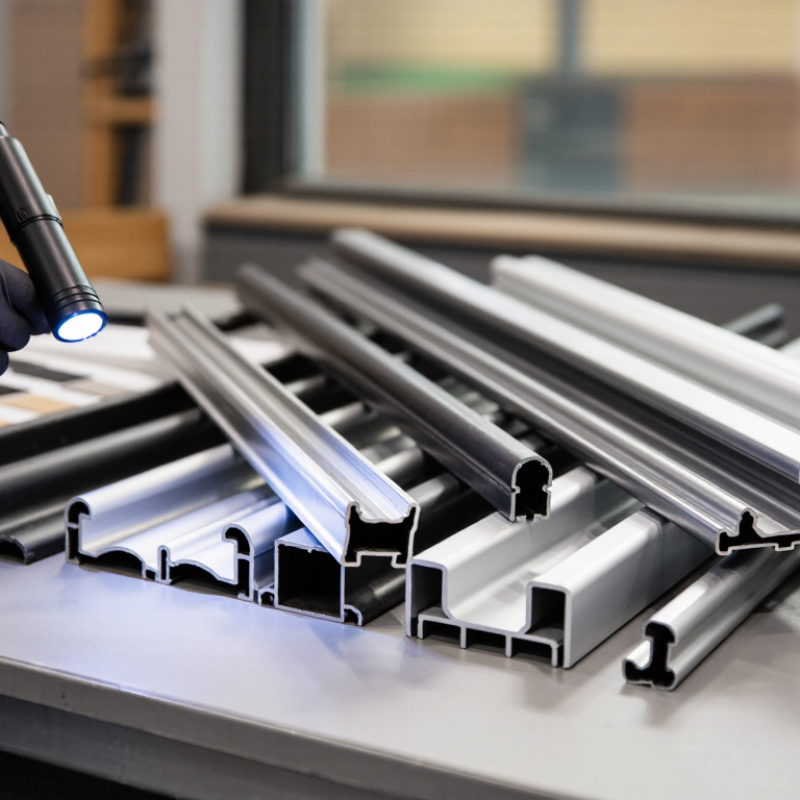
What Powder-Coated Aluminum Profiles Are and Where They Are Used
Powder-coated aluminum profiles are extruded sections finished with dry coating powder, then heated to form a continuous surface layer. The result is a colored finish that can help protect aluminum from everyday wear and weather. Profiles come in many shapes, including slim channels, square tubes, and custom frames. Their appearance depends on the alloy, surface preparation, coating, and curing process—not color alone.
These profiles are used in window and door frames, facade trims, balcony railings, shop displays, furniture, and equipment enclosures. A matte frame beside clear glass gives a clean, low-glare look; a textured finish can help disguise small marks. In outdoor settings, coating quality and suitable pretreatment matter. Scratches can expose the metal beneath, and strong sun may gradually change some colors. It is worth checking the finish specification for the actual exposure conditions. Powder coating is useful, but not maintenance-free.
Tips: Inspect corners and cut ends, where coverage can be easy to overlook. Clean with mild soap and a soft cloth. Avoid assuming every finish performs equally; samples help, though they cannot predict every site condition.
Why 6063 Aluminum Extrusions Suit Complex Architectural Profile Shapes
6063 aluminum is widely used for architectural extrusions because it can form detailed cross-sections while offering a smooth surface for finishing. That matters when a profile needs to combine a glazing pocket, drainage channel, screw port, and decorative face in one piece. A well-planned die can produce these features together, reducing the need for separate components.
Small details matter.
The alloy’s balance of strength and formability suits window frames, door systems, and façade trims. Designers can vary the profile’s depth and create internal ribs, but every feature must still allow metal to flow evenly through the die. Very thin walls beside thick sections may cause uneven filling or distortion.
Real-world trials help.
Sample extrusions can reveal issues that drawings do not, including corner softness and dimensional variation.
Powder coating adds color and a durable surface, but coating quality depends on preparation and profile design. Recessed pockets can collect pretreatment liquid or make uniform coverage harder, so drain paths and access deserve attention. Sharp edges may also receive less coating than rounded ones.
It is easy to overlook that.
Specify the alloy temper, critical dimensions, finish requirements, and intended use with the extrusion supplier; tolerances and coating build-up can affect fit.
How Pretreatment and AAMA 2604/2605’s 30 μm Minimum Film Thickness Matter
The best powder-coated aluminum profiles are prepared carefully before coating begins. Extrusion quality matters, but even a smooth profile can lose adhesion if oil, oxide, or machining residue remains. Pretreatment commonly involves cleaning, etching or deoxidizing, rinsing, and applying a conversion treatment. The exact process depends on the alloy and coating system. Miss a rinse, and the finish may look fine at first but fail later.
A 30 μm minimum dry-film thickness is a useful benchmark for many architectural powder-coating systems associated with AAMA 2604 and 2605. Confirm the applicable specification, coating type, and project requirements rather than relying on a single number. Measure thickness with a calibrated gauge at several points; profile corners and recesses can receive less coating. More powder is not automatically better. It cannot compensate for weak pretreatment or incorrect curing.
AAMA 2605 demands more stringent weathering performance than AAMA 2604; it is not simply a thicker version. For exposed profiles, ask for documented pretreatment controls, thickness readings, and cure records. These checks are practical, not glamorous. And records can still miss a poor spot. Inspect the actual finish for bare edges, uneven gloss, or pinholes before installation, especially where rain and coastal air reach the aluminum.
How AAMA 2603, 2604, and 2605 Set 1-, 5-, and 10-Year Exposure Classes
The best powder-coated aluminum profile depends on its exposure, not just its appearance. FGIA’s AAMA 2603, 2604, and 2605 specifications use one-, five-, and ten-year outdoor exposure benchmarks in South Florida. These periods describe standardized testing, not guaranteed service life. Useful, but limited.
AAMA 2603 suits many interior applications and lower-exposure settings. AAMA 2604 offers a stronger benchmark for residential and commercial exteriors. AAMA 2605 is designed for demanding conditions, including intense sunlight and coastal environments. FGIA’s specifications assess coating performance through measures such as color change, chalking, and film integrity. The longer test periods mean more weathering evidence, not immunity from fading or damage.
Match the class to the site. A shaded inland window may not need the same coating as a sun-facing coastal façade. Check the project specification and coating test documentation, rather than relying on the class number alone. ASTM salt-spray results can help assess corrosion resistance, but they do not reproduce every outdoor condition. No rating captures every installation detail. Cut edges, scratches, cleaning products, and poor drainage can still affect a profile’s performance.
How to Match Profile Design and AAMA Coating Class to Service Conditions
The best powder-coated aluminum profile is not defined by color alone. Match its shape and coating class to the actual exposure. A sheltered interior frame has different needs from a coastal screen facing salt spray, strong sun, and wind-driven rain.
AAMA 2603 generally suits interior or milder applications, while AAMA 2604 is used for more demanding exterior exposure. AAMA 2605 sets more stringent performance requirements for severe conditions, including intense UV exposure. These specifications help compare coating performance; they do not promise a fixed service life. Confirm the coating system, pretreatment, and test documentation with the supplier.
Profile design matters too. Deep channels can trap water and dirt, while sharp corners may receive thinner coverage. Ask how the finish behaves on edges, recesses, and cut ends. For a coastal project, consider drainage and avoid details that hold moisture against the aluminum. A neat sample can mislead. Test a finished profile, not just a flat color chip, and review it under the site’s lighting. I would also check maintenance access early; it is easy to overlook, and difficult to fix after installation.
What Are the Best Powder-Coated Aluminum Profiles?
Match profile design and AAMA coating class to the project’s exposure conditions.
How to use this chart: AAMA 2603, 2604, and 2605 specify progressively more demanding coating performance requirements; the bars show their associated South Florida outdoor exposure test durations, not guaranteed coating service life. For sheltered, low-exposure projects, AAMA 2603 may be considered; AAMA 2604 is commonly specified for more demanding architectural applications, while AAMA 2605 is suited to severe exposure and high-performance requirements. Confirm the project specification, finish system, and local conditions before selection.
Profile design matters at every class: provide drainage and weep paths, avoid water-trapping joints, and account for cut edges and dissimilar-metal contact. In coastal or industrial environments, evaluate corrosion protection and maintenance needs in addition to the coating class.
Reference: AAMA 2603, AAMA 2604, and AAMA 2605 architectural coating specifications. Exposure-test duration is not a prediction of field service life.
Conclusion
Powder Coated Aluminum Profiles combine lightweight, corrosion-resistant aluminum with a durable, colored finish, making them suitable for windows, doors, curtain walls, façades, and other architectural applications. The alloy and extrusion process play an important role in performance and appearance. In particular, 6063 aluminum is well suited to complex profile shapes because it can be extruded into detailed designs while providing a smooth surface for finishing.
A reliable coating system depends on suitable pretreatment, consistent application, and an appropriate film thickness; AAMA 2604 and 2605 commonly call for a minimum coating thickness of 30 μm. The AAMA classes indicate different levels of exposure performance: 2603 is associated with one-year exposure, 2604 with five years, and 2605 with ten years. The best choice depends on the profile’s design and intended service conditions, including climate, sunlight, moisture, and maintenance needs. Matching the aluminum shape and coating class to the environment helps support long-lasting appearance and protection.