
+92 317 811 1453 +92 328 496 8283 Supportteam@haqaluminium.com
0%

Choosing a supplier for Industrial Aluminum Pipes and Tubes involves more than comparing prices. Alloy, temper, dimensions, and production method can affect performance in service. A tube used in a lightweight frame may need different properties from one carrying fluid or facing outdoor exposure. The details matter.

This guide introduces ten manufacturers for buyers to consider, while recognizing that “best” depends on the project. Compare each company’s product range, manufacturing capabilities, available sizes, and stated quality controls. Ask for material test reports, dimensional tolerances, and clear information about alloy grades. These documents help turn a polished catalog into a more useful basis for evaluation.

Look closely at practical points, too. Can the supplier provide the required length, finish, and quantity? Are custom extrusions available, and what are the lead times? A small mismatch in wall thickness can complicate assembly. So can a surface finish that does not suit the final application. Delivery support and communication deserve attention as well.

No shortlist is perfect. Product availability and service can vary by region, order size, and specification, so confirm details directly with each manufacturer. The profiles ahead are intended to help you narrow the field, prepare better questions, and compare suppliers against your actual requirements—not to replace engineering review. A careful check now can prevent costly surprises later.
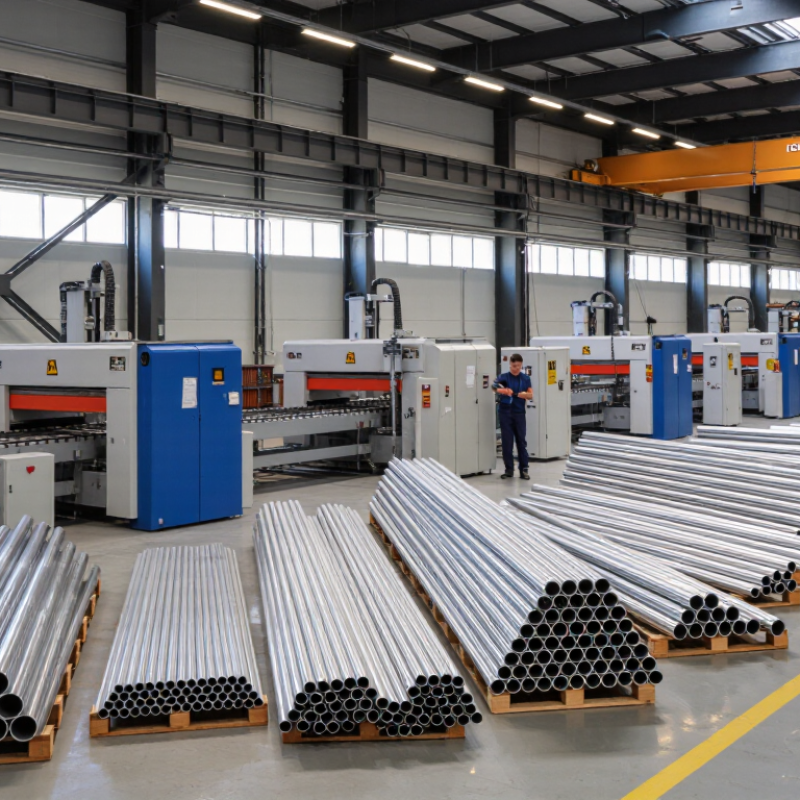
10 Best Industrial Aluminum Pipes and Tubes Manufacturers?

How ASTM B241 and B221 Define Industrial Aluminum Pipe and Tube

ASTM B241/B241M covers aluminum and aluminum-alloy seamless pipe and seamless extruded tube. ASTM B221/B221M covers extruded products, including tubes, profiles, bars, and rods. These standards are not interchangeable labels. They describe different product scopes and specify requirements such as alloy, temper, dimensions, tolerances, and testing.

That matters. A pipe may carry fluid through a plant, while a tube may serve as a structural member or heat-transfer component. But intended use alone does not identify the correct specification. Check the drawing, purchase order, and applicable standard edition. A cut sample can show wall thickness and surface condition, but it cannot confirm alloy or temper. Not just a label.

For a practical comparison, review the specified outside dimensions, wall thickness, permitted tolerances, and mechanical requirements. B241 is relevant when seamless pipe or seamless extruded tube is required; B221 applies to extruded tube and other listed extruded forms. The overlap can be confusing. Even experienced buyers should verify the exact product form and temper before ordering, especially when a part must fit a tight assembly or withstand pressure. A neat finish is useful, but it is not proof of compliance. Check the material documentation and inspection results against the specified standard.

Which Alloy, Temper, and Dimensions Determine Tube Performance?

An aluminum tube’s performance starts with alloy selection, not its polished surface. Alloy 6061 offers useful strength and machinability, while 6063 is often chosen for smooth extrusions and architectural shapes. For marine or chemically exposed settings, corrosion resistance deserves close review. No alloy is ideal everywhere. A tube near a welding station may need different priorities from one carrying a static load indoors.

Temper matters just as much. T5 and T6 describe different heat-treatment conditions, which affect strength, formability, and machining response. A hard temper can resist deformation, but it may complicate tight bends. This is easy to overlook. Dimensions then turn material properties into real performance: outside diameter, wall thickness, straightness, and tolerance all affect fit and load capacity. For example, a thin-wall tube may save weight but dent under a clamp. Check the drawing against the actual connection, not just the nominal size. Ask for material and temper documentation, and inspect sample pieces when tolerances are tight. A specification can look precise while still missing the detail that causes trouble on the shop floor.

How 2.70 g/cm³ Density and a 660.3°C Melting Point Affect Selection

A density of about 2.70 g/cm³ makes aluminum pipe notably lighter than many steel alternatives. For long runs, lower weight can ease handling and reduce support loads. But density alone does not predict service life. Wall thickness, alloy strength, joint design, and internal pressure matter too. A thin tube may save weight and still prove unsuitable.

The 660.3°C melting point applies to nearly pure aluminum, not every industrial alloy. Alloying elements can change the melting range, and heat treatment affects mechanical properties. More importantly, melting point is not a safe operating-temperature rating. Strength may decline well before the metal melts, especially near welded areas. Check the supplier’s alloy data and temperature limits against actual process conditions. This detail is easy to overlook.

Tips: Compare weight per meter, pressure rating, corrosion exposure, and joining method together. Ask for mill test documentation, then verify dimensions on a sample. Small discrepancies happen; leave room for inspection.

Aluminum Alloy Density vs. Melting Temperature

Typical values for selected aluminum materials. Each point shows density and the midpoint of the material’s melting range; pure aluminum is shown at its 660.3°C melting point.

Density and melting behavior help narrow material choices, but selection should also account for strength, corrosion resistance, fabrication, and service temperature. Alloy values are typical and may vary with composition and product form.

What Standards and Manufacturing Capabilities Distinguish 10 Leading Suppliers?

A strong aluminum pipe and tube supplier is distinguished by documented control, not a broad product catalogue. Ask which standards apply to each product: ASTM B210 may cover seamless drawn tube, while ASTM B241 addresses seamless pipe and tube. Extruded products may instead be specified under relevant ASTM or EN requirements. The exact alloy, temper, dimensions, and intended use matter. Standards are not interchangeable.

Manufacturing capability should match the job. Look for extrusion or drawing capacity, controlled heat treatment, and reliable cutting or machining. Request inspection records for wall thickness, outside diameter, straightness, and mechanical properties. A supplier should also explain how it manages batch traceability and nonconforming material. Details matter. For critical applications, ask whether additional testing, such as eddy-current inspection, is available and appropriate.

A useful comparison includes sample lead times, minimum order quantities, packaging, and the ability to provide material certificates. Review actual records, not only a capability sheet. No supplier is perfect; an audit may reveal small gaps in paperwork or process consistency. That is worth discussing openly. Strong answers are specific, verifiable, and tied to the ordered specification.

10 Best Industrial Aluminum Pipes and Tubes Manufacturers? - What Standards and Manufacturing Capabilities Distinguish 10 Leading Suppliers?

This is a comparison of ten common supplier capability profiles, not a verified ranking of named manufacturers. Capabilities and certifications vary by facility, alloy, temper, product form, and order. Standards listed are relevant examples; confirm the applicable edition, product scope, and documented compliance with the supplier before purchase.

Supplier Profile Typical Product Focus Manufacturing Capabilities to Assess Relevant Standards and Specifications Quality Checks to Request Best Fit Buyer Verification
1. Extruded structural tube specialist Hollow and solid extrusions, structural tube, and custom profiles in common wrought aluminum alloys. Billet heating, extrusion through solid or porthole dies, aging, straightening, cutting, and dimensional finishing. ASTM B221 covers aluminum-alloy extruded bars, rods, wire, profiles, and tubes. EN 755-2 specifies mechanical properties for extruded products. Alloy and temper traceability, dimensional inspection, surface checks, and mechanical test reports where specified. Frames, supports, machine structures, and architectural or general industrial components. Ask for the alloy and temper designation, applicable product specification, dimensional tolerances, and sample inspection report.
2. Seamless drawn tube specialist Precision seamless tube for applications requiring controlled dimensions or a tube made without a longitudinal weld. Seamless tube production followed by cold drawing, intermediate annealing when needed, straightening, and precision cutting. ASTM B210 covers aluminum and aluminum-alloy drawn seamless tubes. The purchase specification should identify the required alloy, temper, and dimensions. Outside diameter, wall thickness, ovality, straightness, surface condition, and mechanical properties as specified. Instrumentation, heat-transfer components, and fabricated parts needing seamless tube. Confirm seamless product documentation, permitted dimensional tolerances, temper condition, and any required nondestructive testing.
3. Seamless pipe and tube producer Seamless aluminum pipe or tube supplied to defined dimensional and material requirements. Seamless production, sizing, heat treatment where applicable, end preparation, and cut-to-length service. ASTM B241/B241M covers aluminum-alloy seamless pipe and seamless extruded tube. Confirm that the selected product form falls within the specification. Material identification, dimensions, visual inspection, mechanical testing, and pressure-related tests when required by the order. Industrial systems and fabricated assemblies where a seamless product is specified. Check whether the specification covers the exact product, alloy, temper, size, and intended service conditions.
4. Welded tube manufacturer Welded aluminum tube and pipe made from formed strip or sheet, depending on the product design. Forming, longitudinal welding, sizing, heat treatment where applicable, straightening, and end finishing. ASTM B429/B429M covers aluminum-alloy structural pipe and tube. Confirm its suitability for the intended welded product and purchase requirements. Weld appearance, dimensions, material traceability, mechanical properties, and weld examination or leak testing where specified. Structural fabrications and general industrial assemblies with a welded-tube design. Request the manufacturing route, weld inspection method, applicable acceptance criteria, and product-specific test records.
5. Large-profile extrusion producer Larger or more complex hollow extrusions and custom-section tubing. Large-capacity extrusion presses, custom die design, profile development, heat treatment, straightening, and length cutting. ASTM B221 and EN 755-2 may be relevant for extruded products; applicability depends on product form and order specification. Profile geometry, wall thickness, twist, straightness, surface condition, and required mechanical properties. Large structures, transport equipment, and engineered assemblies using custom hollow sections. Confirm press and die capability against the cross-section, alloy, wall thickness, length, and tolerance requirements.
6. Precision small-diameter tube supplier Small-diameter tube with close dimensional control for components and equipment. Drawing or precision sizing, controlled annealing, straightening, tight cutting tolerances, and specialized packaging. ASTM B210 may apply to drawn seamless tube. Other requirements should be stated on the drawing or purchase specification. Diameter, wall thickness, concentricity, straightness, surface finish, and dimensional capability data. Precision components, instrumentation, and equipment assemblies. Request capability data for the actual dimensions and tolerances, plus a first-article inspection report.
7. Heat-exchanger tube specialist Tube for heat-transfer equipment, with alloy, temper, and dimensions selected for the service environment. Tube production, drawing or sizing, controlled heat treatment, cutting, and inspection tailored to the specified application. ASTM B234 covers aluminum-alloy drawn seamless tubes for condensers and heat exchangers. Verify alloy and product suitability for the intended service. Dimensions, mechanical properties, surface condition, cleanliness, and leak or pressure tests when included in the specification. Condensers and heat exchangers designed around aluminum tube. Check the required alloy, corrosion environment, design conditions, cleanliness requirements, and test method with the supplier.
8. Custom-fabrication tube supplier Tube supplied with additional processing such as cutting, bending, machining, or joining preparation. Tube sourcing or production combined with CNC cutting, bending, end forming, drilling, machining, or assembly support. Applicable material standards depend on the base tube and product form; fabrication drawings should define dimensions and acceptance criteria. Incoming material traceability, formed-part dimensions, bend condition, surface inspection, and process-specific checks. OEM parts and assemblies requiring ready-to-install or partly finished tube components. Review the production drawing, process controls, first-article results, and responsibility for material certification.
9. Corrosion-focused alloy supplier Tube or pipe in aluminum alloys selected for a particular combination of strength, corrosion resistance, and fabrication needs. Alloy-specific extrusion or drawing, temper control, material segregation, and application-focused technical support. Relevant ASTM or EN product standards depend on the alloy and manufacturing route. EN 573-3 specifies chemical composition limits and product forms for wrought aluminum alloys. Alloy identification, chemical composition documentation, temper verification, mechanical tests, and surface condition. Applications where alloy selection and environmental exposure are important design factors. Confirm service environment, alloy designation, temper, and compatibility with joining and finishing processes.
10. Quality-system-focused supplier Industrial aluminum pipe and tube supplied with documented process controls and order-specific inspection records. Controlled purchasing and production processes, traceability, inspection planning, nonconformance handling, and document retention. ISO 9001 specifies requirements for a quality management system; it is not a product specification and does not by itself certify a particular tube. Material certificates, inspection records, calibration controls, nonconformance documentation, and traceability to the supplied lot. Projects requiring clear quality documentation and consistent order controls. Verify the certificate’s validity and scope, and specify product standards, test requirements, and documentation in the purchase order.

How Aluminum Pipes and Tubes Serve Transport, Construction, and Process Industries

Aluminum pipes and tubes help transport, construction, and process industries balance strength with manageable weight. In vehicles and material-handling equipment, lighter tubing can reduce overall load and support efficient movement. In buildings, it may appear in frames, railings, and service lines, where corrosion resistance can simplify upkeep. Process plants use aluminum tubing for selected fluid systems and heat-transfer equipment. Suitability depends on the medium, temperature, pressure, and operating conditions; aluminum is not compatible with every application.

Small details matter. Tube diameter, wall thickness, alloy, and temper affect performance and fabrication. A thin-wall tube may save weight, but it can be harder to join or more vulnerable to dents. One detail is easy to overlook: the lightest option is not always the best one. Check drawings and service requirements before selecting material, and ask qualified suppliers for traceable specifications and inspection records.

Tips: Match the tube to its actual job, not just its dimensions. Check for dents, ovality, and damaged ends before installation. Keep records. If conditions are uncertain, pause and verify compatibility rather than relying on a general corrosion claim. That extra check can prevent rework later.

FAQS

How do 6061 and 6063 aluminum tubes differ?

6061 offers useful strength and machinability. 6063 is often selected for smooth extrusions and architectural shapes. Neither alloy suits every job.

How does temper affect tube performance?

T5 and T6 describe different heat-treatment conditions. Temper can change strength, formability, and machining response. A hard temper may resist deformation but complicate tight bends.

Which dimensions should I check before ordering?

Check outside diameter, wall thickness, straightness, and tolerance. Compare the drawing with the actual connection. Nominal size alone can be misleading.

Does aluminum’s density make it suitable for long runs?

At about 2.70 g/cm³, aluminum is lighter than many steel alternatives. Lower weight can ease handling and reduce support loads. Weight alone is not enough.

Is 660.3°C a safe operating-temperature limit?

No. That melting point applies to nearly pure aluminum, not every industrial alloy. Strength may decline well before melting, especially near welded areas.

What should I consider for marine or chemically exposed settings?

Review corrosion resistance alongside alloy, wall thickness, and service conditions. The article offers no universal alloy choice. I would check the actual exposure carefully.

Can a thin-wall tube handle clamping?

It may save weight, but a thin wall can dent under a clamp. Check the load and connection details before choosing it. That part is easy to miss.

What documentation and inspections help prevent fit problems?

Request material and temper documentation. Check dimensions on a sample when tolerances are tight. Small discrepancies happen; leave room for inspection.

Conclusion

Industrial Aluminum Pipes and Tubes are selected by matching material standards, alloy characteristics, and manufacturing requirements to the demands of an application. ASTM B241 and ASTM B221 provide different frameworks for specifying aluminum pipe and extruded products, while alloy, temper, wall thickness, diameter, and dimensional tolerances influence strength, formability, corrosion resistance, and fit. Aluminum’s approximate density of 2.70 g/cm³ can help reduce component weight, and its melting point of about 660.3°C is an important consideration when evaluating heat exposure and operating conditions.

When comparing suppliers, buyers can assess documented standards compliance, production capabilities, dimensional control, testing, and consistency of material supply. These factors help determine whether a product is suitable for transport systems, building and construction, or industrial process equipment. Careful specification and supplier evaluation can support dependable performance while balancing weight, durability, fabrication needs, and cost.

Ethan

Ethan

Ethan is a dedicated marketing professional with a strong understanding of the company’s products, customers, and industry landscape. Through years of experience in market research, content strategy, and customer communication, he has developed the ability to explain complex product features in a......