
0%

The 2026 market is changing quickly, and global buyers need more than attractive catalog images. Aluminum Kitchen Cabinet Profiles now influence cabinet strength, appearance, installation speed, and long-term maintenance. This guide examines practical profile choices for residential kitchens, hospitality projects, and large-scale developments.

The review considers frame depth, wall thickness, alloy selection, surface treatment, and hardware compatibility. It also looks at anodized finishes, powder coatings, concealed handles, corner joints, and integrated lighting channels. A profile may look slim, yet its internal structure can affect door alignment and daily durability. Small details matter. A poorly matched connector can create visible gaps after repeated use.

Reliable purchasing requires evidence. Buyers should request dimensional drawings, material declarations, coating information, load data, and sample approvals. Suppliers with documented quality systems and traceable production records deserve closer attention. Independent testing can also clarify corrosion resistance, coating adhesion, and hinge-cycle performance. Regional climate matters too. Coastal kitchens may need stronger protection than dry inland interiors.

No profile is perfect. Some marketing claims remain difficult to verify without physical samples or factory records. Even experienced buyers can overlook packaging quality, replacement-part access, or installation training. That is worth questioning. This overview compares leading 2026 options through a practical, evidence-based lens, while recognizing that price, design preference, and local standards will shape the final decision. The best choice should fit the project, not merely the brochure.
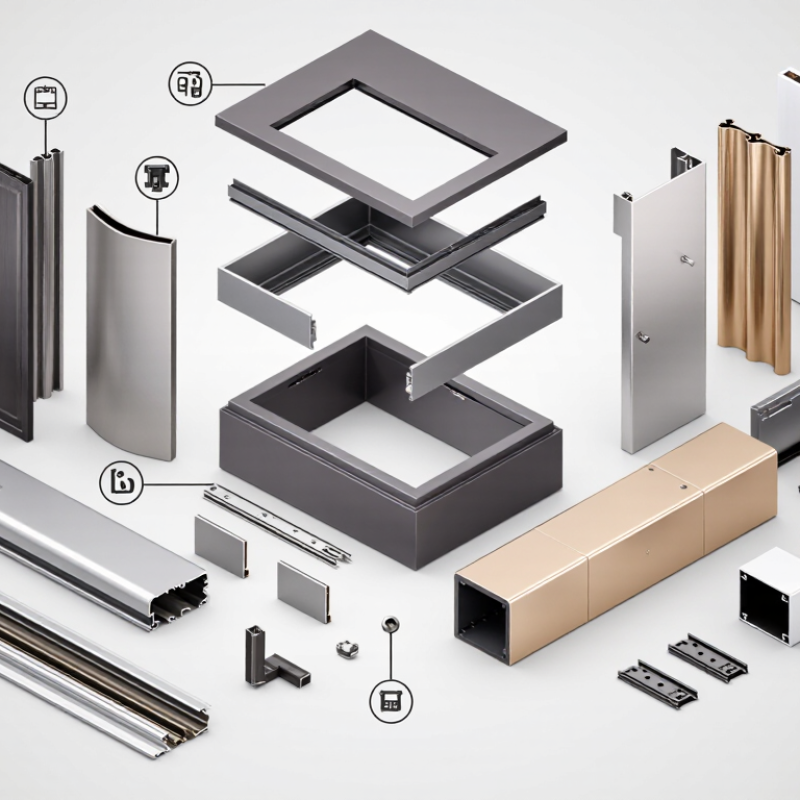
2026 Top Aluminum Kitchen Cabinet Profiles for Global Buyers

2026 Aluminum Cabinet Profile Basics: 2.70 g/cm³ Density and Alloy Grades

For global kitchen cabinet buyers, aluminum profile selection starts with density. Most commercial aluminum profiles are calculated at about 2.70 g/cm³. This figure helps estimate shipment weight, frame load, and material usage. It is not the complete specification. Alloy composition, temper, wall thickness, and machining accuracy also affect performance.

Alloy 6063 is widely used for cabinet frames because it extrudes smoothly and accepts anodizing well. Its clean surface suits visible doors and handles. Alloy 6061 generally offers higher strength, but its appearance and extrusion behavior may require closer process control.

Temper matters too. T5 and T6 conditions can change hardness and resistance to deformation. In factory inspections, I check profile weight against the drawing, then measure wall thickness at several points. Small variations are easy to miss. They can still affect corner alignment.

Tips: Ask for the alloy grade, temper, density basis, and dimensional tolerances before approving samples. Request a mill certificate and coating test data. Compare cut samples under normal kitchen lighting, not only showroom light. A light profile is not always a better profile. Very thin walls may reduce weight, but they can create flexing around hinges and screws. I have seen attractive samples fail during repeated door testing. That result is worth reflecting on before a large order. Local humidity, salt exposure, and cleaning habits should also guide the surface finish and corrosion checks.

Profile Types by Function: Frames, Handles, Plinths, and Door Rails

Aluminum kitchen cabinet profiles should be selected by function, not appearance alone. Frame profiles create the cabinet structure and must resist twisting under loaded shelves. A 1.2–1.5 mm wall thickness often offers a practical balance between strength and weight, but the final choice depends on cabinet width and installation conditions. Check corner joints carefully. Poorly aligned joints can expose sharp edges and weaken the frame.

Handle profiles affect daily comfort. Recessed handles provide a clean surface, while integrated edge handles suit modern doors. Their grip depth should support wet or gloved hands without catching clothing. Door rails need accurate machining because small errors can create uneven gaps. Plinth profiles protect the lower cabinets from moisture, cleaning water, and floor impacts. Ventilation space may also be necessary around appliances. A beautiful plinth can still cause trouble if it blocks airflow.

Tips: Request profile samples, section drawings, alloy information, finish data, and tolerance ranges before ordering. Compare the finish under natural and artificial light. Confirm whether cutting, drilling, and corner accessories are included. A polished specification can still fail during installation. Recheck the installer’s tools, wall conditions, and floor level. Small details matter.

2026 Top Aluminum Kitchen Cabinet Profiles for Global Buyers — Profile Types by Function: Frames, Handles, Plinths, and Door Rails
Function Profile Type Typical Cross-Section or Size Common Aluminum Alloy and Temper Typical Wall Thickness Common Surface Finish Typical Kitchen Application Key Selection Criteria
Frames Cabinet carcass frame profile 30–40 mm face width; 18–20 mm panel accommodation 6063-T5 or 6063-T6 1.2–2.0 mm Powder coating, anodizing, or mill finish Front-facing cabinet structures, tall-unit frames, and open shelving systems Check panel compatibility, corner-joint accuracy, straightness, and visible-surface quality.
Frames Glass-door frame profile 20–30 mm face width; 4–6 mm glass channel 6063-T5 1.0–1.6 mm Anodized, powder-coated, or brushed finish Aluminum-framed doors with tempered glass, fluted glass, or acrylic panels Confirm glazing gasket design, glass tolerance, corner connection, and hinge compatibility.
Handles Integrated edge-pull profile 20–40 mm projection; 2–4 mm door-edge channel 6063-T5 1.0–1.5 mm Anodized, powder-coated, or brushed finish Handleless base cabinets, wall cabinets, drawer fronts, and tall doors Evaluate grip comfort, door thickness, cut-length accuracy, end-cap fit, and cleaning access.
Handles Gola-style horizontal handle profile Approx. 50–70 mm overall height; continuous horizontal length 6063-T5 1.2–2.0 mm Anodized or powder-coated finish Continuous handle channels between drawers, doors, and countertop sections Check cabinet module alignment, vertical clearance, joint visibility, and support at long spans.
Plinths Adjustable plinth and toe-kick profile 100–150 mm height; 10–20 mm panel return 6063-T5 1.2–2.0 mm Anodized, powder-coated, or protective foil over finished surface Base-unit toe kicks, dishwasher areas, sink runs, and moisture-prone floor zones Prioritize moisture resistance, clip or leg compatibility, impact resistance, and easy removal.
Plinths Ventilated appliance plinth profile 100–150 mm height with ventilation slots or grille section 6063-T5 1.2–1.8 mm Powder coating or anodizing Refrigerator, oven, dishwasher, and other appliance ventilation zones Verify the appliance manufacturer’s airflow requirement and maintain unobstructed ventilation paths.
Door Rails Top and bottom door rail profile 25–45 mm visible face; 16–22 mm panel accommodation 6063-T5 or 6061-T6 for higher-strength designs 1.5–2.5 mm Anodized, powder-coated, or brushed finish Aluminum doors with glass, composite, or lightweight panel inserts Check door width, hinge load, rail-to-stile joint, panel retention, and dimensional stability.
Door Rails Reinforced tall-door rail profile 35–60 mm visible face; reinforced internal cavity 6061-T6 or 6063-T6 2.0–3.0 mm Powder coating or anodizing Full-height pantry doors, appliance panels, and wide swing doors Use with suitable hinges and corner joints; confirm deflection, door weight, and maximum unsupported width.
Technical note: The dimensions and material ranges above are typical industry specifications for cabinet extrusion concepts, not universal standards. Final selection should be verified against door size, panel weight, hardware loads, local building requirements, finish specifications, and the extrusion supplier’s approved drawings.

6063-T5 vs 6061-T6: Strength, Extrusion, and Finish Trade-Offs

2026 Top Aluminum Kitchen Cabinet Profiles for Global Buyers

6063-T5 vs 6061-T6: Strength, Extrusion, and Finish Trade-Offs

For most kitchen cabinet profiles, 6063-T5 offers a practical balance between extrusion quality, surface appearance, and cost. Its smooth structure supports clean lines, narrow frames, and consistent anodizing. It also accepts powder coating well when pretreatment is controlled. In project inspections, I look for die lines, corner sharpness, and coating thickness. Small defects become obvious under kitchen lighting.

6061-T6 provides higher strength and better resistance to demanding mechanical loads. It suits heavy doors, long spans, reinforced connectors, and profiles exposed to repeated stress. However, it is harder to extrude than 6063-T5. Complex shapes may require slower production, stronger tooling, and more machining. The surface can also need extra preparation before anodizing. Stronger is not always better.

Global buyers should request alloy and temper certificates, dimensional reports, and finish samples from the same production batch. A supplier should state the applicable testing standard and allowable tolerances. Check the actual profile design, not only the alloy label. A thin 6061-T6 section may still flex, while a well-designed 6063-T5 frame can feel remarkably rigid. This is where specifications become imperfect. Factory capability, die maintenance, coating control, and installation accuracy can change the final result. Ask for corner samples and assembled mock-ups before approving volume production.

2026 Top Aluminum Kitchen Cabinet Profiles for Global Buyers

6063-T5 vs 6061-T6: Strength, Extrusion, and Finish Trade-Offs

6063-T5

Lower strength but generally easier to extrude into complex, thin-walled cabinet profiles. Its high magnesium-silicon balance also supports smooth anodizing and consistent decorative finishes.

6061-T6

Offers substantially higher tensile and yield strength for structural frames, hinges, and heavy-duty applications. It typically requires higher extrusion force and may show less uniform anodized appearance than 6063.

Chart basis: representative minimum mechanical-property values commonly specified for extruded products; actual values vary with profile thickness, product standard, temper, and supplier certification.

Global Size and Tolerance Guide: EN 755 and ASTM B221 Benchmarks

For 2026 kitchen cabinet projects, aluminum profiles should be specified by standards, not appearance alone. EN 755 provides a useful European benchmark for extruded profile dimensions and tolerances. EN 755-9 is especially relevant to profile tolerances. ASTM B221 supports comparable requirements for aluminum extruded bars, profiles, tubes, and related shapes. These standards do not make every profile interchangeable.

Small details matter. A 30 mm frame may require a tighter width tolerance than a concealed support rail. Tolerance limits depend on alloy, temper, wall thickness, and cross-sectional size. Straightness, twist, corner radius, and wall variation should appear on the technical drawing. Do not rely on “standard tolerance” without checking the applicable table. That shortcut often creates assembly gaps.

A dependable purchasing process starts with one approved drawing and one inspection method. Measure critical dimensions with calibrated calipers, gauges, or a coordinate measuring machine. Check samples before mass production, then repeat inspections during production. Surface marks, anodizing thickness, and color consistency should be agreed separately because dimensional standards may not define the final appearance. In my experience, drawings sometimes overlook screw channels and sealing grooves. That mistake is easy to miss until installation. Leave realistic allowances for joining, cutting, and thermal movement. Global buyers should request the alloy, temper, standard edition, tolerance class, inspection records, and packing requirements in writing. Clear records reduce disputes across factories, ports, and installation teams.

Finish and Testing Standards: AAMA 2605 and ISO 9227 Requirements

2026 Top Aluminum Kitchen Cabinet Profiles for Global Buyers

For aluminum kitchen cabinet profiles, finish quality affects appearance, corrosion resistance, and long-term maintenance. AAMA 2605 is a high-performance coating specification for architectural aluminum. It evaluates coating durability through weathering, adhesion, impact, abrasion, humidity, and chemical-resistance tests.

Buyers should request the exact coating system and test records. Check color change, gloss retention, film thickness, and adhesion results. A clean cross-cut grid should show firm coating attachment. Kitchen profiles also face steam, cooking oils, detergents, and repeated hand contact. Small scratches around handles deserve attention.

ISO 9227 covers laboratory salt spray testing. The supplier should identify the test method, such as neutral salt spray, exposure duration, panel preparation, and scribe condition. Inspectors usually review blistering, rust, and creepage from the cut line. Salt spray is useful, but it does not recreate every kitchen environment. That matters.

A practical weakness remains. A passed test cannot correct poor pretreatment, sharp profile edges, or damaged packaging. Buyers should inspect conversion coating, sealing, corner protection, and batch consistency. Photographs alone are insufficient. Ask for independent laboratory reports when risk is high. Keep retained samples from each production batch. This creates traceability, although it adds time and cost. Experienced teams should compare test data with actual installation conditions, especially in coastal regions and humid commercial kitchens.

FAQS

Why is 2.70 g/cm³ important for aluminum cabinet profiles?

It helps estimate shipment weight, frame load, and material usage. Density alone is not a complete specification.

Which alloy grades are commonly suitable for cabinet frames?

Alloy 6063 extrudes smoothly and accepts anodizing well. Alloy 6061 usually provides higher strength but may require tighter process control.

How do T5 and T6 tempers affect cabinet profiles?

T5 and T6 can change hardness and resistance to deformation. Check the temper before comparing samples.

What wall thickness is practical for cabinet frame profiles?

A 1.2–1.5 mm wall often balances strength and weight. Wider cabinets or heavy shelves may need a stronger design.

How should buyers inspect profile dimensions?

Compare profile weight with the technical drawing. Measure wall thickness at several points. Small variations can affect corner alignment.

Should a lighter profile always be preferred?

No. Very thin walls may flex around hinges and screws. I have seen attractive samples fail repeated door testing.

How should handle and door rail profiles be selected?

Recessed handles create a clean surface. Integrated edge handles suit modern doors. Grip depth should work with wet or gloved hands.

What should buyers check on plinth profiles?

Plinths should resist moisture, cleaning water, and floor impacts. Check ventilation space around appliances. A beautiful plinth may block airflow.

Which surface and installation checks are easy to overlook?

Compare finishes under natural and artificial light. Consider humidity, salt exposure, and cleaning habits. Recheck tools, wall conditions, and floor level.

What documents and samples should be requested before ordering?

Request alloy details, temper, section drawings, tolerances, mill certificates, and coating test data. Confirm cutting, drilling, and corner accessories. Samples can still mislead.

Conclusion

Aluminum Kitchen Cabinet Profiles are essential structural and decorative components for modern kitchen systems, offering a practical balance of low weight, corrosion resistance, and design flexibility. With an approximate density of 2.70 g/cm³, aluminum is easy to handle while providing reliable performance. This guide explains how profile types serve different functions, including cabinet frames, handles, plinths, and door rails, helping global buyers select suitable shapes for specific installation needs.

It also compares 6063-T5 and 6061-T6 alloys in terms of strength, extrusion performance, machinability, and surface finish potential. Buyers can use EN 755 and ASTM B221 as references for dimensions, mechanical properties, and extrusion tolerances. In addition, the guide introduces finish and durability expectations based on AAMA 2605 and ISO 9227 testing principles, covering coating quality, color stability, and resistance to corrosion. These considerations support consistent sourcing and long-term cabinet performance across different markets.

Elara

Elara

Elara is a dedicated marketing professional with a strong understanding of the company’s products, customers, and evolving market landscape. Through clear, practical, and well-researched content, Elara regularly updates the company website with professional blog articles that help readers......